


The collapse of a five-storey building in Satya Niketan, Delhi (September 2026) killing six people has once again highlighted India’s recurring problem of unsafe urban structures and growing concerns related to Urban Disaster in India. The increasing frequency of Building Collapses in India reflects challenges in urban planning, construction regulation, and disaster preparedness.
Background
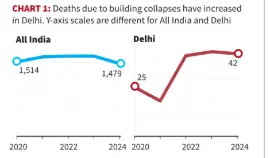
- Data from the Accidental Deaths and Suicides in India (ADSI) reports shows nearly 7,874 deaths due to building collapses between 2020-2024, making it a persistent urban safety challenge.
- Recurring Incidents: Hundreds of collapses occur annually, often unnoticed unless death tolls are high, highlighting the increasing threat of Urban Disasters in India.
- ADSI Data: Uttar Pradesh (223 deaths in 2024) and Maharashtra (220 deaths) recorded the highest fatalities. Delhi, despite its smaller size, consistently ranks among the top 15 states.
- Population Risk: Delhi recorded the 2nd or 3rd highest deaths per million population in 2022-2024, reflecting severe vulnerability in dense urban areas and rising Urban Disaster Risk India.
- Rapid urbanisation without adequate planning has increased challenges related to Urbanisation and Disaster Risk in Indian cities.
Causes of Building Collapses
- Illegal Constructions: Unauthorized multi-storey buildings without safety clearances contribute significantly to Building Collapse India incidents.
- Poor Enforcement: Municipal laxity in monitoring structural safety and adherence to codes.
- Use of Substandard Materials: Cheap, non-compliant materials increase vulnerability.
- Overcrowding: High population density strains infrastructure and accelerates wear-and-tear.
- Neglected Maintenance: Old structures often lack periodic safety audits.
- Weak compliance with Building Safety Regulations India remains a major reason behind structural failures.
- Lack of proper inspections affects overall Structural Safety in India.
Policy and Institutional Response
- Municipal Crackdowns: Post-incident sealing of illegal structures, though reactive rather than preventive.
- Building Codes: The National Building Code prescribes safety standards, but enforcement remains weak.
- Affordable Housing: Rising demand for low-cost housing fuels unsafe constructions.
- Disaster Management Framework: NDMA guidelines exist but lack integration with municipal planning.
- Strengthening the National Building Code India framework is essential for improving construction safety.
- Effective Urban Disaster Management India requires coordination between municipalities, disaster agencies, and urban planning authorities.
Way Forward
- Strengthen Enforcement: Mandatory periodic structural audits and strict penalties for violations.
- Urban Planning: Integrate safety norms into affordable housing schemes.
- Capacity Building: Train municipal engineers and inspectors in modern safety practices.
- Community Awareness: Educate residents on risks of illegal PGs and unsafe rentals.
- Technology Use: GIS mapping and AI-based monitoring of high-risk structures.
- Improved Disaster Management in Urban Areas can reduce casualties through early identification of vulnerable structures.
- Technology-driven monitoring can strengthen Building Safety in India and improve urban resilience.
Conclusion
Building collapses in India represent a silent urban disaster. Sustainable urban safety requires proactive regulation, affordable housing solutions, and integration of technology with governance. Only then can India prevent avoidable tragedies like Satya Niketan and ensure resilient cities.
The issue of Building Collapse Causes India, Urban Disaster Management UPSC, and Building Collapse UPSC is important under GS Paper 3 themes related to disaster management, urbanisation, infrastructure governance, and sustainable development.