

Three Indian Sites Added to UNESCO Tentative List
Three Indian locations have reportedly been added to UNESCO’s Tentative World Heritage List 2026, taking India’s total to 81. These additions strengthen India’s presence among UNESCO World Heritage Sites India and are important for Art and Culture Current Affairs 2026.
Baratang Karst–Mud Volcano Complex
- Location: Baratang Island, Andaman and Nicobar Islands.
- Features: Limestone caves formed through the gradual dissolution of rocks by water, highlighting the Baratang Island Geological Features.
- Mud volcanoes: Release mud, water and gases instead of molten lava.
- Importance: Demonstrates unusual geological processes and supports scientific research, making the Karst-Mud-Volcano Complex of Baratang an important geological heritage site.
Andaman Subduction Volcanoes
- Location: Barren Island and Narcondam Island, Andaman Sea, collectively known as the Narcondam and Barren Islands.
- Barren Island: Contains India’s only confirmed active volcano.
- Narcondam Island: A volcanic island supporting unique forest ecosystems.
- Biodiversity: Habitat of the endemic Narcondam hornbill.
- Importance: Illustrates plate tectonics, volcanic activity and ecological development through the Andaman Subduction Volcanoes.
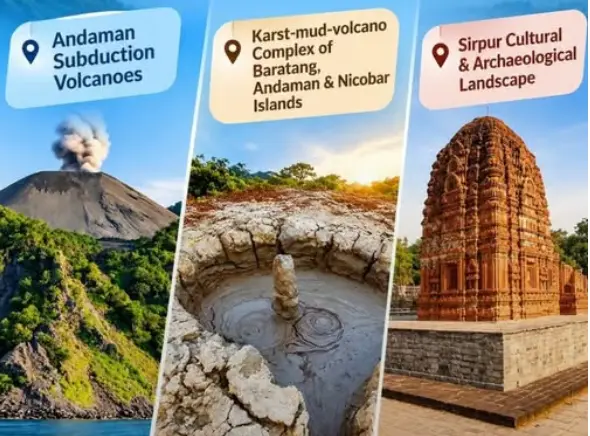
Sirpur Cultural and Archaeological Landscape
- Location: Mahasamund district, Chhattisgarh, near the Mahanadi River.
- History: Important centre under the Sharabhapuriya and Panduvamshi dynasties.
- Heritage: Contains Buddhist, Hindu and Jain archaeological remains.
- Example: Lakshmana Temple, noted for its early brick architecture.
- Importance: Reflects religious coexistence, artistic traditions and ancient trade networks, making the Sirpur Cultural and Archaeological Landscape an important Sirpur Heritage Site Chhattisgarh.
UNESCO Tentative List
- Countries identify potential World Heritage properties through their Tentative Lists.
- Inclusion is a necessary preliminary step before World Heritage nomination.
- Tentative listing does not mean UNESCO World Heritage inscription.
- The UNESCO Tentative List India 2026 is therefore an important preliminary stage for properties seeking recognition under the UNESCO World Heritage List UPSC framework.
- The additions are relevant to UNESCO Tentative List UPSC, Indian Heritage and Culture UPSC and the broader study of India UNESCO Heritage Sites.
Conclusion
Protecting these sites will preserve India’s geological wonders, unique biodiversity and rich cultural legacy for future generations. The Three Indian Sites Added to UNESCO Tentative List highlight India’s diverse natural and cultural heritage and strengthen its prospects for future UNESCO recognition.