

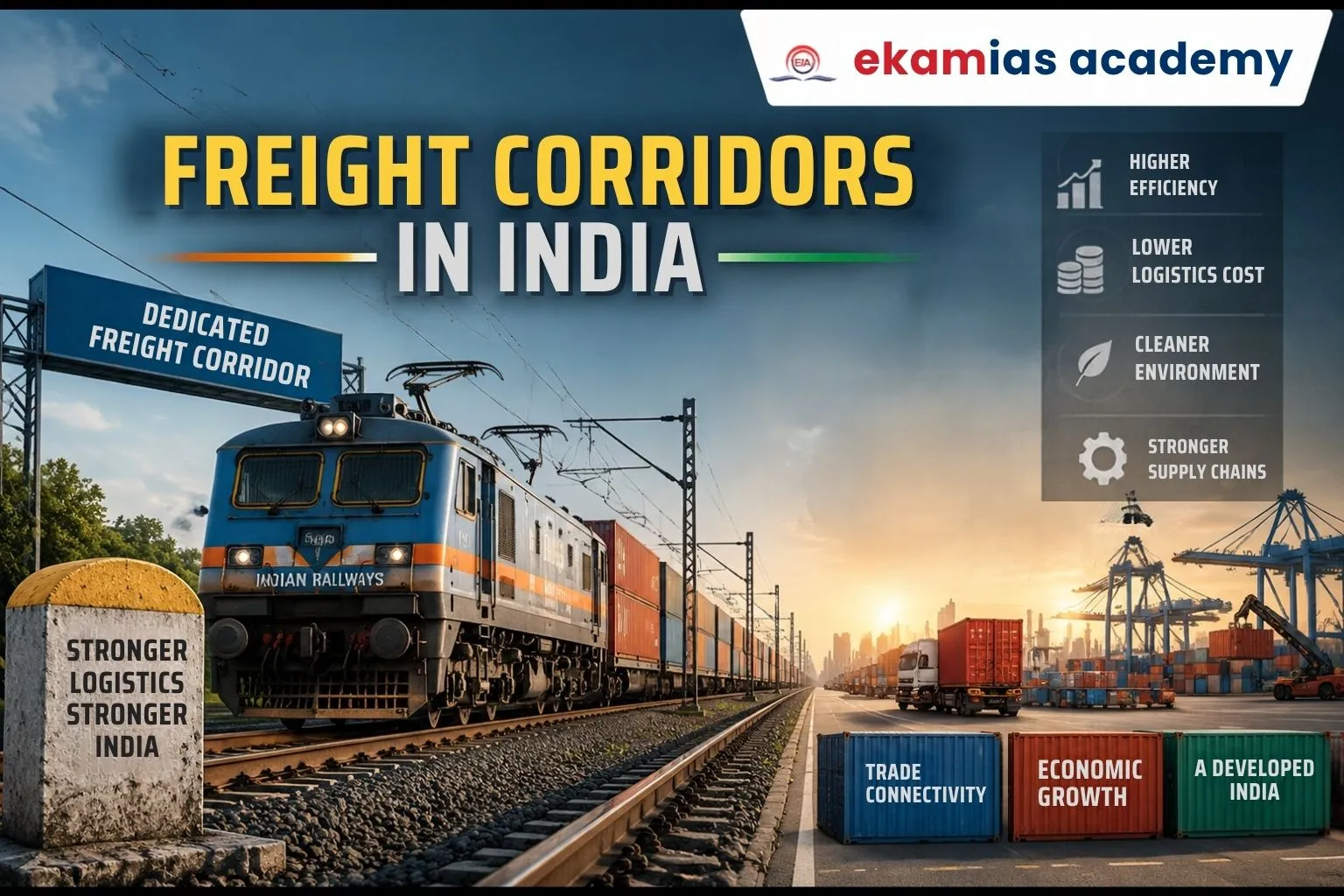
Prime Minister Narendra Modi has inaugurated key sections of the Western Dedicated Freight Corridor (WDFC), connecting Jawaharlal Nehru Port in Navi Mumbai with Dadri in Uttar Pradesh, marking the project’s completion. This milestone strengthens Dedicated Freight Corridors in India and highlights the importance of modern Freight Corridors in India for improving logistics efficiency, reducing transportation costs, and supporting economic growth.
What are Freight Corridors?
- Freight Corridors are dedicated railway networks designed exclusively for goods movement, aimed at decongesting passenger lines and improving logistics efficiency. These networks are a major component of Freight Corridor India and modern railway infrastructure development.
- Objective: Reduce logistics costs, improve supply chain efficiency, and support industrial growth through efficient Freight Transportation in India.
- India’s ambitious Dedicated Freight Corridor India (DFC) project, launched in 2006, is one of the largest infrastructure initiatives in the rail sector.
- The project is managed by the Dedicated Freight Corridor Corporation India (DFCCIL), which is responsible for planning, development, and operation of these logistics networks.
- Design: Tracks are wider, stronger, and equipped with modern signalling to handle heavier loads and improve Railway Infrastructure India UPSC relevance.
Types in India
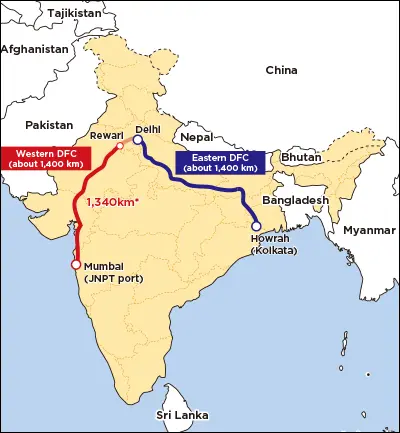
- Western Dedicated Freight Corridor: Connects Jawaharlal Nehru Port (Mumbai) to Dadri (Uttar Pradesh), covering ~1,500 km. The Western Dedicated Freight Corridor plays a crucial role in improving container movement and port connectivity.
- Eastern Dedicated Freight Corridor: Connects Ludhiana (Punjab) to Dankuni (West Bengal), covering ~1,800 km. The Eastern Dedicated Freight Corridor strengthens coal, steel, and industrial freight transportation.
- Together, they form the backbone of India’s freight modernization plan and represent key Logistics Corridors in India.
- The development of these corridors is an important topic under Dedicated Freight Corridors UPSC and Dedicated Freight Corridor UPSC preparation.
Significance
- Efficiency: Enables faster, cheaper, and reliable movement of coal, cement, steel, and containers, strengthening Indian Railways Freight Corridor networks.
- Economic Impact: Reduces logistics cost from 13–14% of GDP to ~8–9%, improving India’s trade competitiveness.
- Environmental Benefits: Cuts carbon emissions by shifting freight from road to rail and promotes sustainable Freight Corridors and Logistics development.
- Strengthens Freight Infrastructure India by improving supply chains, industrial connectivity, and manufacturing competitiveness.
Conclusion
Freight Corridors in India represent a transformational step in India’s infrastructure, boosting trade competitiveness, reducing costs, and aligning with sustainable transport goals. Their completion marks a milestone in India’s journey toward becoming a global logistics hub.
The expansion of Dedicated Freight Corridors in India will play a crucial role in strengthening logistics networks, modernising Indian Railways, and supporting India’s long-term economic growth.