


The Meghalaya Cabinet has approved another six-month extension of the Garo Hills Autonomous District Council (GHADC), highlighting the importance of Tribal Self-Governance in Meghalaya and Tribal Governance in Meghalaya.
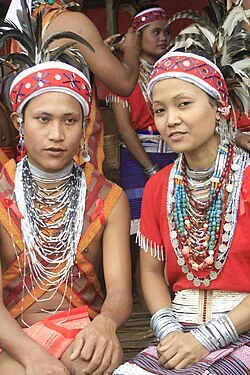
About the Garo Tribe
- Location: Primarily inhabits Meghalaya’s Garo Hills, with communities in Assam, Tripura, Nagaland and Bangladesh. The Garo Tribe in Meghalaya is an important component of Meghalaya Tribal Communities.
- Population: Second-largest tribal community in Meghalaya, after the Khasi.
- Origin: Traditionally believed to have migrated from Tibet, an important aspect of Garo Tribe History.
- Identity: Also known as A’chik or Mande and forms a significant part of the Garo Tribal Community India.
- Language: Garo belongs to the Tibeto-Burman language family.
Social Organisation
- Matrilineal society: Family lineage and inheritance pass through women, making the Garo Matrilineal Society distinctive among India’s tribal communities.
- The youngest daughter, called Nokna, traditionally inherits family property.
- Nokma: Traditional village head responsible for managing community land and an important institution among Garo Traditional Institutions.
- Marriage generally occurs outside one’s clan.
Economy and Livelihood
- Agriculture is the main occupation.
- Hill communities practise jhum (shifting cultivation), while plains communities grow wet rice.
- Important crops include rice, millet, maize and vegetables.
- Traditional village life emphasises cooperation and community participation.
Religion and Culture
- Songsarek: Indigenous belief system involving nature, spirits and ancestors.
- Christianity is now the predominant religion.
- Wangala Festival: Harvest celebration associated with Saljong, traditionally regarded as a deity of fertility and prosperity.
- Traditional music prominently features drums and group dances.
Constitutional Significance
- Garos are recognised as a Scheduled Tribe, making their protection relevant to broader Tribal Rights in India.
- The GHADC functions under the Sixth Schedule of Indian Constitution, which provides a framework for autonomous administration in specified tribal areas.
- It supports Tribal Self-Governance in Meghalaya and protection of customary practices and land rights through one of the Autonomous District Councils in India.
- The GHADC is also an important example of Tribal Administration in Northeast India, with the Sixth Schedule framework being particularly relevant for Sixth Schedule UPSC preparation.
Conclusion
The Garo community demonstrates India’s cultural diversity and the importance of protecting indigenous traditions through constitutional self-governance. The Garo Tribe in Meghalaya, its traditional institutions and the GHADC illustrate the significance of Indian Society and Tribal Issues UPSC in understanding India’s pluralistic social and governance framework.