
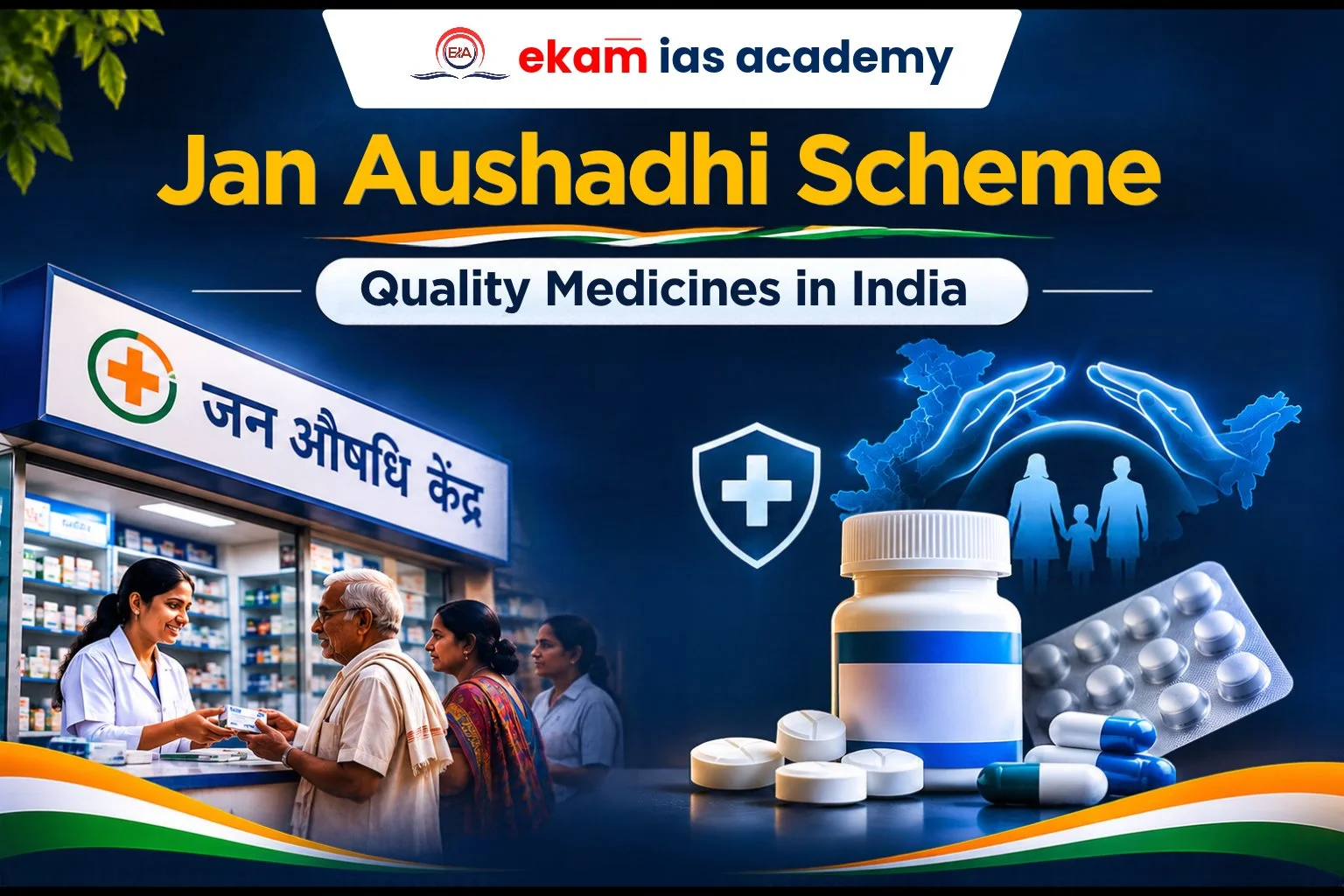
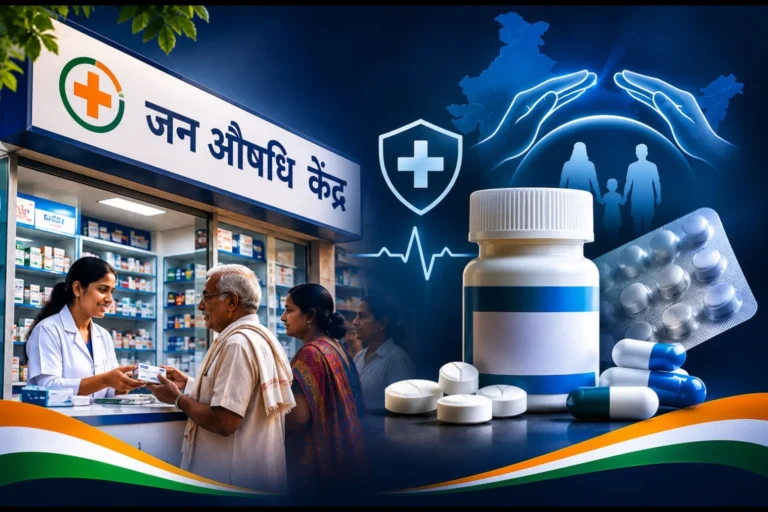
The expansion of the Jan Aushadhi Scheme has drawn attention due to low public awareness, medicine shortages and concerns over generic drug quality. The scheme is important for Affordable Healthcare in India, access to Quality Generic Medicines and Health and Social Justice UPSC.
About Pradhan Mantri Bhartiya Janaushadhi Pariyojana (PMBJP)
- Objective: Provide quality generic medicines at affordable prices, reducing household healthcare expenses through the Pradhan Mantri Bhartiya Janaushadhi Pariyojana and Affordable Medicines Initiative.
- Launched: 2008; revamped in 2015.
- Nodal Ministry: Ministry of Chemicals and Fertilisers, through the Department of Pharmaceuticals.
- Implementing Agency: Pharmaceuticals and Medical Devices Bureau of India (PMBI), with the institutional framework historically associated with the Bureau of Pharma PSUs of India.
- Generic medicines: Medicines containing the same active ingredients as branded alternatives, generally sold at lower prices. Understanding Generic Medicines vs Branded Medicines is important for assessing the scheme.
- Quality Assurance: Medicines are sourced from WHO-GMP-certified manufacturers and undergo batch testing.
- The scheme is an important topic for Jan Aushadhi Scheme UPSC, PMBJP Scheme and Government Healthcare Schemes.
Progress and Achievements
- Coverage: 2,110 medicines and 315 surgical and medical items.
- Expansion: Over 20,000 Jan Aushadhi Kendras by June 2026, targeting 25,000 by March 2027.
- Affordability: Medicines generally cost 50–80% less than comparable branded products.
- Economic Impact: Sales reached ₹2,252 crore in 2025–26, while estimated cumulative savings reached ₹45,000 crore over 12 years.
- The expansion demonstrates the potential of Affordable Generic Medicines in India to improve Healthcare Accessibility in India.
Significance of the Scheme
- Financial Protection: Reduces direct medical expenditure, especially for low-income households.
- Healthcare Equity: Improves treatment access in rural and underserved regions.
- Chronic Disease Management: Makes regular medicines for diabetes, hypertension and heart diseases more affordable.
- Women’s Health: Low-cost Jan Aushadhi Suvidha sanitary pads support menstrual hygiene.
- Inclusive Development: Advances SDG 3 (Good Health and Well-being) and Universal Health Coverage.
- These outcomes strengthen the role of the Jan Aushadhi Scheme in promoting Affordable Healthcare in India and Healthcare Accessibility in India.
Challenges
- Limited Awareness: Misconceptions that Kendras serve only poorer households discourage wider use.
- Supply Gaps: Medicine shortages interrupt treatment and reduce customer confidence.
- Quality Concerns: Patients and doctors may distrust cheaper generic medicines despite testing requirements.
- Prescription Practices: Brand-name prescriptions discourage generic substitution.
- Uneven Accessibility: Remote and tribal regions face gaps in physical access to pharmacies.
- These challenges affect the effectiveness of Jan Aushadhi Kendras and the wider objective of providing Quality Generic Medicines through the PMBJP Scheme.
Way Forward
- Awareness: Conduct nationwide campaigns through ASHA workers, Ayushman Arogya Mandirs and medical institutions.
- Transparency: Publish independent drug-quality testing results regularly to strengthen public trust.
- Digital Solutions: Introduce real-time stock availability through the Jan Aushadhi Sugam app.
- Medical Participation: Encourage generic prescriptions through doctor training and evidence-based guidelines.
- Rural Expansion: Use Primary Agricultural Credit Societies (PACS) to establish Kendras in underserved areas.
- Public Investment: Increase funding for essential medicines and integrate Jan Aushadhi with government health programmes.
- These measures can strengthen the Affordable Medicines Initiative, improve Healthcare Accessibility in India and expand access to Affordable Generic Medicines in India.
Conclusion
Jan Aushadhi can become a pillar of Universal Health Coverage by combining affordable medicines, assured quality, reliable supply and equitable access. Strengthening the Pradhan Mantri Bhartiya Janaushadhi Pariyojana, Government Healthcare Schemes and Affordable Healthcare in India can advance health equity and Health and Social Justice UPSC objectives.