
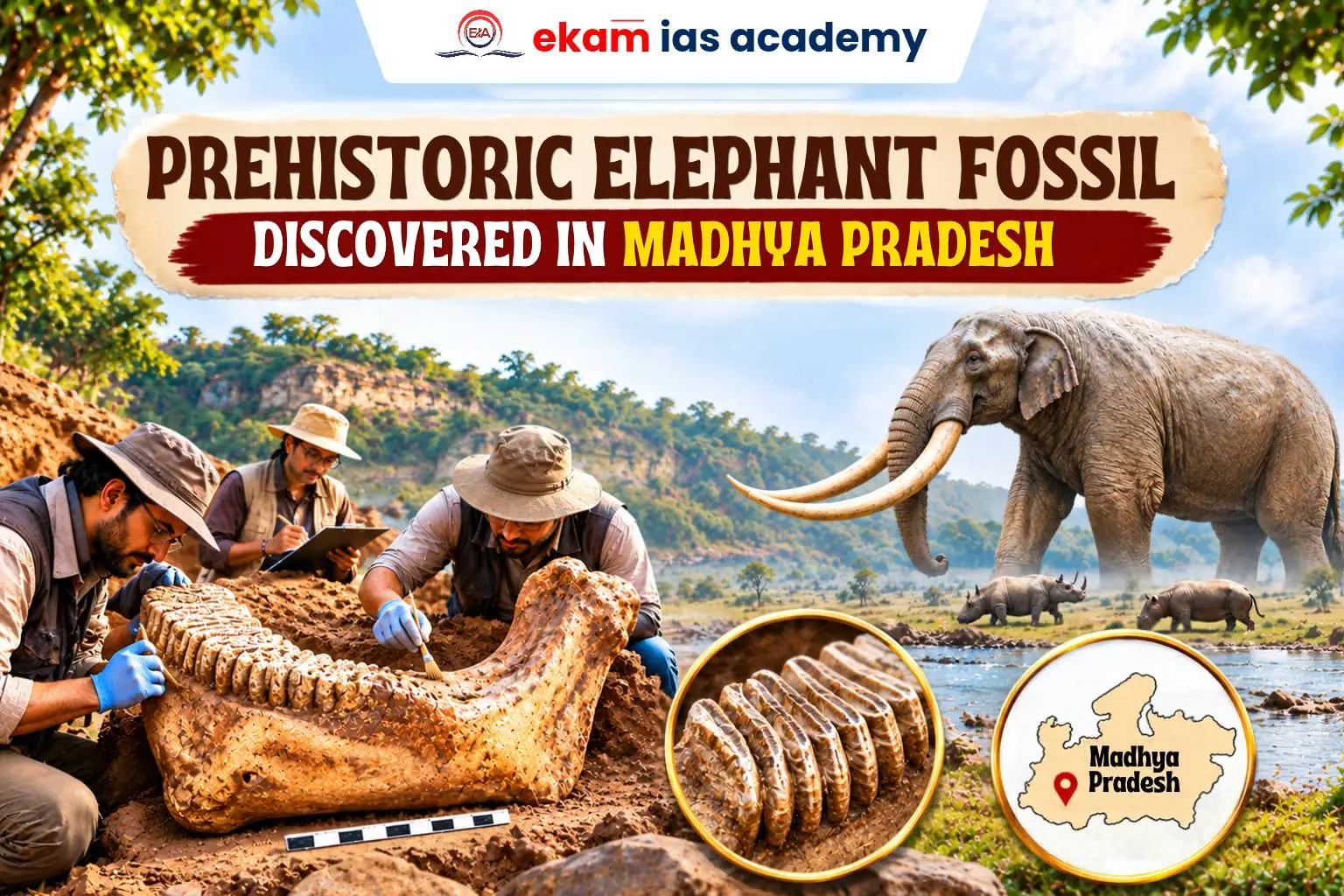
A 75-cm fossilised elephant jaw was discovered at Patai Ghat, Raisen district, Madhya Pradesh, along the Narmada River. Researchers suggest it may belong to Palaeoloxodon namadicus, among the largest prehistoric elephants. The discovery is significant for Prehistoric Elephant Fossil Discovery, Prehistoric Elephant Fossil Madhya Pradesh, Elephant Fossil in India and the study of Ancient Biodiversity of India.
Details of the Discovery
- Location: Patai village, Deori tehsil, Raisen district, Madhya Pradesh.
- Discovery: Fossilised lower jaw exposed by Narmada River erosion, adding to the record of Madhya Pradesh Fossil Discovery and Fossil Excavation in India.
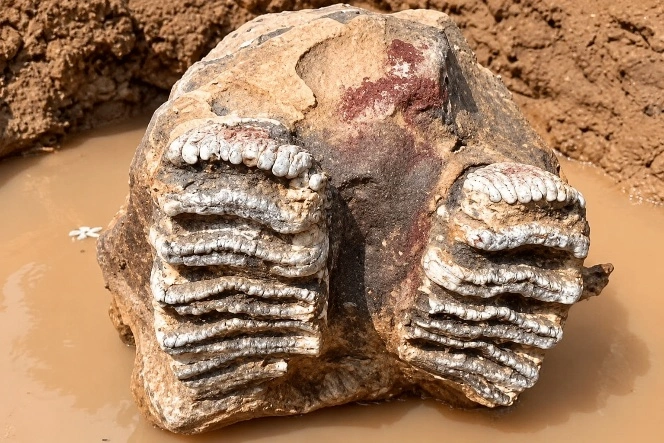
- Dimensions: Approximately 75 cm long and 25 cm wide.
- Dental Features: Molars contain 7–9 parallel ridges, raised teeth and distinct grooves.
- Age of Animal: Six molar rows on one side and seven on the other suggest a young elephant.
- Probable Species: Palaeoloxodon namadicus, although Stegodon remains an alternative identification. These remains are important examples of Proboscidean Fossils and Ancient Elephant Species.
About Palaeoloxodon namadicus
- An extinct prehistoric straight-tusked elephant associated with the Indian subcontinent.
- Considered among the largest elephant species ever to exist.
- Geological Period: Pleistocene Epoch.
- Possible Age: Researchers suggest approximately 4–5 lakh years, while another preliminary estimate places the fossil at 7–8 lakh years.
- Important: Exact identification and age require detailed examination and scientific dating.
- The species contributes to the study of Prehistoric Mammals in India, Ice Age Animals in India and Fossil Records and Evolution.
Geological Significance
- The fossil was embedded in yellowish soil associated with the Baneta Formation.
- The surrounding geological deposits indicate a Pleistocene environment.
- The Narmada Valley was historically a marshy landscape, supporting large prehistoric animals.
- Earlier fossil discoveries include rhinoceroses, hippopotamuses and horses.
- Other bone fragments nearby suggest additional fossil deposits.
- The Narmada Valley discoveries contribute to understanding India’s Ancient Biodiversity, prehistoric ecosystems and the Geological Heritage of Madhya Pradesh.
Scientific Investigation
- A five-member research team, including Dr Hitkishor Goswami, Dr Ravi Upadhyay and Dr Kunwar Wajahat Shah, examined the remains.
- A four-member Geological Survey of India (GSI) team inspected the site on November 13, 2026.
- The administration cordoned off the site to prevent damage.
- Further scientific investigation can contribute to Paleontological Discoveries in India, Fossil Excavation in India and the study of Fossil Records and Evolution.