
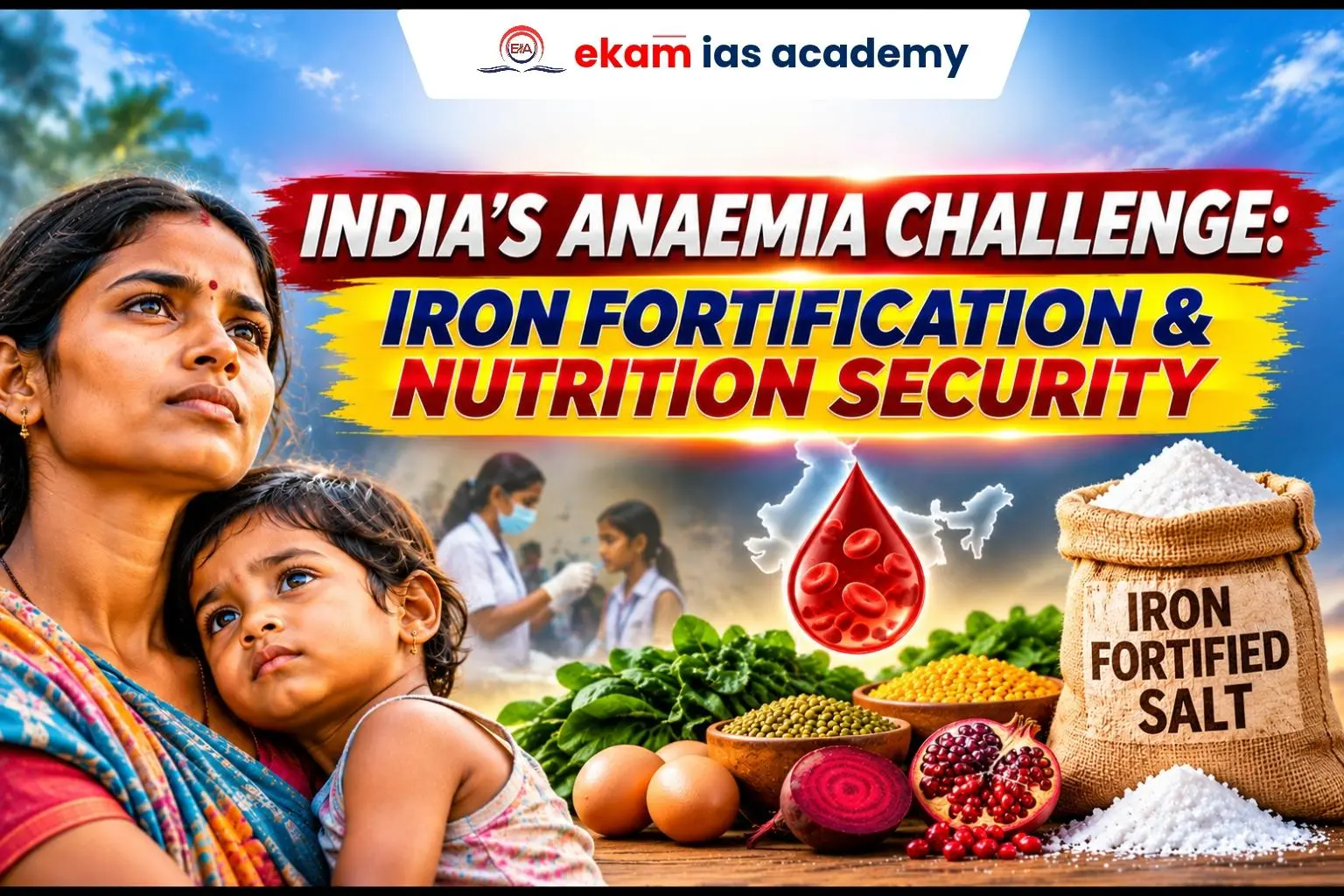
India’s high anaemia burden has renewed debate over the effectiveness and safety of Double Fortified Salt (DFS) containing iodine and iron. The issue highlights India’s Anaemia Challenge, Iron Fortification in India and the broader concerns surrounding Anaemia Prevention in India.
What is Anaemia
- Anaemia: A condition in which haemoglobin levels are insufficient to meet the body’s oxygen requirements.
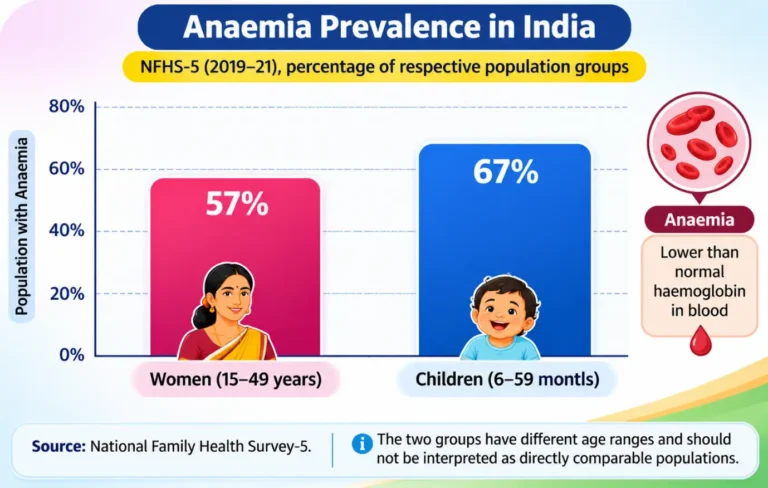
- NFHS-5 (2019–21): Around 57% of women aged 15–49 and 67.1% of children aged 6–59 months were anaemic.
- Major effects: Fatigue, reduced productivity, poor learning outcomes and increased maternal health risks, making Women’s Health and Anaemia an important public health concern.
- Iron deficiency: An important cause, but not responsible for every case. Iron Deficiency Anaemia is therefore only one part of the wider anaemia burden.
- Understanding these issues is important for Anaemia in India UPSC and Health and Nutrition UPSC preparation.
What Is Double-Fortified Salt?
- DFS contains two micronutrients: iodine and iron.
- It aims to improve micronutrient intake through a commonly consumed household product.
- Advantage: Potentially reaches vulnerable populations through existing food distribution systems and can contribute to Food Fortification in India.
- Limitation: Iron intake depends on salt consumption, which varies across individuals.
- DFS is one example of Iron Fortified Foods used to address micronutrient deficiencies.
Why Iron Alone Is Insufficient
- Multiple deficiencies: Vitamin B12, folate, vitamin A and protein deficiencies can contribute to anaemia.
- Infections: Malaria, hookworm and chronic inflammation affect haemoglobin levels.
- Genetic disorders: Thalassaemia and sickle cell disease require specialised management.
- Poor absorption: Phytates in cereals and pulses can reduce non-haem iron absorption.
- Health risks: Excess iron may harm susceptible individuals, particularly those with iron-overload disorders.
- These factors demonstrate why Micronutrient Deficiency in India requires a comprehensive approach rather than relying only on iron supplementation or fortification.
Public Health Concerns
- Salt reduction: WHO recommends consuming less than 5 grams of salt daily to reduce hypertension risks.
- Unequal exposure: Children and women may consume less fortified salt than adult men.
- Programme overlap: Fortified rice, DFS and iron-folic acid tablets may create overlapping iron exposure.
- Monitoring gaps: Haemoglobin testing alone cannot identify the underlying cause.
- These concerns highlight the wider Public Health Challenges UPSC associated with nutrition interventions and population-level fortification.
Government Initiatives
- Anaemia Mukt Bharat: Uses a 6×6×6 strategy involving beneficiaries, interventions and institutional mechanisms.
- Iron-Folic Acid supplementation: Targets vulnerable age groups.
- National Deworming Day: Reduces worm-related health problems.
- POSHAN Abhiyaan: Promotes improved maternal and child nutrition.
- Eat Right India: Encourages safe, healthy and balanced diets.
- These programmes form part of India’s broader nutrition and public-health framework, including the National Health Mission India, and address Child Anaemia in India and Nutrition Security in India.
Way Forward
- Targeted intervention: Identify iron deficiency before prescribing additional iron where feasible.
- Better diagnostics: Expand access to ferritin, vitamin B12 and inflammation testing.
- Dietary diversity: Improve affordability of eggs, pulses, green vegetables and fortified foods.
- Disease prevention: Strengthen malaria control, sanitation and deworming.
- Evidence-based fortification: Conduct monitored district-level DFS pilots before nationwide expansion.
- Outcome monitoring: Measure reductions in anaemia rather than merely counting distributed tablets.
- A comprehensive strategy for Anaemia Prevention in India should integrate nutrition, healthcare, disease control and evidence-based Iron Fortification in India.
Conclusion
India can reduce anaemia sustainably only by combining targeted nutrition, accurate diagnosis, infection control and affordable healthy diets instead of relying on iron fortification as a universal solution. A multidimensional approach is essential for India’s Anaemia Challenge, Anaemia Mukt Bharat Programme, Nutrition Security in India, Women’s Health and Anaemia and Health and Nutrition UPSC.