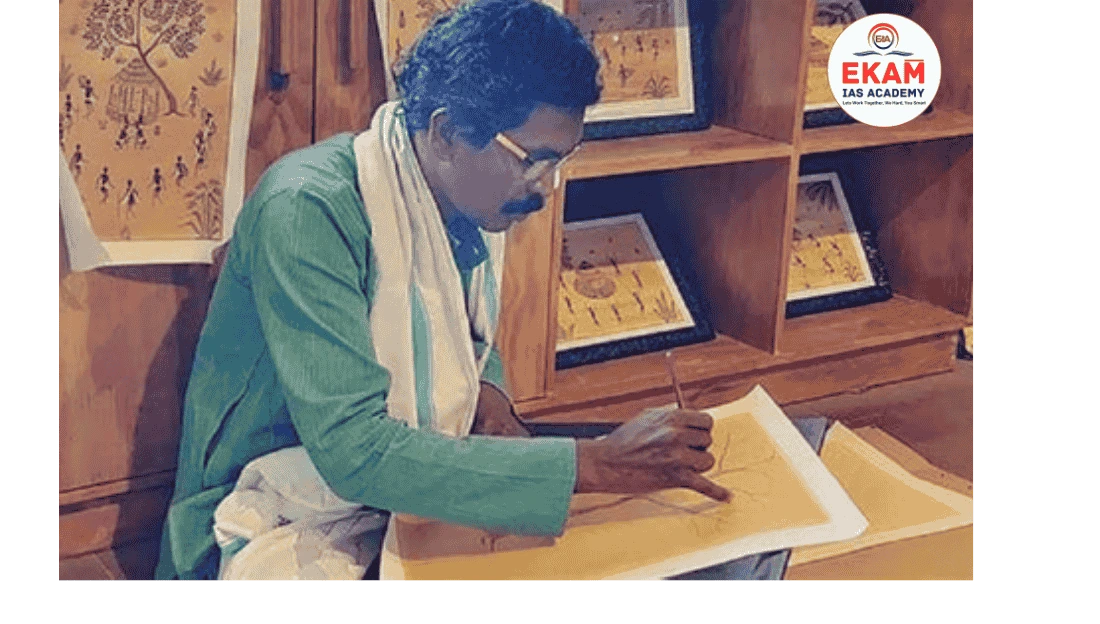


The Kurumba language, spoken by a Particularly Vulnerable Tribal Group (PVTG) in Kerala, faces the threat of gradual disappearance. The issue highlights the importance of Kurumba Language UPSC, Linguistic Diversity in India, Endangered Languages of India and the preservation of India’s Linguistic Heritage.
Who Are the Kurumbas?
- Location: Mainly inhabit the forested hills of Attappady in Palakkad district, Kerala.
- Tribal status: Recognised as a Particularly Vulnerable Tribal Group (PVTG).
- Population: Approximately 2,719 people in 2024, according to the article.
- Language: Kurumba is primarily an oral language without a widely used written script. It is an important example of Kurumba Tribal Language and the Tribal Languages of India.
- Cultural importance: It preserves traditional knowledge, customs, folklore and community identity, making Kurumba Language and Culture an important part of the Kurumba Community in India and the broader Linguistic Heritage of India.
Why Is the Language Endangered?
- Language shift: Younger generations increasingly adopt Malayalam for education and employment.
- Migration: Movement outside traditional settlements reduces opportunities to speak Kurumba.
- Educational barriers: Limited access to secondary schools within tribal habitations encourages linguistic assimilation.
- Lack of documentation: Oral traditions are vulnerable when elderly speakers pass away.
- Example: Younger speakers increasingly use Malayalam chechi instead of Kurumba akke for elder sister.
- These factors reflect wider concerns surrounding Endangered Languages of India, Indigenous Languages of India and the need for Language Preservation in India.
Census and Linguistic Invisibility
- Census classification: Mother tongues with fewer than 10,000 speakers are generally grouped under broader categories or “Others” in published language tables.
- Official recognition: The 2011 Census reported 121 languages, including 22 Scheduled and 99 non-Scheduled languages.
- People’s Linguistic Survey of India (PLSI): Documented approximately 800 languages, highlighting India’s greater linguistic diversity.
- Concern: Aggregated reporting can reduce the visibility of smaller languages in policymaking.
- Such invisibility can affect the recognition and Protection of Tribal Languages and the preservation of Linguistic Diversity in India.
Constitutional and Government Safeguards
- Article 29: Protects the right to conserve distinct languages, scripts and cultures.
- Article 350A: Encourages mother-tongue instruction at the primary level for linguistic minorities.
- Eighth Schedule: Recognises 22 languages but does not cover every indigenous language.
- SPPEL (2013): The Ministry of Education’s scheme documents and preserves endangered languages.
- NEP 2020: Promotes education in home or mother tongues wherever possible.
- These safeguards contribute to Language Preservation in India, Protection of Tribal Languages and the broader objective of preserving India’s Indigenous Languages. The broader international discussion on UNESCO Endangered Languages also highlights the importance of documenting and preserving vulnerable linguistic traditions.
Wider Implications
- Cultural loss: Language disappearance threatens oral histories, songs and traditional practices.
- Knowledge systems: Indigenous ecological and medicinal knowledge may be lost.
- Social exclusion: Language barriers can limit access to education, healthcare and government services.
- Identity: Linguistic decline weakens intergenerational cultural connections.
- The issue demonstrates the close relationship between Kurumba Language and Culture, Cultural Diversity and Language Preservation and the protection of India’s Linguistic Heritage.
Way Forward
- Document Kurumba vocabulary, stories and oral traditions through community-led projects.
- Introduce bilingual learning materials and train teachers familiar with tribal languages.
- Record smaller mother tongues separately in Census databases and published statistics.
- Support local-language digital archives, community radio and youth participation.
- Such measures can strengthen Language Preservation in India, protect Tribal Languages of India and promote greater recognition of Indigenous Languages of India.
Conclusion
Protecting endangered tribal languages is essential for safeguarding India’s cultural diversity, indigenous knowledge and constitutional commitment to inclusion. The preservation of the Kurumba Language, Protection of Tribal Languages and Linguistic Heritage of India is therefore an important dimension of Cultural Diversity and Language Preservation and Indian Society UPSC.