
Why in News?
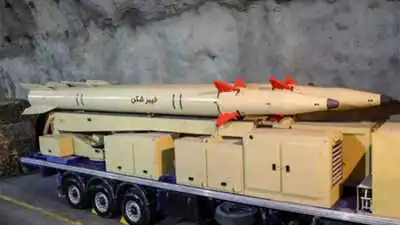
Iran’s Islamic Revolutionary Guard Corps (IRGC) recently claimed the use of Kheybar Shekan ballistic missiles during rising tensions in the West Asia region — a security development often analysed in UPSC coaching in Hyderabad while studying global defence technologies and geopolitics.
Key Features of the Missile
• Range: The missile has a strike range of approximately 1,450 kilometres, allowing it to reach several strategic locations across West Asia.
• Solid Fuel Technology: The missile uses solid propellant, which provides operational advantages such as faster launch preparation, easier storage, and lower maintenance compared to liquid-fuel missiles.
• Size and Weight: The missile is about 4 metres in length and weighs roughly 1,500 kilograms, making it relatively compact compared to some other ballistic missiles.
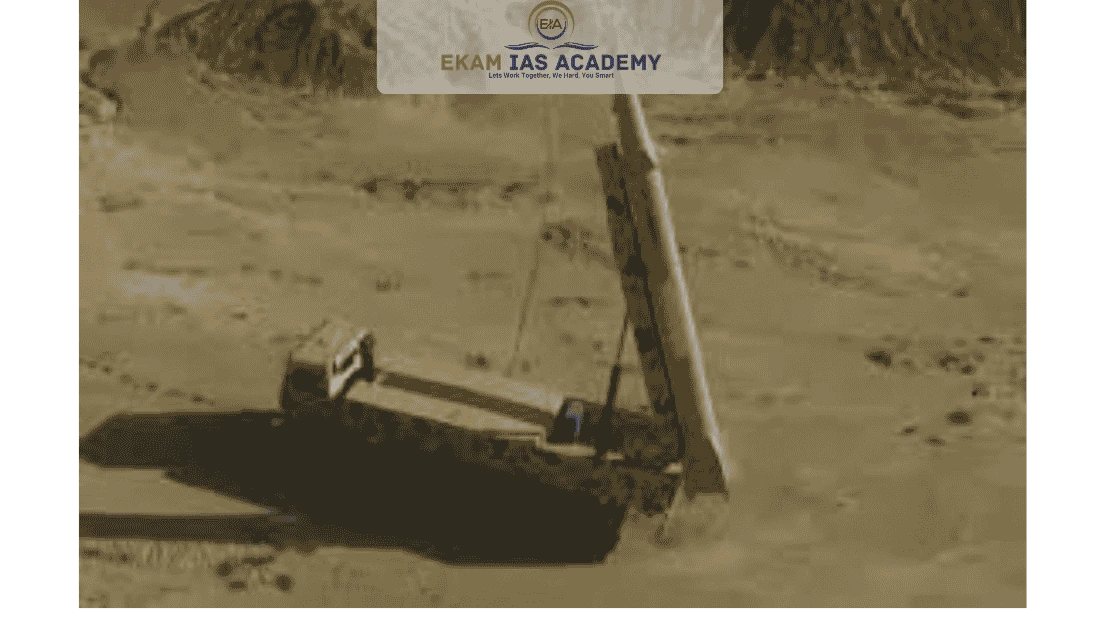
• Mobile Launch Capability: The missile can be launched from mobile launch platforms, improving survivability by making it harder for adversaries to detect and destroy before launch.
Advanced Technical Characteristics
• Multi-Stage Flight System: The missile operates through three main phases — the launch phase, the mid-course guidance phase, and the terminal phase where the missile precisely strikes the target.
• Precision Guidance: The missile uses satellite-based navigation systems that enhance targeting accuracy and reduce the chances of missing the intended target.
• Maneuverable Warhead: It is equipped with a maneuverable warhead, allowing it to adjust its trajectory during the final stage of flight and evade interception by missile defence systems.
• High Speed: Reports suggest that the missile can reach speeds of Mach 10 to Mach 12, making interception extremely difficult even for advanced air defence systems — topics often covered in IAS coaching in Hyderabad while analysing defence technologies.
Strategic Significance
• Regional Deterrence: The missile strengthens Iran’s deterrence capability by allowing it to strike distant targets if threatened.
• Indigenous Defence Development: The development reflects Iran’s progress in domestic missile manufacturing and defence technology.
• Impact on Regional Security: Such missile advancements influence strategic stability and power balance in West Asia, making them important in geopolitical calculations.
Ballistic Missiles: A Brief Overview
A ballistic missile is a rocket-powered weapon that:
• Follows a ballistic trajectory after launch.
• Travels through space before re-entering the atmosphere to strike its target.
Ballistic missiles are classified by range:
• Short-Range Ballistic Missiles (SRBM) – up to 1,000 km
• Medium-Range Ballistic Missiles (MRBM) – 1,000–3,000 km
• Intermediate-Range Ballistic Missiles (IRBM) – 3,000–5,500 km
• Intercontinental Ballistic Missiles (ICBM) – more than 5,500 km
These classifications are frequently discussed in UPSC online coaching and civils coaching in Hyderabad while preparing for GS3 internal security and defence technology topics.
This topic is available in detail on our main website.