
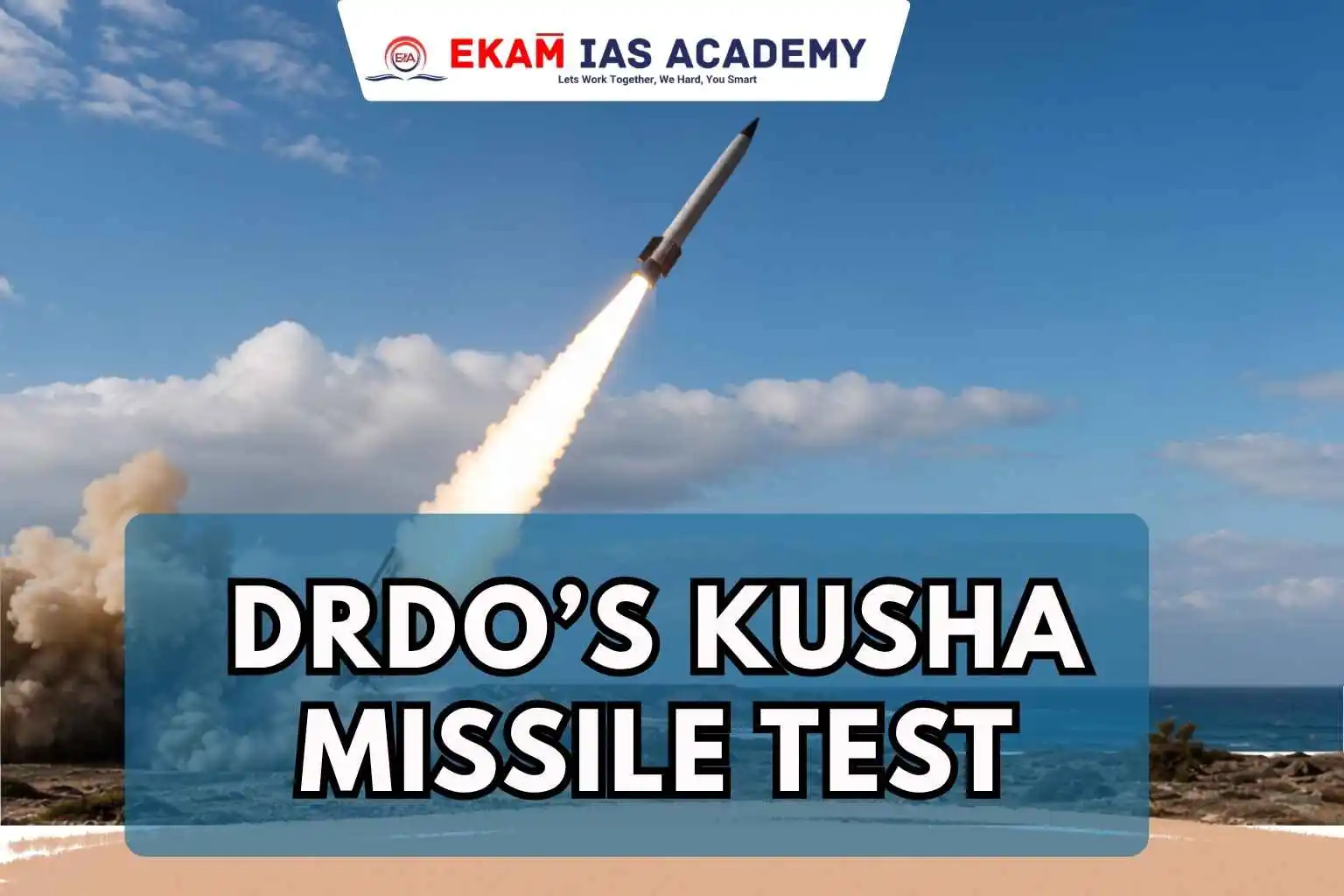
The Defence Research & Development Organisation (DRDO) successfully conducted the maiden flight test of ‘Kusha’, India’s long range surface-to-air missile system. This topic is important for aspirants preparing for GS3 Security and Defence through ias coaching in Hyderabad.
About Kusha Missile System
• Designed to counter fighter aircraft, ballistic missiles, and unmanned aerial vehicles.
• Range: Up to 400 km, comparable to advanced global systems.
• Tested against an electronic target simulating high speed aerial threats.
• Part of India’s multi-layered air defence architecture, complementing systems like Akash, Barak 8, and S 400 Triumf.
• Test conducted at APJ Abdul Kalam Island, Odisha, marking a major step in India’s self-reliance in air defence.
Strategic Significance
• Reduces dependence on imported systems such as Russia’s S 400.
• Strengthens protection of strategic military bases and civilian assets.
• Enhances India’s deterrence and homeland security capabilities.
• Supports the vision of Atmanirbhar Bharat in defence manufacturing.
Broader Defence Context
• India is building a multi-layered air defence shield:
– Akash missile system: short range.
– Barak 8: medium range, Indo-Israel collaboration.
– Directed energy weapons under development.
• Aligns with Defence Production and Export Promotion Policy (DPEPP 2020) to boost indigenous R&D and exports.
Way Forward
• Rigorous Testing & Deployment: Gradual deployment across strategic zones like Western and Eastern borders. Data: India currently faces 350+ aerial incursions annually (IAF records).
• Tri-Service Integration: Ensures a 360° shield against fighter aircraft, drones, and cruise missiles. Example: US Patriot & Aegis systems achieve similar joint force interoperability.
• Export & Defence Diplomacy: Position Kusha as a strategic export product under Make in India and DPEPP 2020. Target friendly nations in South Asia, Africa, and ASEAN. Data: India’s defence exports crossed ₹21,000 crore in FY 2023–24.
• Next Gen Innovation: Invest in hypersonic missile technology, AI-enabled threat detection, and directed energy weapons. Collaboration with DRDO labs, IITs, IISc, and private start-ups will accelerate innovation. Global Benchmark: China and Russia are testing hypersonic glide vehicles; India must match pace to maintain deterrence.
Conclusion
The successful test of Kusha marks India’s decisive move towards a self-reliant, multi-layered air defence system, strengthening national security and global standing.