

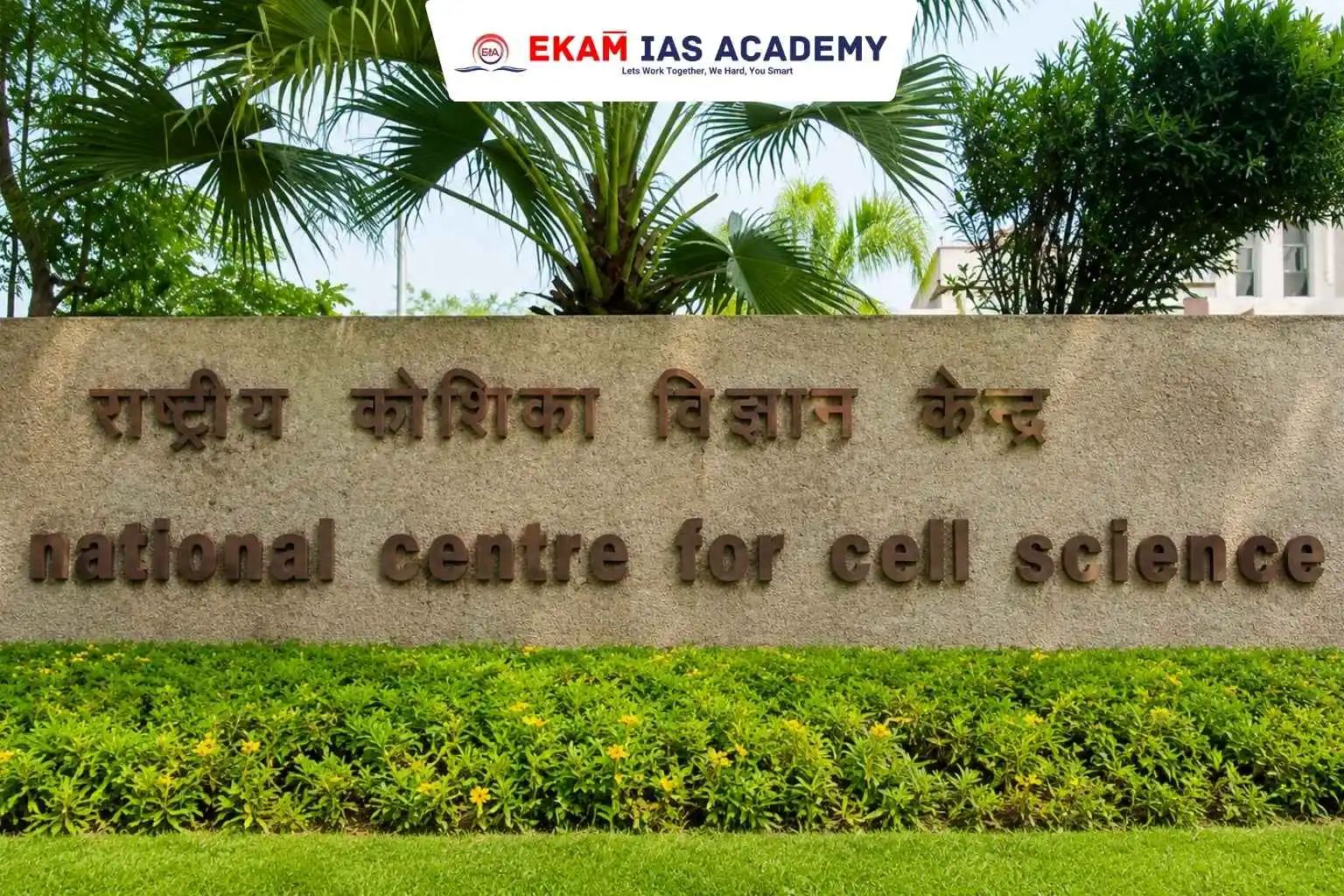
The National Centre for Cell Science (NCCS) has gained attention after a recent study identified nearly 200 new microbial strains, highlighting the influence of diet, geography, and lifestyle on human gut health. The research underlines the importance of developing an India-specific microbiome map for better understanding of microbial diversity and personalised healthcare. This topic is important for aspirants preparing for GS3 Science and Technology through UPSC Preparation.
About NCCS
- Autonomous organisation: Functions under the Department of Biotechnology, Ministry of Science and Technology.
- Location: Situated on the campus of Savitribai Phule Pune University, Maharashtra.
- Origins:
- Began as the National Tissue Culture Facility (1986).
- Became the National Facility for Animal Tissue and Cell Culture Collection (NFATCC) in 1988.
- Renamed as NCCS in 1996.
Mandate and Functions
- National Cell Repository: Maintains and distributes authenticated animal cell lines to universities and research institutions at affordable costs.
- Research focus: Engaged in advanced studies across:
- Cell Biology and Cancer Biology.
- Structural Biology, Bioinformatics, and Omics.
- Infectious Diseases, Immunology, and Microbiology.
- Neurobiology and Stem Cell Biology.
- Human resource development: Provides teaching and training to build expertise in cell biology.
Research Contributions
- Tackles cancer, infectious diseases, metabolic disorders, and regenerative medicine using integrated approaches.
- Hosts the DBT-funded National Centre for Microbial Research, which collects, identifies, and preserves microbial cultures from diverse ecological niches.
- Maintains the third-largest microbial collection globally, strengthening India’s position in microbiome and microbial diversity research.
Significance
- Enhances India’s scientific capacity in cell and microbiome research.
- Supports affordable access to cell lines and microbial cultures for academic institutions.
- Contributes to global knowledge on gut health and microbial diversity, with direct implications for public health and personalised medicine.
Conclusion
The National Centre for Cell Science plays a pivotal role in advancing India’s research in cell biology and microbiome studies. Its work not only addresses pressing health challenges but also strengthens India’s scientific infrastructure, making it a hub for cutting-edge biomedical research.