
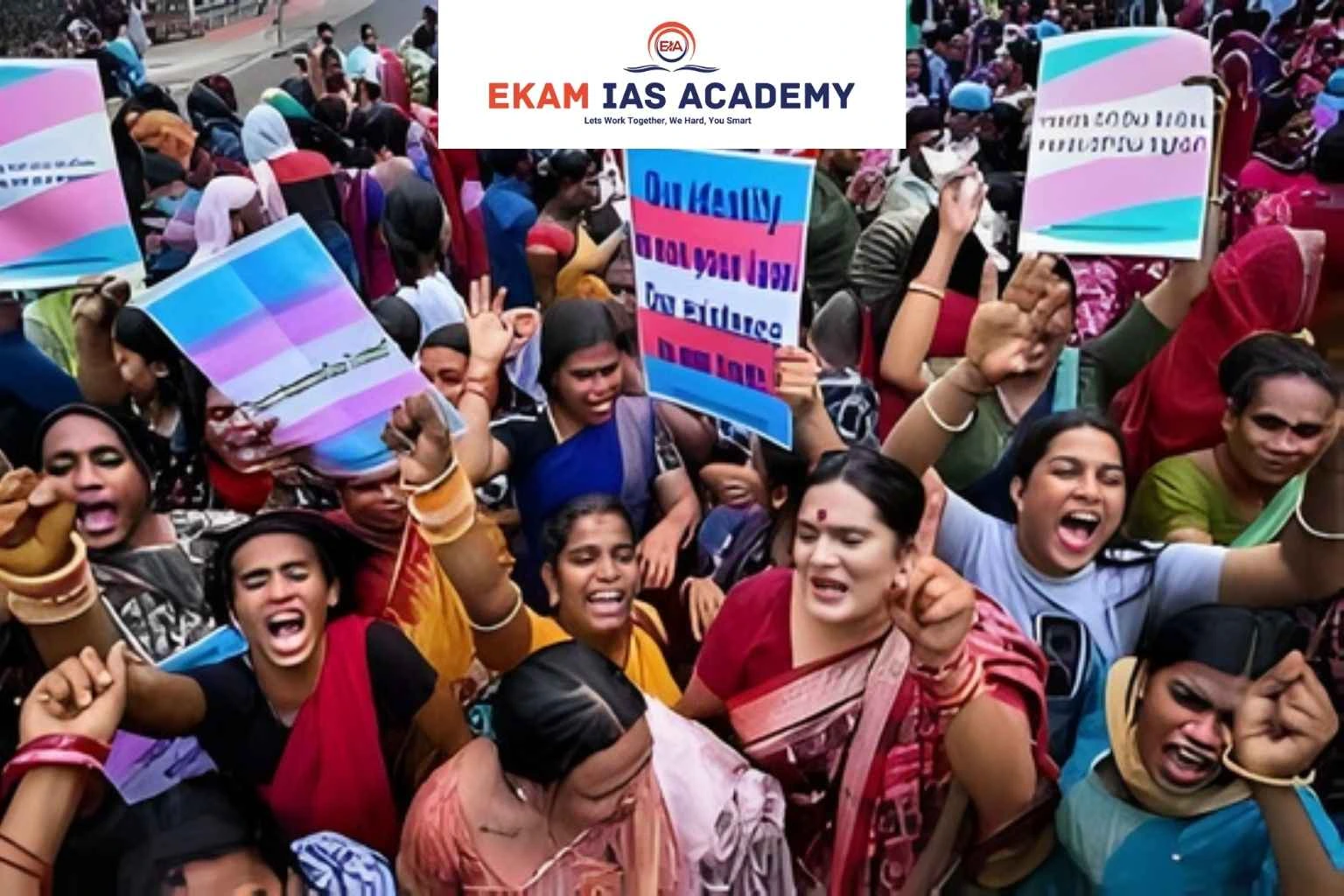
The Transgender Persons (Protection of Rights) Amendment Bill, 2026 was recently introduced in Parliament. It proposes major changes to the 2019 law. Such governance and social justice issues are important for aspirants preparing through IAS coaching in Hyderabad, UPSC online coaching, and other civil services preparation programs.
Background
• NALSA v. Union of India (2014): Supreme Court recognised transgender persons as “third gender” and upheld self-identification without medical proof.
• 2019 Act: Legalised self-identification, issued identity cards, and created welfare boards.
• 2026 Bill: Seeks to replace this rights-based approach with a medicalised framework.
Understanding such landmark judgments and policy changes is essential for students preparing through UPSC coaching in Hyderabad and Hyderabad IAS coaching institutes, where polity and governance topics are key components of the UPSC syllabus.
Provisions of the 2026 Bill
• Shift in Approach: Moves focus from identity-based recognition to biology-based recognition. Prioritises physical traits (chromosomes, hormones, genitalia) over lived identity.
• Narrower Definition of Transgender: Recognises only traditional socio-cultural groups (hijra, kinner, aravani, jogta). Excludes gender-fluid, non-binary, and self-perceived identities.
• Removal of Self-Identification: Deletes the right to declare one’s gender without medical proof. Introduces Medical Board certification headed by senior doctors. District Magistrate to approve identity based on medical evaluation.
• New Category Introduced: Recognises persons “forced” into transgender identity through coercion or surgery.
• Institutional Changes: Welfare boards to include only senior officials (Director rank or above).
These provisions are frequently analysed in IAS coaching and civils coaching in Hyderabad, helping aspirants develop analytical understanding for GS Paper 2.
Stricter Penal Provisions
• Forcing transgender identity (adult): 10 years–life imprisonment + ₹2 lakh fine.
• Forcing transgender identity (child): Life imprisonment + ₹5 lakh fine.
• Forced begging/servitude (adult): 5–10 years + ₹1 lakh fine.
• Forced begging/servitude (child): 10–14 years + ₹3 lakh fine.
Such legal provisions are important for aspirants enrolled in UPSC online coaching and structured UPSC coaching in Hyderabad programs.

Criticism & Concerns
• Violation of Self-Determination: Removes fundamental right to self-identify gender. Seen as a rollback of progressive jurisprudence.
• Burden of Proof: Individuals must prove identity through medical certification. Activists argue identity is personal, not subject to external validation.
• Social Stigma in Healthcare: Medical gatekeeping may expose trans persons to discrimination in hospitals.
• Exclusionary Definition: Limits recognition to traditional communities. Ignores diversity of modern transgender identities.
These critical perspectives are often discussed in Hyderabad IAS coaching programs to help aspirants write balanced answers in UPSC Mains.
Conclusion
The 2026 Bill marks a shift from rights-based recognition to medicalised control. While it strengthens punishments against exploitation, critics argue it undermines dignity, equality, and the constitutional principle of self-determination upheld in the NALSA judgment. For aspirants preparing through IAS coaching in Hyderabad, UPSC coaching in Hyderabad, and civils coaching in Hyderabad, such topics are crucial for understanding contemporary governance issues.
This topic is available in detail on our main website.