
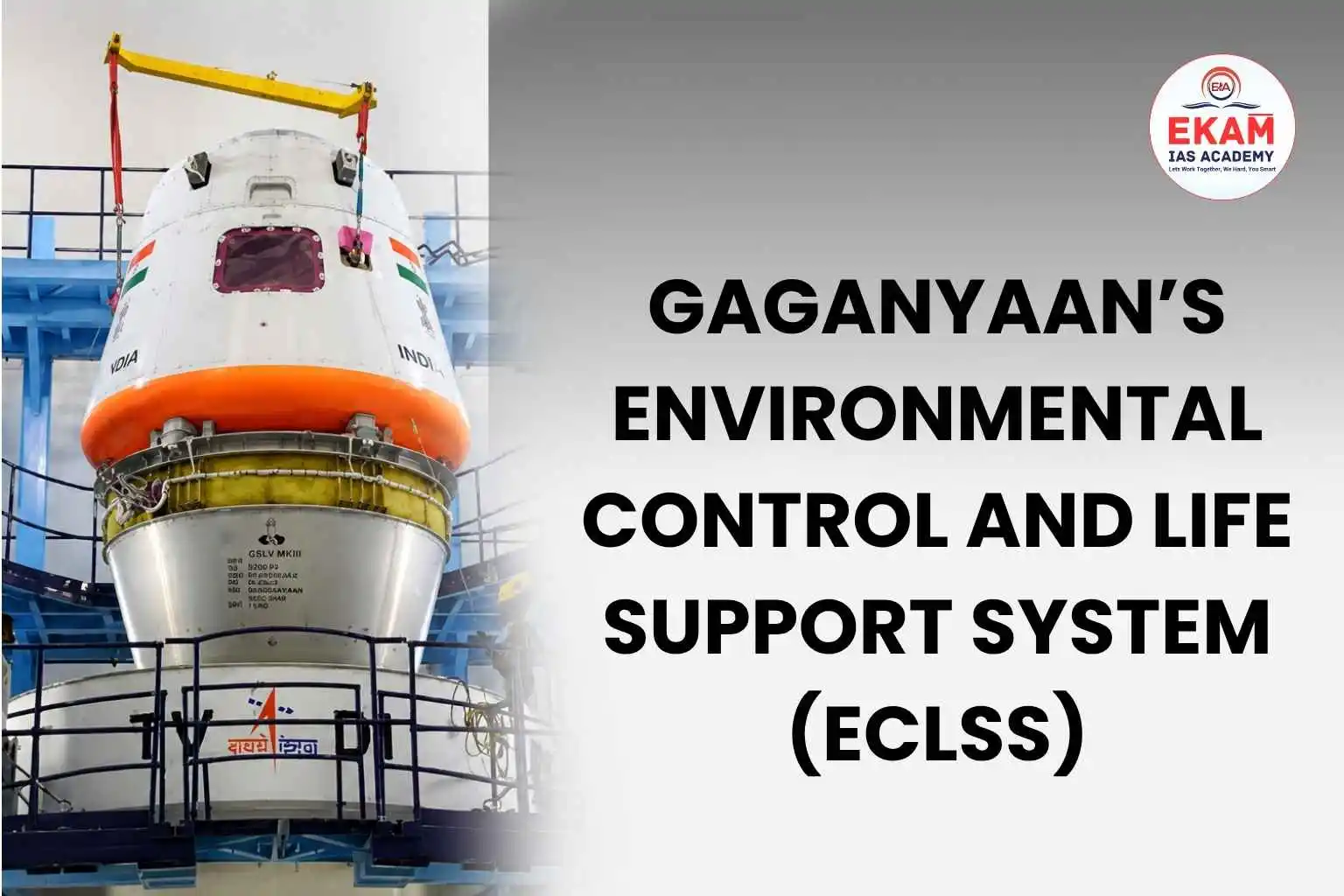
ISRO has highlighted the life support system of the Gaganyaan mission, which will ensure astronaut safety during India’s first human spaceflight. This topic is important for aspirants preparing through IAS coaching in Hyderabad, UPSC online coaching, and UPSC coaching in Hyderabad.
Gaganyaan’s ECLSS
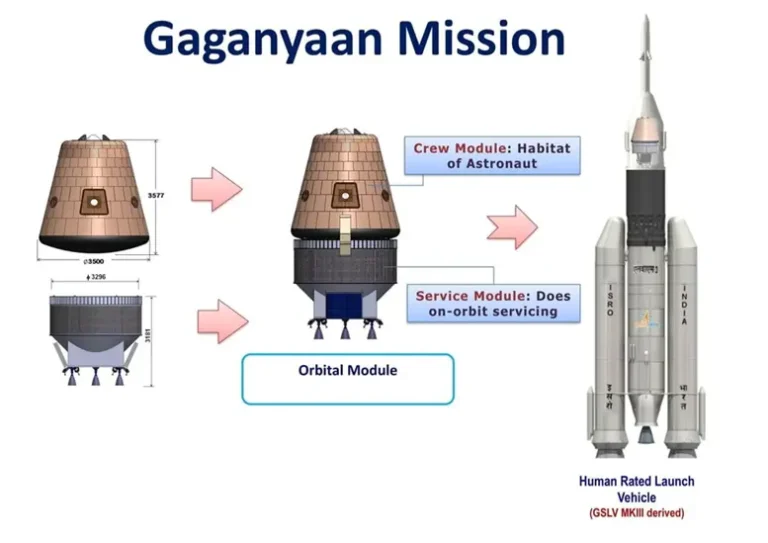
• India’s First Crewed Mission: The Gaganyaan mission marks India’s entry into human spaceflight, scheduled for launch in the coming years.
• Critical Role of ECLSS: Its success depends on the Environmental Control and Life Support System (ECLSS), which ensures astronauts can survive and function in orbit.
• Earth-like Conditions in Space: The ECLSS replicates Earth-like living conditions inside the crew module by managing air composition, water recycling, temperature regulation, and waste disposal.
• Safety & Sustainability: By maintaining a stable and habitable environment, the system protects astronauts from the harsh realities of space, ensuring mission safety and long-duration viability.
Air Revitalisation
• Oxygen supply: Maintained at safe levels to support astronaut survival.
• Carbon dioxide removal: Achieved through lithium hydroxide canisters, while activated charcoal absorbs odours.
• Atmospheric control: Pressure and humidity are regulated to mimic Earth-like conditions inside the crew module.
Thermal Regulation
• Cabin temperature: Maintained between 20–26°C for optimal comfort.
• Humidity control: Relative humidity kept within 30–70%, ensuring crew well being.
• Electronics safety: Systems are designed to prevent overheating of onboard equipment and electronics.
Water Management
• Recycling & storage: Essential in microgravity, where water conservation is critical.
• Microgravity risks: Water forms floating globules, which can cause short circuits or accidental inhalation.
• Safe usage systems: Special containment and dispensing mechanisms ensure safe handling and consumption.
Waste Management
• Chemical treatment: Human waste is treated to neutralise odours and inhibit bacterial growth.
• Sealed storage: Waste is stored in airtight containers for disposal after return.
• Hygiene assurance: Prevents contamination and maintains crew health inside the module.
Fire Safety
• Suppression systems: Integrated fire suppression mechanisms ensure rapid response.
• Emergency depressurisation: As a last resort, the cabin can be depressurised to extinguish fire after astronauts wear protective spacesuits.
Significance of Gaganyaan’s ECLSS
• Crew Survival & Comfort: Ensures safe oxygen levels, controlled temperature, clean water, and waste management.
• Human Spaceflight Capability: Demonstrates India’s ability to design advanced life support systems.
• Foundation for Future Missions: Supports future space station modules, long-duration missions, and deep space exploration.
• Strategic Advancement: Strengthens India’s status as a spacefaring nation and enhances international collaboration.
Conclusion
The ECLSS is the backbone of Gaganyaan, replicating Earth-like conditions in space. It ensures astronaut safety and marks a crucial step in India’s journey toward human space exploration. For aspirants preparing through IAS coaching and civils coaching in Hyderabad, this topic is highly relevant for GS3 Science and Technology, space missions, and India’s human spaceflight programme.
This topic is available in detail on our main website.