
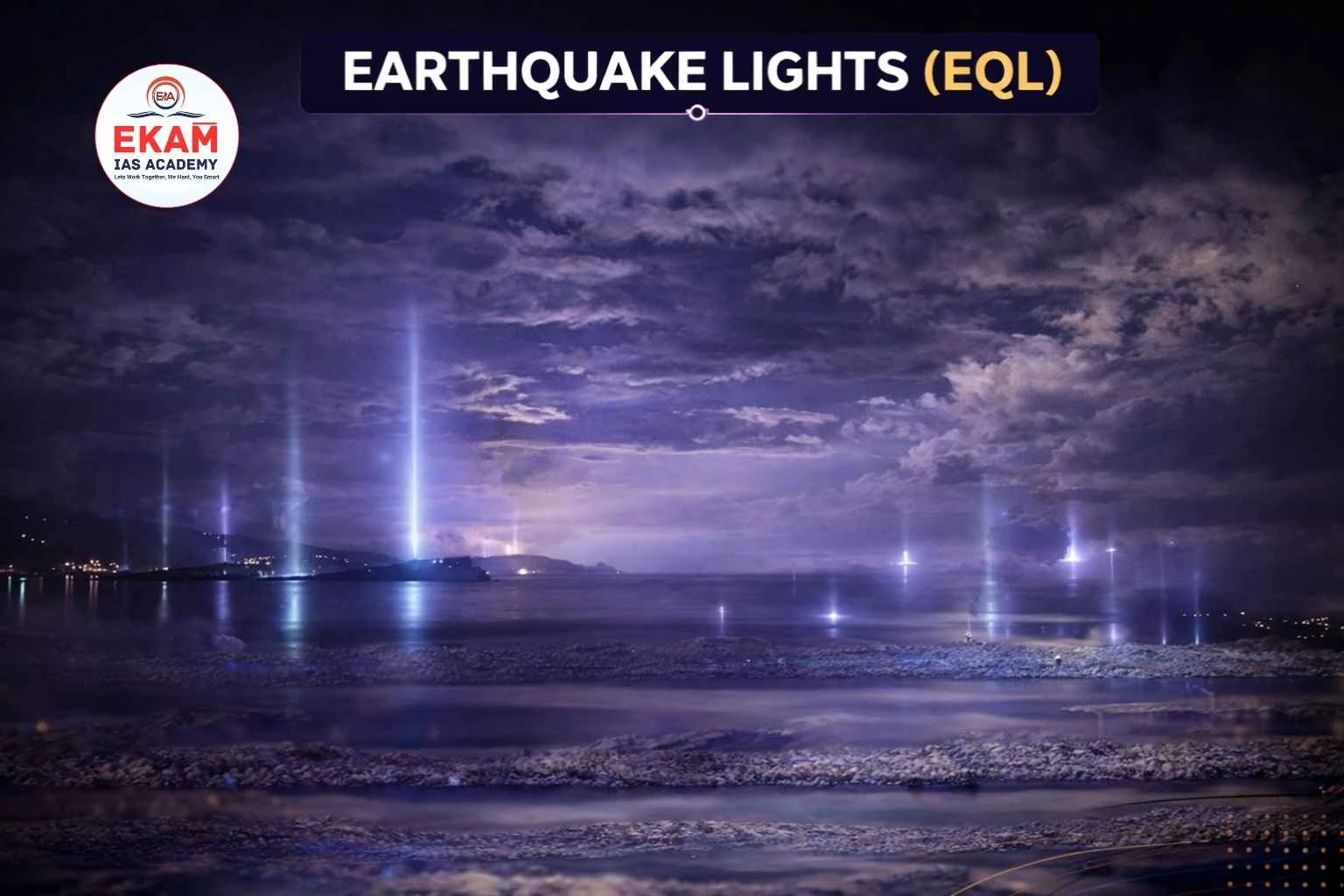
Floating lights were seen after small earthquakes in the Aegean Sea region near Turkey and Greece, attracting viral videos and scientific attention. Such geography and disaster-related phenomena are important for aspirants preparing through IAS coaching in Hyderabad, UPSC online coaching, and other civil services preparation platforms.
What are Earthquake Lights (EQL)?
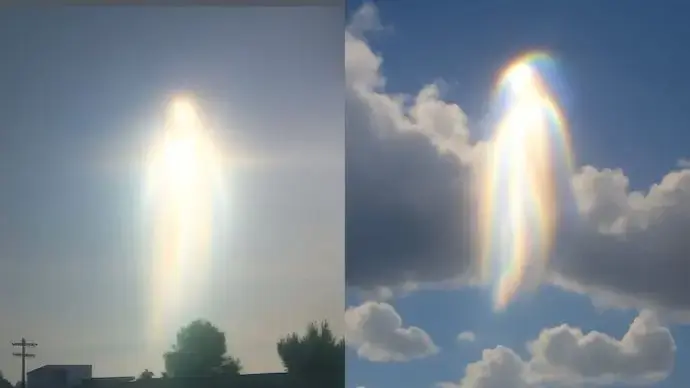
• Definition: EQL are brief luminous phenomena — flashes, streaks, glowing balls, or vertical pillars — observed just before, during, or after seismic events.
• Appearance: They can be white, blue or orange, may hover or move, and are usually short lived but highly visible.
Understanding such natural phenomena is essential for students preparing through UPSC coaching in Hyderabad and Hyderabad IAS coaching institutes, especially for GS Paper 1.
How Scientists Explain EQL
• Tectonic stress builds up when large crustal blocks press and slide against each other along faults.
• Certain rocks (e.g., quartz rich) under extreme pressure can generate electric charges (a piezoelectric like effect). These charges travel along cracks to the surface.
• At the surface the charges ionise air molecules, producing glowing plasma visible as lights; this process does not involve heat or fire.
These concepts are often analysed in IAS coaching and civils coaching in Hyderabad for better understanding of earthquake-related phenomena.
Where EQL are More Likely
• Rift zones and straight vertical faults provide easier pathways for charges to reach the atmosphere, so EQL reports cluster in such tectonic settings.
Such topics are frequently discussed in UPSC online coaching and structured UPSC coaching in Hyderabad programs.
Evidence and Recent Examples
• Aegean Sea (April 2026): Small quakes near Turkey produced multiple eyewitness videos of floating beams and flashes; scientists and space agencies are tracking these reports.
• Scientific status: EQL are rare and episodic; while increasingly accepted as real, they are not yet fully predictable or universally observed before every quake.
These examples are important for aspirants studying through IAS coaching in Hyderabad and Hyderabad IAS coaching programs.
Limitations and Way Forward
• Unpredictability: EQL are not consistent enough to be a standalone early warning tool.
• Research needs: Systematic observation, instrumented field studies near active faults, and satellite monitoring are required to validate mechanisms and assess predictive value.
Such analytical points are commonly covered in IAS coaching and civils coaching in Hyderabad for GS1 answer writing.
Conclusion:
Earthquake Lights are a rare but scientifically plausible phenomenon tied to tectonic stress; the recent Aegean events offer fresh data, but more research is needed before EQL can inform policy or early warning systems. For aspirants preparing through IAS coaching in Hyderabad, UPSC coaching in Hyderabad, and UPSC online coaching, such topics are crucial for understanding physical geography and disaster management in UPSC.
This topic is available in detail on our main website.