
Why in News
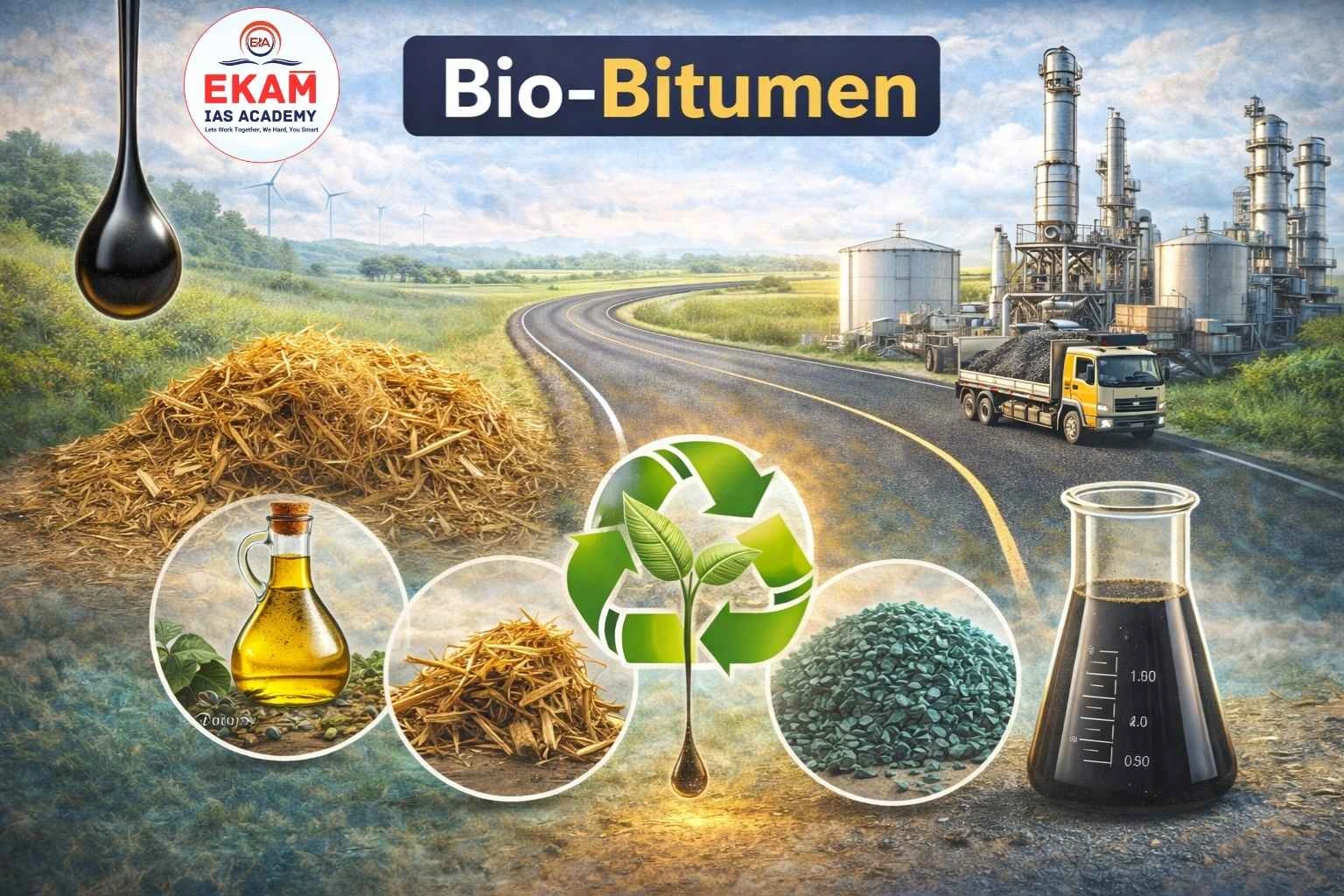
The Council of Scientific and Industrial Research (CSIR) recently organised a Technology Transfer Event in New Delhi for its innovation “Bio-Bitumen from Lignocellulosic Biomass,” promoting large-scale industry adoption. Such science and technology innovations are important for aspirants preparing through IAS coaching in Hyderabad, UPSC online coaching, and other civil services preparation platforms.
About Bio-Bitumen
• Developed from renewable, non-petroleum resources such as vegetable oils, agricultural waste, and lignocellulosic biomass.
• Undergoes special processing to create a binder similar to traditional bitumen.
• Serves as an eco-friendly substitute for petroleum-based bitumen used in roads and construction.
Understanding such innovations is essential for students preparing through UPSC coaching in Hyderabad and Hyderabad IAS coaching institutes, especially for GS Paper 3.
Key Materials Used
• Plant-based oils.
• Agricultural residues (farm waste, biomass).
• Synthetic polymers (in some processes).
These concepts are often covered in IAS coaching and civils coaching in Hyderabad for better understanding of sustainable technologies.
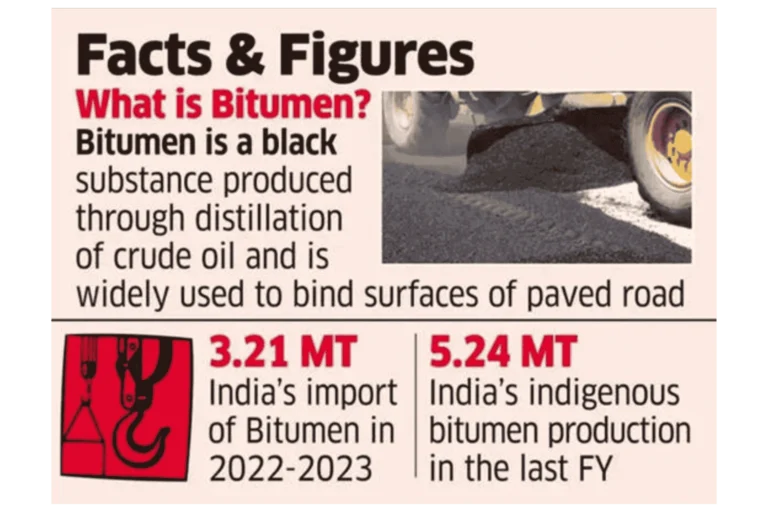
Advantages
• Sustainability: Produced from renewable resources, reducing reliance on fossil fuels.
• Lower Carbon Footprint: Organic materials absorb CO₂ during growth, making the product climate-friendly.
• Environmental Safety: Contains fewer heavy metals and pollutants compared to petroleum bitumen.
• Versatility: Can be used in road paving, roofing, waterproofing, and construction projects.
• Reduced Import Dependency: Helps India cut down on petroleum imports.
Such benefits are frequently analysed in UPSC online coaching and structured UPSC coaching in Hyderabad programs.
Why More Adoption is Needed
• Energy Security: Reduces dependence on imported crude oil.
• Climate Goals: Supports India’s commitment to net-zero emissions by 2070.
• Waste Utilisation: Converts farm residue into valuable infrastructure material, reducing stubble burning.
• Economic Benefits: Encourages rural industries and creates new green jobs.
These dimensions are important for aspirants studying through IAS coaching in Hyderabad and Hyderabad IAS coaching programs.
Initiatives Required
• Policy Support: Government incentives for bio-bitumen production and usage.
• Industry Collaboration: Partnerships between CSIR, road construction firms, and state governments.
• Research & Development: Improve durability and large-scale production efficiency.
• Awareness Campaigns: Promote adoption among contractors and local bodies.
Such policy approaches are commonly discussed in IAS coaching and civils coaching in Hyderabad for GS3 answer writing.
Conclusion
By turning farm residue into roads, India can achieve sustainable infrastructure growth, reduce pollution, and strengthen its path toward self-reliance and climate resilience. For aspirants preparing through IAS coaching in Hyderabad, UPSC coaching in Hyderabad, and UPSC online coaching, such topics are crucial for understanding sustainable development and green technologies in UPSC.
This topic is available in detail on our main website.