
Why in News?
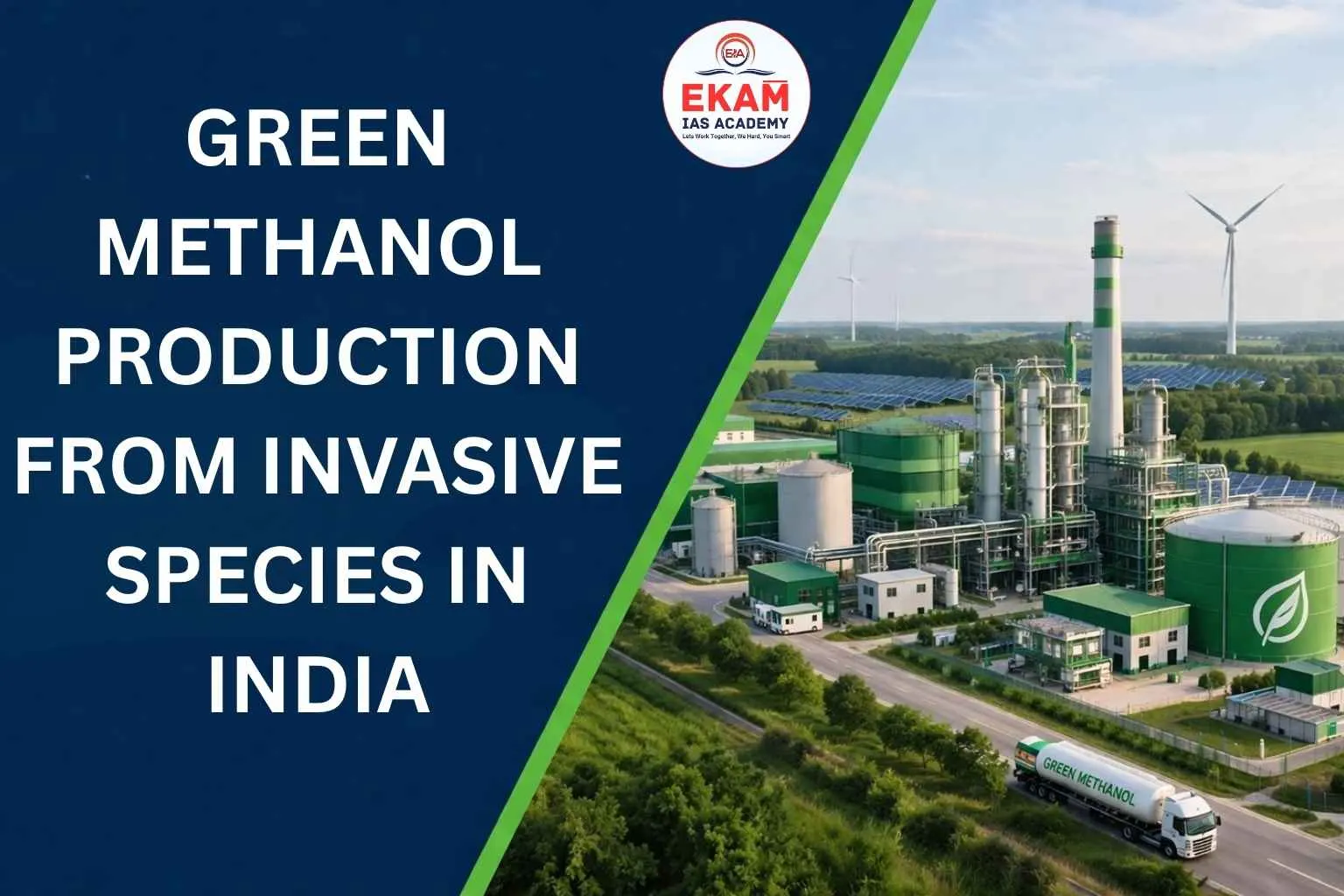
India is set to establish its first green methanol plant in Kutch, Gujarat, using the invasive plant Prosopis juliflora as feedstock. This environment–economy topic is important for aspirants preparing through IAS coaching in Hyderabad, UPSC coaching in Hyderabad, and UPSC online coaching.
What is Green Methanol?
• A clean-burning liquid fuel produced from renewable biomass or captured carbon.
• Alternative to conventional fossil fuel-based methanol.
• Can be used in shipping, power generation, and industrial applications.
• Emits lower greenhouse gases, especially carbon dioxide (CO₂) and nitrogen oxides (NOx).
• Recognized as a potential fuel under global maritime decarbonization efforts.
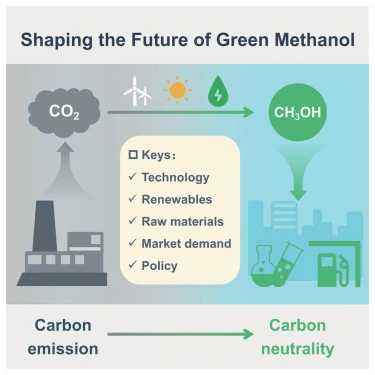
Production Process
• Biomass Collection: Invasive species like Prosopis juliflora are harvested.
• Gasification: Biomass is heated in a low-oxygen environment to produce syngas (CO + H₂).
• Methanol Synthesis: Syngas is chemically converted into methanol.
• Refinement: Final purification for industrial and maritime use.
About Prosopis juliflora (Invasive Species)
- Commonly known as Vilayati Kikar, it is native to Central and South America.
- Introduced in India during the colonial period to prevent desertification.
- Now classified among the most invasive species globally.
- Spreads aggressively, replacing native vegetation and reducing biodiversity.
- Causes soil degradation and water depletion.
- Particularly dominant in Kutch and arid regions of Gujarat.
Significance of the Project
1. Ecological Benefits
• Helps control invasive species spread. Promotes restoration of native ecosystems.
2. Clean Energy Transition
• Supports India’s goal of reducing carbon emissions. Provides sustainable marine fuel alternatives.
3. Economic Advantages
• Converts waste biomass into valuable fuel. Generates local employment opportunities.
4. Maritime Sector Relevance
• Aligns with International Maritime Organization (IMO) norms on emissions. Supports development of green ports in India.
Policy and Strategic Context
• Linked to India’s National Green Hydrogen Mission and broader clean fuel initiatives.
• Supports the vision of energy diversification and import reduction.
• Encourages circular economy practices—waste to wealth.
• Complements schemes promoting biofuels and renewable energy.
Challenges
• Technological Constraints: High initial cost of gasification and synthesis technology.
• Supply Chain Issues: Ensuring consistent availability of biomass feedstock.
• Economic Viability: Competition with cheaper fossil fuels.
• Environmental Concerns: Improper biomass extraction may affect local ecosystems.
Way Forward
• Invest in R&D for efficient biomass conversion technologies.
• Develop policy incentives for green fuel adoption.
• Promote public-private partnerships (PPP).
• Integrate such projects with climate commitments (NDCs).
• Expand model to other invasive species across India.
Conclusion
Using invasive plants for fuel reflects an innovative “problem-to-solution” approach in governance.
It strengthens both environmental conservation and clean energy transition simultaneously.
For aspirants preparing through IAS coaching and civils coaching in Hyderabad, this topic is highly relevant for GS3 Environment, Economy, and Sustainable Development.
This topic is available in detail on our main website.