
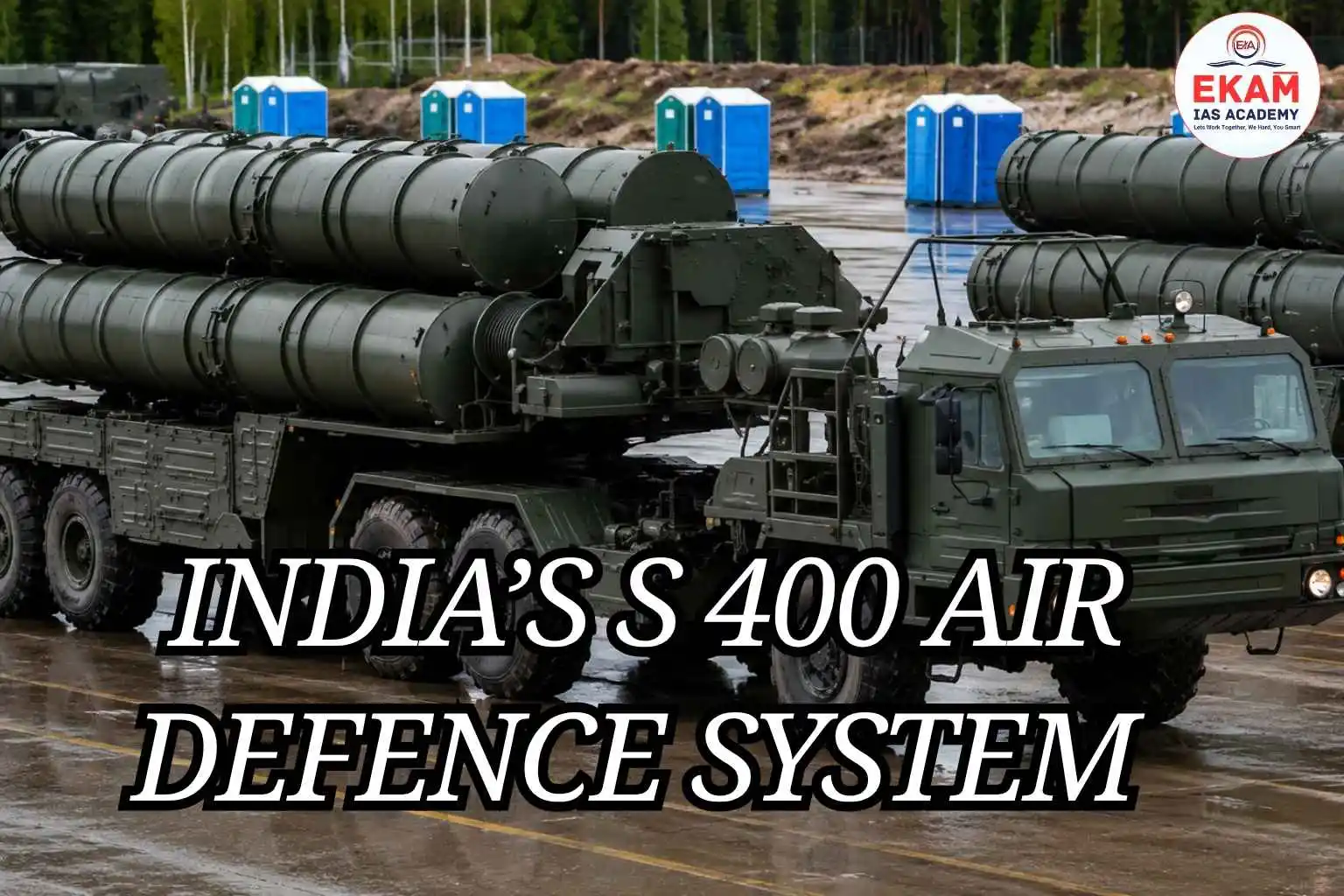
India has received the fourth squadron of the S-400 Triumf air defence system from Russia in May 2026. This topic is important for aspirants preparing through IAS coaching in Hyderabad and UPSC online coaching.
S-400 Triumf Air Defence System
• The S-400 Triumf is a long-range surface-to-air missile (SAM) system developed by Russia.
• It is regarded as one of the world’s most advanced integrated air defence systems.
• Designed to detect, track, and destroy multiple aerial threats simultaneously.
Features of the S-400 System
Multi-Range Capability
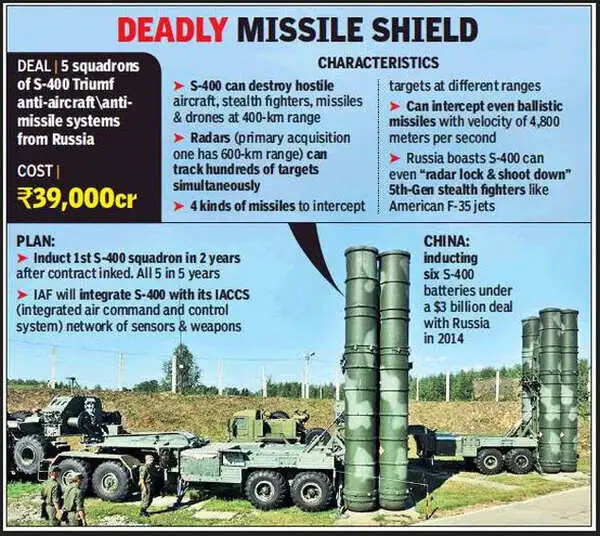
• Can engage targets at ranges of up to 400 km and altitudes of nearly 30 km.
Multi-Layered Defence
• Uses different missile variants for engaging:
- Fighter aircraft.
- Bombers.
- UAVs (drones).
- Cruise missiles.
- Ballistic missiles.
Advanced Radar Network
• Capable of tracking hundreds of targets simultaneously.
• Detects stealth aircraft and high-speed threats at long distances.
AI-Assisted Decision Support
• Incorporates automated threat assessment and prioritisation systems.
• Final engagement decisions remain under human control.
Operational Deployment
• Indian squadrons are deployed in:
- Punjab.
- Assam.
- Tamil Nadu.
• Provides strategic coverage along western, northern, and eastern sectors.
Recent Developments
• India received the fourth S-400 squadron in May 2026.
• The fifth and final squadron is expected by 2027.
• Four operational squadrons now strengthen India’s integrated air defence network.
• The system is linked with India’s Integrated Air Command and Control System (IACCS) for real-time surveillance and coordination.
Strategic Importance for India
Strengthened Deterrence
• Enhances India’s ability to counter aircraft, missile, and drone threats from adversaries.
Force Multiplier
• Works alongside indigenous systems such as:
- Akash Missile System.
- QRSAM.
- MR-SAM.
- Upcoming XR-SAM programme.
Airspace Protection
• Provides layered protection to strategic military and civilian assets.
Strategic Autonomy
• Continued procurement despite international pressure reflects India’s independent foreign and defence policy.
Challenges
Import Dependence
• Heavy reliance on foreign suppliers for critical defence systems.
Supply Chain Risks
• Russia–Ukraine conflict may affect maintenance support and spare parts availability.
Network Integration
• Requires seamless integration with India’s diverse radar, missile, and command systems.
Cybersecurity Concerns
• Advanced digital and AI-assisted systems require strong cyber protection against electronic warfare and cyberattacks.
Way Forward
• Accelerate indigenous missile defence projects such as XR-SAM and BMD programmes.
• Strengthen domestic defence manufacturing under Aatmanirbhar Bharat.
• Expand joint training and simulation exercises for operational readiness.
• Improve cybersecurity and electronic warfare capabilities.
• Diversify defence procurement sources to reduce strategic vulnerabilities.
Conclusion
The S-400 Triumf significantly enhances India’s air defence architecture, deterrence capability, and strategic preparedness. While it provides a robust shield against modern aerial threats, long-term security will depend on developing indigenous missile defence technologies and reducing dependence on foreign suppliers.
This topic is available in detail on our main website.