
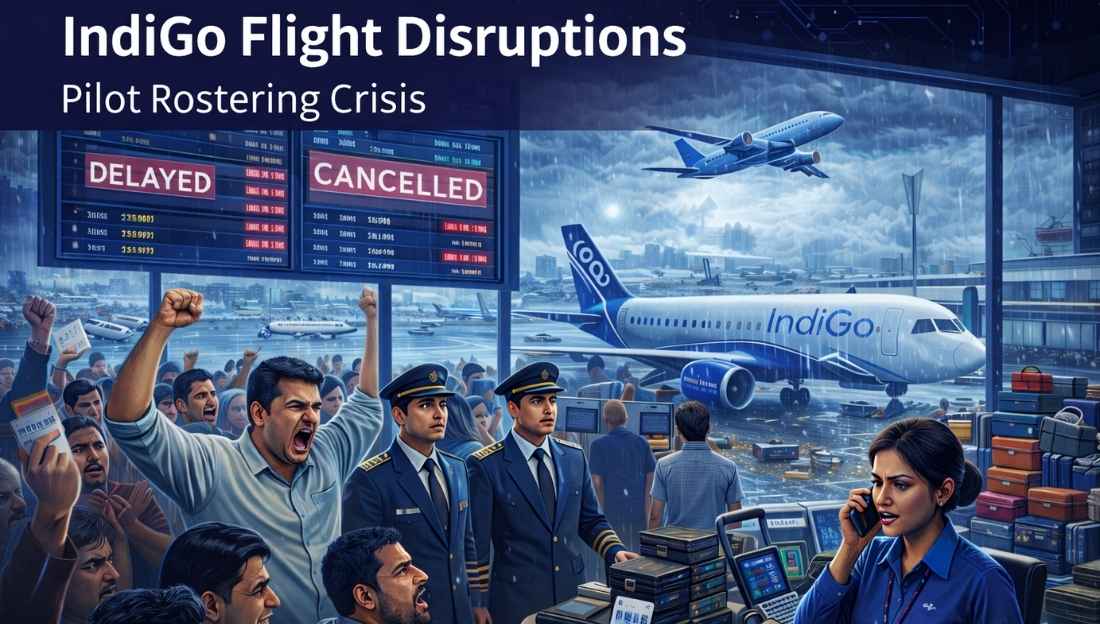
In early December, IndiGo Airlines, India’s largest carrier by market share, faced unprecedented flight delays and cancellations, affecting over 12 lakh passengers nationwide. The episode has raised serious questions about aviation safety, regulatory preparedness, labour management, and passenger rights—all critical themes for UPSC aspirants preparing at institutions such as the Best IAS Academy in Hyderabad.
What Happened to IndiGo Operations?
IndiGo experienced a major breakdown in flight operations during November and early December:
- Over 5,000 flights cancelled in the first ten days of December
- Nearly 900 flights cancelled in November alone
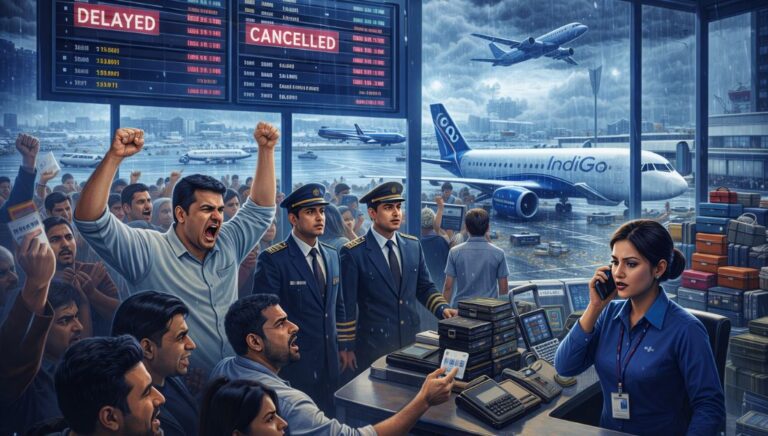
The disruptions resulted in widespread chaos across Indian airports:
- Flight crew reporting to incorrect locations
- Pilots waiting at airports without assigned duties
- Checked-in baggage reaching destinations despite flight cancellations
- Airline call centres overwhelmed by passenger complaints
- Passenger protests and slogan-shouting inside airport terminals
The incident became a case study in operational risk management, often discussed in governance and public service ethics classes at a UPSC Academy in Hyderabad.
Reason: Planning Gaps in Pilot Rostering
IndiGo informed the Directorate General of Civil Aviation (DGCA) that it had miscalculated pilot availability under the revised FDTL rules that came into force on November 1.
- The airline faced a shortage of 65 pilots-in-command.
- Additional factors worsened the situation: Changes in winter flight schedules. Poor weather conditions and congestion in Indian airspace.
- IndiGo requested temporary relaxation from the new rules to restore normal operations.
Impact on Passengers
- The scale of disruption was significant and directly affected passengers.
- Nearly 12.5 lakh passengers were impacted until December 9.
- IndiGo provided: ₹1,100 crore in ticket refunds. ₹10,000 travel vouchers to severely affected passengers between December 3 and 5.
- The DGCA granted a temporary exemption from the new FDTL norms until February 10 to stabilise operations.
Flight Duty Time Limitation (FDTL) Rules
FDTL rules regulate pilots’ working hours, rest periods, and night flying duties to ensure aviation safety.
- The 2011 FDTL rules were introduced after: The 2010 Mangalore air crash, where pilot fatigue was a key factor.
- Recommendations of the Nasim Zaidi Committee, which relied on NASA studies on fatigue and circadian rhythm disruption.
- Key safety provisions in 2011 included: A ban on consecutive night flying duties. Night landings restricted to two hours. Maximum duty time capped at nine hours.
Why Were the Rules Revised in 2019 and 2024?
- The 2019 revision diluted several pilot-friendly protections: It allowed consecutive night duties. It introduced vague definitions for duty and flying hours.
- Pilot associations challenged these changes in court.
- In January 2024, the DGCA restored safety-focused norms: Weekly rest was increased from 36 hours to 48 hours. Night flying and duty hours were strictly capped.
- The Delhi High Court ordered phased implementation, with night-duty rules effective from November 1, which triggered IndiGo’s staffing crisis.
Why Other Airlines Were Not Affected
Other airlines such as Air India, Akasa Air, and SpiceJet did not face similar disruptions because:
- They had excess pilots due to grounded aircraft or delayed plane deliveries.
- Their operational models allowed greater staffing flexibility.
- In contrast, IndiGo’s cost-efficiency-driven and lean staffing strategy left very little margin for operational shocks.
Broader Concerns and Way Forward
- IndiGo’s market share increased from 47% to 65%, while employee costs declined from 11% to 8%.
- Major concerns include: Rising pilot fatigue and declining morale. High pilot training costs leading to long-term debt pressure.
Key reforms needed:
- Stronger passenger rights during delays and cancellations.
- Transparent and airline-specific compensation rules.
- Greater regulatory focus on human factors in aviation safety.
- Enhanced competition and rationalisation of airline operating costs.
Conclusion
The IndiGo disruption underscores the tension between aggressive cost efficiency and aviation safety. Sustainable airline operations demand balanced regulation, humane rostering practices, and robust passenger-centric safeguards. For UPSC aspirants analysing governance failures and regulatory ethics at platforms like the Best IAS Academy in Hyderabad, this incident offers a powerful contemporary case study.
This topic is available in detail on our main website.