
Why in News?
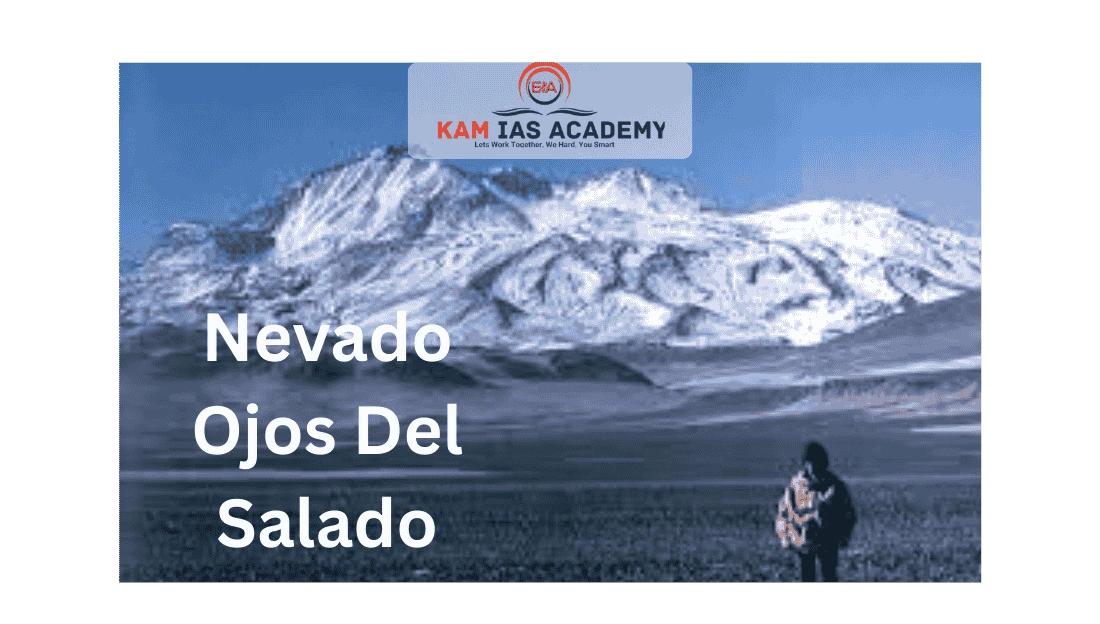
A professor from the Indian Institute of Science (IISc) recently successfully summited Nevado Ojos del Salado, drawing attention to the peak. Such geographical developments are often analysed in detail in IAS coaching in Hyderabad and UPSC online coaching programs while preparing aspirants for physical geography topics in the UPSC Civil Services Examination.
Location and Geographical Setting
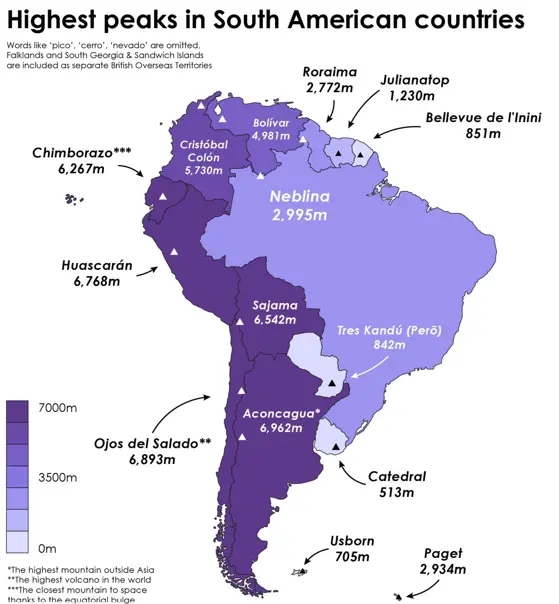
• The mountain lies in the Andes mountain range, specifically in the Atacama Region of Chile and Catamarca Province of Argentina.
• It is part of the Central Volcanic Zone of the Andes, a region known for intense volcanic activity due to subduction of the Nazca Plate beneath the South American Plate.
• The volcano rises close to the Atacama Desert, one of the driest places on Earth, which significantly influences its climatic conditions.
• Due to its border location, the mountain is shared between Chile and Argentina, though the highest summit lies within Chilean territory.
• The surrounding region consists of volcanic peaks, salt flats, and high-altitude deserts, geographical features frequently discussed in UPSC coaching in Hyderabad and Hyderabad IAS coaching institutes while covering world geography.
Major Physical Features
1. Highest Active Volcano
Nevado Ojos del Salado holds the record as the tallest active stratovolcano in the world.
2. Volcanic Formation
The mountain formed through the accumulation of repeated lava flows, ash deposits, and pyroclastic material over thousands of years.
3. Crater System
The summit area includes multiple craters and elongated volcanic ridges, indicating past volcanic eruptions.
4. High-altitude Crater Lake
• A permanent crater lake is located at an altitude of around 6,390 metres.
• It is considered one of the highest lakes in the world.
5. Volcanic Activity
Though considered active, the volcano has not experienced major recent eruptions, with activity mainly limited to fumaroles and minor geothermal activity.
Climate and Environmental Conditions
• The region experiences a high-altitude desert climate due to its proximity to the Atacama Desert.
• Temperature variation is extreme, with daytime temperatures sometimes reaching around 18°C, while nighttime temperatures can fall to –10°C or lower.
• Precipitation is extremely low, making the mountain one of the driest high peaks in the world.
• Snow cover is limited, usually remaining only near the summit during winter months.
• Strong winds, low oxygen levels, and arid conditions make climbing the peak challenging, topics often discussed in Civils coaching in Hyderabad and advanced IAS coaching classes while studying mountain environments.
Scientific and Mountaineering Significance
- Nevado Ojos del Salado is an important site for studying high-altitude volcanism and extreme environments.
- Scientists use the region to understand planetary conditions similar to Mars, due to its dry climate and volcanic terrain.
- The mountain is a popular destination for high-altitude mountaineers because it is considered one of the highest climbable volcanoes without technical ice climbing.
- It also helps researchers study glacial remnants and climate patterns in the Andes, topics frequently analysed in UPSC online coaching and geography discussions in UPSC coaching in Hyderabad.
This topic is available in detail on our main website.