
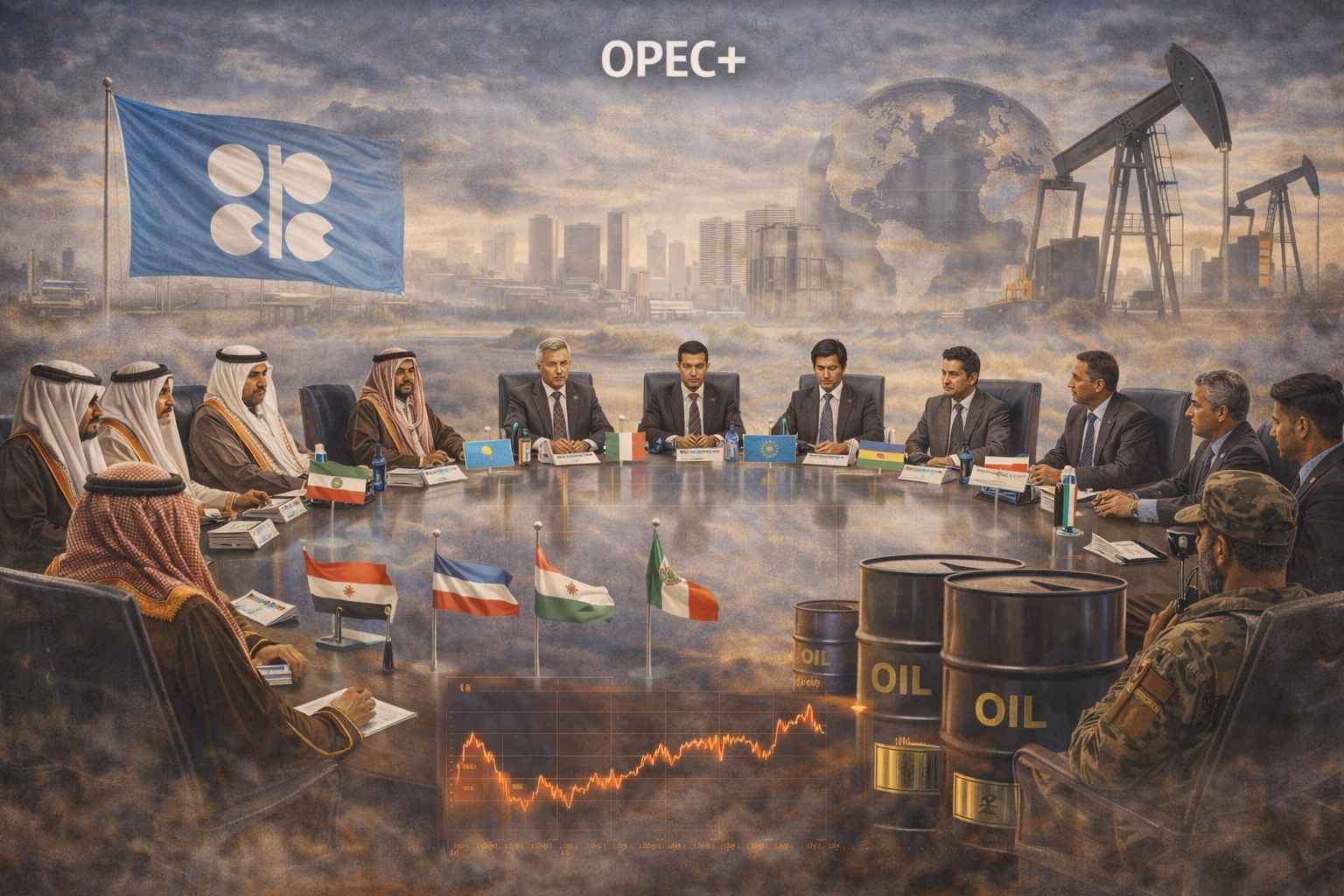
OPEC+ has recently decided to keep oil production steady despite internal disagreements and global geopolitical tensions. This decision is significant as it directly affects global energy prices and market stability—an important current affairs theme analysed in UPSC coaching in Hyderabad.
About OPEC+
- OPEC+ is a coalition of major oil-exporting nations. Formed in 2016 as an extension of OPEC to include non-OPEC producers.
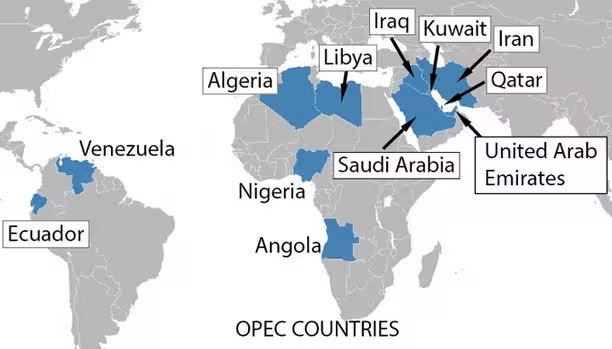
- Membership: Comprises 22 countries – 12 OPEC members plus 10 non-OPEC nations (Azerbaijan, Bahrain, Brunei, Kazakhstan, Russia, Mexico, Malaysia, South Sudan, Sudan, and Oman).
- Objective: To coordinate crude oil production levels and ensure stability in the global oil market. Members meet regularly to decide output quotas and manage supply-demand balance.
- Establishment: Founded in 1960 by Iran, Iraq, Kuwait, Saudi Arabia, and Venezuela.
- Recent Change: Angola officially exited OPEC on 1 January 2024.
- Headquarters: Located in Vienna, Austria.
Importance of OPEC+
- Global Oil Prices: Production decisions by OPEC+ directly influence international crude oil prices and energy security—an issue frequently discussed in IAS coaching under GS-III (Economy).
- Market Stability: Coordinated output management helps prevent extreme volatility in oil supply and demand.
- Geopolitical Impact: Cooperation between OPEC and non-OPEC producers such as Russia highlights the growing role of energy diplomacy in global politics.
- India’s Relevance: As one of the world’s largest oil importers, India closely tracks OPEC+ decisions for their impact on inflation, trade balance, and energy policy—topics of regular focus in civils coaching in Hyderabad.
This topic is available in detail on our main website.