
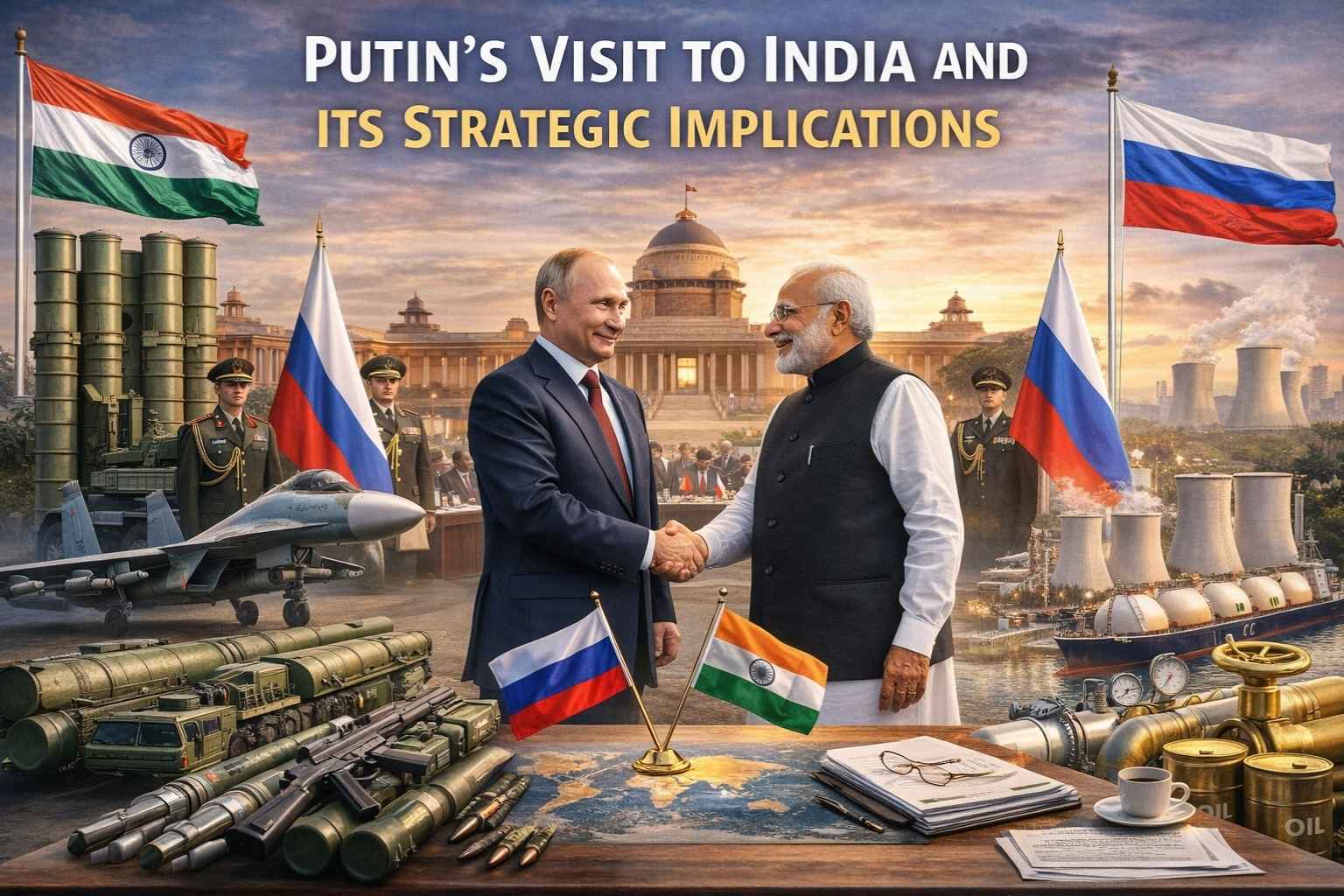
Russian President Vladimir Putin visited India on December 4–5 for the 23rd India–Russia Annual Summit, marking his first visit since the outbreak of the Russia–Ukraine war. The visit carries major strategic significance for India’s foreign policy and is closely analysed by aspirants preparing through UPSC coaching in Hyderabad.
Background of India–Russia Relations
- India and Russia share a long-standing strategic partnership rooted in mutual trust, defence cooperation, and diplomatic support.
- The 1971 India–Soviet Treaty of Peace, Friendship and Cooperation transformed South Asia’s strategic balance and enabled India’s decisive role in the creation of Bangladesh.
- Russia has consistently supported India on security matters, particularly when Western countries adopted a pro-Pakistan stance.
- Since the Gorbachev era and especially under President Putin, bilateral relations have steadily deepened through regular summits and close political engagement.
Impact of the Russia–Ukraine War
The Russia–Ukraine conflict posed a serious test to India–Russia relations. India adopted a calibrated and neutral stance, refusing to condemn Russia or join Western-led sanctions. This position led to diplomatic friction with the United States and Europe but reinforced India’s core foreign policy principle of strategic autonomy, a concept frequently discussed in international relations modules at the Best IAS Academy in Hyderabad.
Notable Absence of Defence Cooperation
- Defence cooperation, traditionally the backbone of India–Russia relations, was largely absent from the Joint Statement.
- This silence may reflect a deliberate diplomatic choice to avoid controversy in the current global climate.
- It also raises questions about whether India is gradually rebalancing its defence relationships.
Russia’s Role in India’s Defence Preparedness
- Russia remains India’s most reliable and historically significant defence supplier.
- Major defence platforms such as the S-400 air defence system, BrahMos missile, Sukhoi Su-30 MKI aircraft, T-90 tanks, and transport helicopters form the core of India’s military strength.
- These systems proved their effectiveness during Operation Sindoor in May 2025.
- Joint manufacturing and defence technology collaboration between India and Russia have further strengthened defence ties.
Strategic Concerns with the West
- India has diversified defence procurement to include France and Israel, but Russian support remains critical.
- The U.S. decision to approve major upgrades for Pakistan’s F-16 fleet raises doubts about Western reliability as a strategic partner.
- Excessive dependence on Western suppliers could undermine India’s long-term security interests.
Conclusion
Putin’s visit demonstrated that India–Russia relations remain strong despite geopolitical turbulence.
While defence cooperation received less public emphasis, the partnership continues to be strategically significant.
This topic is available in detail on our main website.