

The United Nations General Assembly declared June 29 as the International Day of Care and Support, recognizing the vital role of childcare and care workers and highlighting the need for comprehensive policies to value care work.
Significance of Childcare Workers
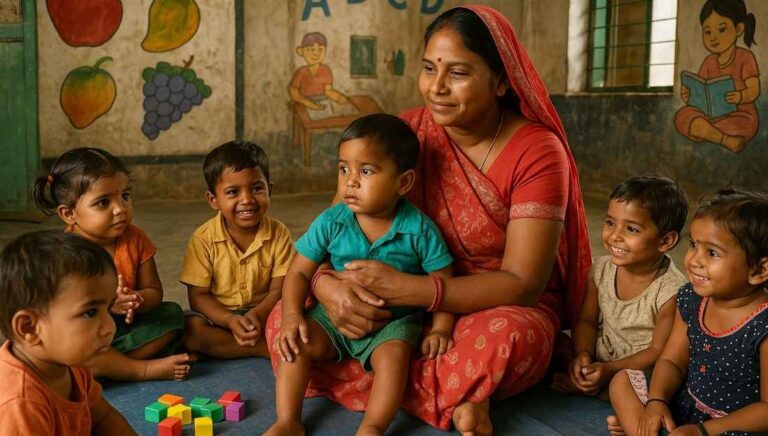
- Childcare workers play a crucial role in early childhood development, ensuring children’s nutrition, health, learning, and emotional well-being.
- They support working parents, enable women’s participation in the workforce, and strengthen social inclusion.
- However, their contribution is largely undervalued and underpaid, despite being central to building human capital.
Impact of Climate Change
- Climate change heightens the need for childcare, especially for poor, marginalized, and rural communities.
- Extreme weather events such as floods, heatwaves, and droughts increase vulnerabilities of children and caregivers.
- Limited access to safe, climate-resilient childcare centers disrupts service delivery and increases burden on women.
Government Initiatives
- Integrated Child Development Services (ICDS) is among the world’s largest childcare and nutrition programs, reaching over 100 million beneficiaries.
- Poshan Abhiyaan, National Family Health Surveys, and Mission Saksham Anganwadi improve nutrition, cognitive development, and infrastructure.
- Time Use Survey (2024 Guidelines) aims to formalize unpaid care work by recognizing and redistributing responsibilities.
- Proposed 2 lakh care centers under PM Care Fund could improve access to quality childcare.
Global Best Practices
- Scandinavian countries offer lessons through state-funded childcare, strong training systems, professional wages, and strict safety norms.
- They ensure universal childcare access, enabling high employment among women and strong early childhood outcomes.
Challenges Faced by Childcare Workers
- Low wages and poor working conditions, with limited benefits, no paid leave, or job security.
- Many are treated as volunteers rather than professionals.
- Lack of training, recognition, and career growth, leading to low morale and high workforce attrition.
- Limited representation, making it difficult for them to voice their demands or negotiate better conditions.
Way Forward
- Recognize childcare work as skilled and professional.
- Improve training, salaries, social security, and career pathways.
- Build climate-resilient childcare infrastructure, especially in rural and disaster-prone areas.
- Promote public-private-community partnerships to enhance service quality.
ICDS (Integrated Child Development Services)
It is a government program launched in 1975 to improve the health, nutrition, and early education of children under 6 years, and support pregnant and lactating mothers.
- Services include supplementary nutrition, immunization, health check-ups, preschool education, and nutrition awareness.
- ICDS operates mainly through Anganwadi centres, which act as the main delivery point for all services.
Nexus Between ICDS, ASHA, and Anganwadi Workers
- Anganwadi workers support nutrition and preschool education, while ASHA workers focus on health and maternal care, both working under ICDS goals.
- Together, they conduct Village Health, Sanitation and Nutrition Days (VHSND) for immunization, nutrition checks, and health awareness.
- They collectively ensure holistic child development, covering nutrition, health, education, and hygiene at the grassroots level.
Conclusion
Childcare workers form the backbone of social welfare and human development, yet remain undervalued. Recognising, supporting, and professionalising their role is essential for inclusive growth, gender equality, and a resilient care economy.
This topic is available in detail on our main website.