
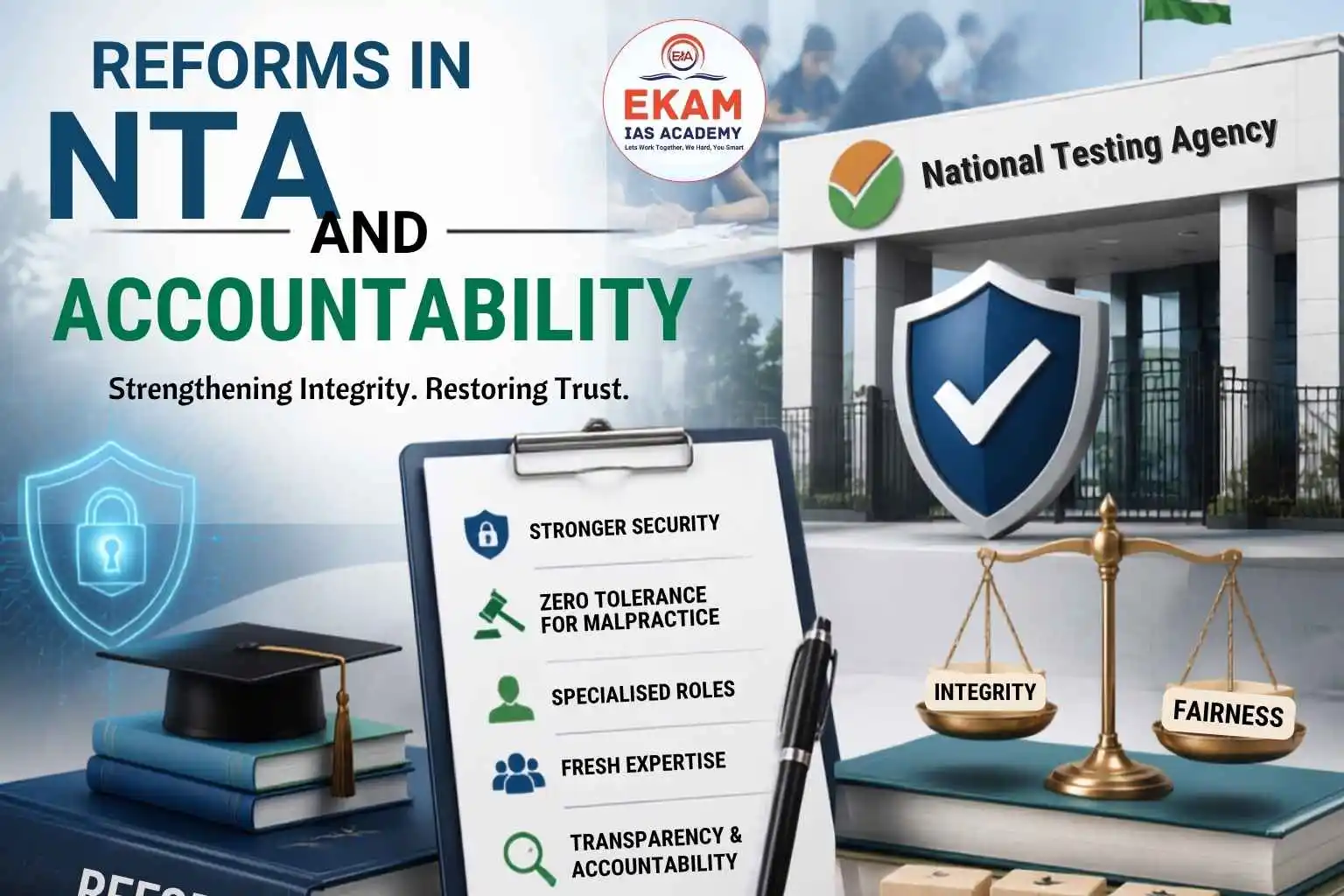
The National Testing Agency (NTA) has terminated the services of 47 officials after controversies like the NEET UG paper leak. The Ministry of Education has initiated structural reforms by recruiting General Managers and young professionals to improve transparency, efficiency, and accountability in examination management. This topic is important for aspirants preparing for governance and education-related issues through upsc coaching in hyderabad.
Background
- Scale of Unrest: According to NCRB (2024) data, there were over 1,200 protest-related incidents recorded nationwide, with Delhi accounting for nearly 15% of these occurrences.
- Violation of Police Protocols: Despite Standing Orders 309 and 152 mandating the use of “minimum force” and “proportionality,” the deployment of pellet guns, lathi charges, and tear gas against students indicates a non-compliance with established police guidelines.
- Judicial Precedents: In the Ramlila Maidan Case (2012), the Supreme Court emphasized that the state must use the “least invasive methods” for crowd control, yet recent judicial comments suggest a reluctance to engage with real-time video evidence of alleged brutality.
- Democratic and International Standards: Excessive policing is seen as a threat to Article 19 rights (freedom of speech and assembly) and violates the UN Basic Principles on Use of Force (199
NTA Reforms and Examination Integrity
Accountability and Deterrence Measures
The government has adopted a “zero-tolerance” approach toward negligence and malpractice to bridge the growing trust deficit between citizens and state institutions.
- Personnel Accountability: Termination of 47 staff members for misconduct and the initiation of criminal proceedings against those involved in malpractices.
- Legislative Teeth: Implementation of the Public Examinations (Prevention of Unfair Means) Act, 2024, which provides for stringent penalties and is designed to curb organized paper leaks.
- Judicial Expediency: The proposal for Fast Track Courts to ensure the speedy trial of exam-related crimes, preventing the “judicial time” concerns often raised in high-profile cases.
Functional Specialization
The Four-Pillar Management Model To modernize examination governance, four new General Manager (GM) roles have been created to address specific systemic vulnerabilities:
- Information Security: Tasked with strengthening cybersecurity protocols to prevent digital leaks and protect the sanctity of the examination process.
- Vigilance & Forensics: Focused on investigating irregularities and establishing internal review mechanisms, addressing the “accountability gap” often seen in large-scale public institutions.
- Assessment & Psychometrics: A specialized role to improve exam design and reliability, ensuring that the assessment remains fair and scientifically sound.
- Network & Operations: Responsible for the logistical oversight of test centers to eliminate local-level tampering.
Infusing Fresh Expertise
- Pratibha Setu Portal: In collaboration with the UPSC, 16 “Young Professionals” are being engaged to bring modern technological perspectives and innovative solutions to the NTA.
- Historical Precedent: These reforms draw a parallel to the Railway Recruitment Board (2011) overhaul, highlighting that periodic institutional “cleaning” is necessary after systemic irregularities.
Way Forward
- Independent Probes: Moving beyond internal reviews to include independent oversight, as called for by civil society groups.
- Global Best Practices: Adopting “Dialogue-based Governance” (similar to the UK’s Dialogue Policing model) where stakeholders—students and educators—are consulted during the reform process to reduce friction.
- Transparency: Ensuring that the recruitment for these new GM roles remains open and merit-based to uphold public trust.
Broader Implications
- Student Trust: Restoring confidence in national exams is crucial for education equity.
- Technology Integration: Use of AI‑based monitoring and secure digital platforms can reduce risks.
- Global Benchmarking: Countries like the US (ETS for SAT/TOEFL) adopt strong psychometric and security standards, offering models for India.
- Accountability Culture: Signals a shift towards stricter governance in education institutions.
Conclusion
The NTA overhaul shows that credible exams require strong institutions, transparent processes, and strict accountability to uphold fairness in education.