
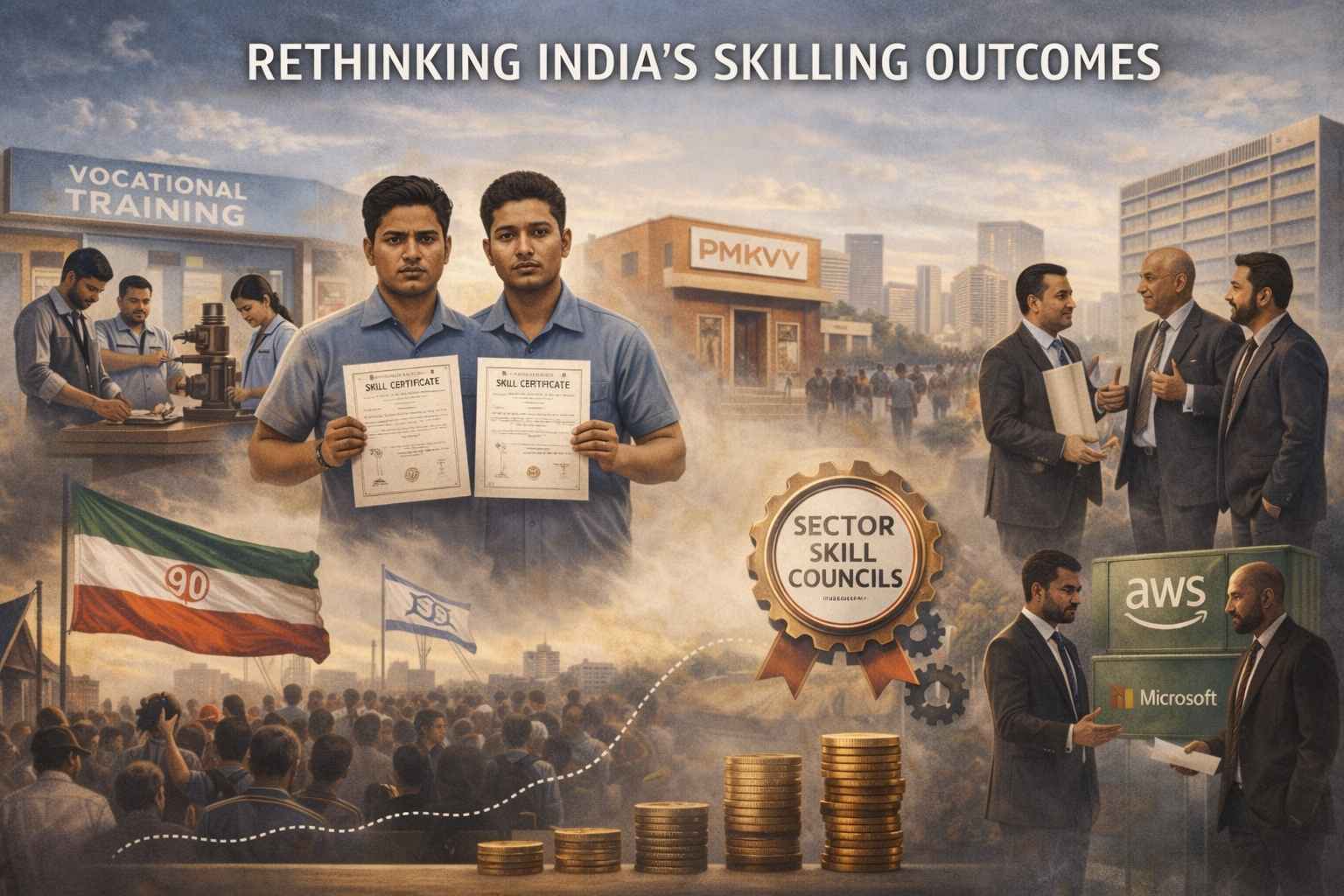
Despite large-scale government investment in vocational training through schemes, employability outcomes remain weak. Recent reports highlight low industry participation, limited credibility of Sector Skill Councils, and modest wage gains for trained youth—an issue of high relevance for GS-III and often discussed in UPSC coaching in Hyderabad.
Skilling in India
- Scale of Ecosystem: Schemes like Pradhan Mantri Kaushal Vikas Yojana (PMKVY), which trained and certified 1.40 crore candidates between 2015–2025.
- Low Coverage: Despite this, only 4.1% of India’s workforce has received formal vocational training (PLFS, World Bank), showing little improvement from 2% a decade ago.
- Global Contrast: In OECD countries, 44% of upper-secondary learners are enrolled in vocational programmes, rising to 70% in Austria, Finland, Czech Republic, and the Netherlands.
- Employability Outcomes: Wage gains from vocational training remain modest and uneven, particularly in the informal sector where most workers are absorbed—an analytical concern emphasised in IAS coaching.
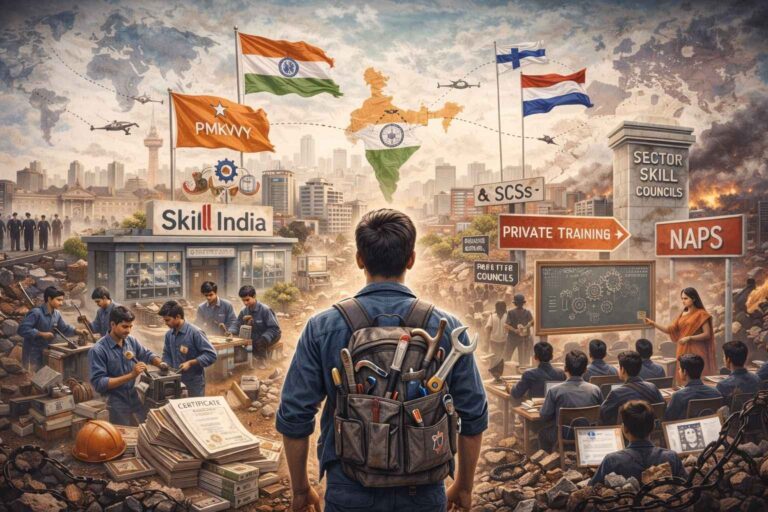
Why Skilling Fails to Inspire Aspiration
- Low Recognition: Certified skills often lack value in the labour market.
- Education Disconnect: Skilling is not integrated into higher education pathways.
- Limited Participation: Post-degree skilling is not common among graduates.
- Global Contrast: Countries like Austria and Finland have strong vocational enrolment, unlike India.
Industry’s Role and Challenges
- Beneficiary of Skilling: Industry faces high attrition (30–40%) and productivity losses.
- Weak Participation: Employers rarely use public skilling certifications for hiring.
- Preference for Private Training: Companies rely on internal programmes or private platforms.
- NAPS Impact: Apprenticeship schemes have improved participation but unevenly, mostly among large firms.
- Lack of Incentives: Industry is not compelled to co-design curriculum or certification standards.
Sector Skill Councils (SSCs) – Structural Weakness
- Mandate: SSCs were meant to define standards, certify job readiness, and anchor employability.
- Fragmentation: Training, assessment, certification, and placement are handled by different entities, diffusing accountability.
- Credibility Gap: Employers do not trust SSC credentials compared to degrees or private certifications (e.g., AWS, Microsoft).
- Outcome Failure: SSCs focus on standards but not on ensuring employability.
Way Forward
- Integrate Skills into Degrees: Embed vocational training within formal education.
- Industry Co-Ownership: Treat industry as a partner in curriculum design and certification.
- Strengthen Apprenticeships: Expand NAPS and workplace-based skilling.
- Accountability for SSCs: Make them responsible for placement and employability outcomes.
- Modernise ITIs: Programmes like PM-SETU should build stronger execution models with industry involvement.
Government initiatives:
- Pradhan Mantri Kaushal Vikas Yojana (PMKVY): Flagship scheme that provides free skill training and certification to youth in various trades.
- Skill India Mission: Launched in 2015 to train millions of youth in industry-relevant skills and improve employability.
- National Apprenticeship Promotion Scheme (NAPS): Encourages companies to offer apprenticeship opportunities with financial support from the government.
- Pradhan Mantri Kaushal Kendras (PMKKs): Model training centres set up across districts to provide high-quality skill training.
- Digital India & Future Skills PRIME: Focus on digital literacy, IT skills, and emerging technologies like AI, cloud, and cybersecurity.
Conclusion
India’s skilling challenge is not about lack of funding but about weak accountability and poor industry integration. For India to harness its demographic dividend, skilling must transform into a pillar of national productivity and dignity of labour, driving sustained economic growth—an argument central to answers written by aspirants enrolled in Hyderabad IAS coaching.
This topic is available in detail on our main website.