
Students preparing through UPSC online coaching and IAS coaching in Hyderabad should note that the Calcutta High Court Port Blair bench has admitted a PIL questioning the legality of tribal consent under the Forest Rights Act (FRA), 2006 for the ₹81,000 crore Great Nicobar infrastructure project.
Great Nicobar Project
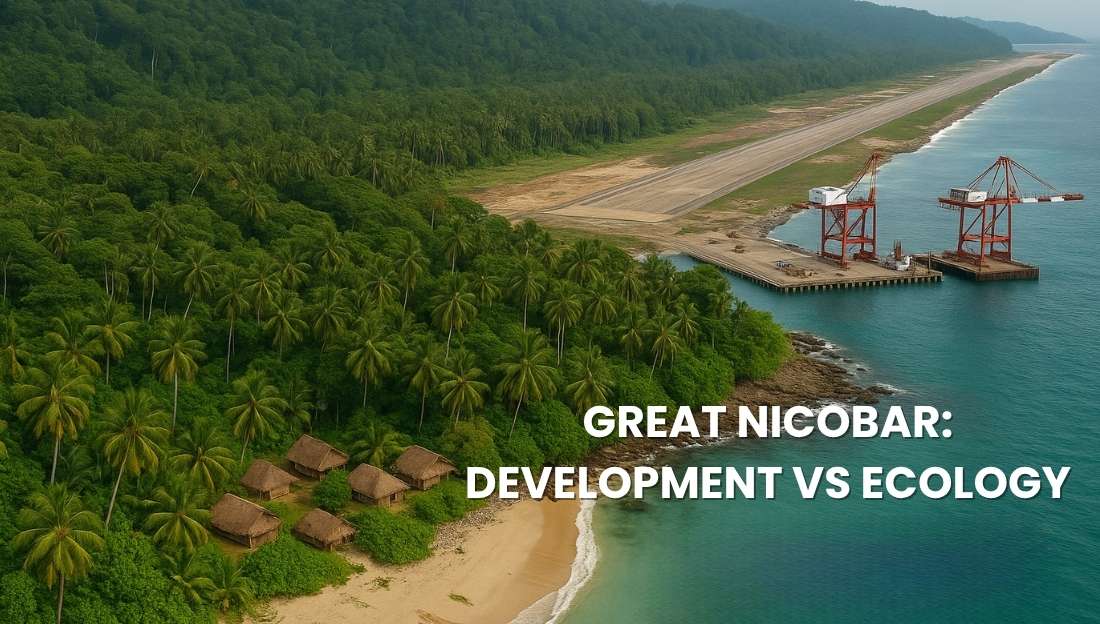
• Mega Infrastructure Plan: ₹81,000 crore project including a transshipment port, integrated township, dual-use airport, and solar + gas-based power plants.
• Forest Rights & Tribal Consent Issues: PIL challenges compliance with the Forest Rights Act, 2006.
• Ecological & Indigenous Concerns: Diversion of 166 sq km of forest land threatens biodiversity and tribal habitats. The Shompen tribe’s rights to food, water, shelter, and cultural survival are at risk, raising ethical and legal questions.
Key Issues Raised
Forest Rights Act Compliance
• The Forest Rights Act (FRA), 2006 mandates settlement of forest rights before diversion of land.
• Petition alleges no claims were settled on Great Nicobar Island.
• The Recognition of Forest Rights (RoFR) certificate issued in August 2022 is contested as unlawful.
Sub-Divisional Level Committee (SDLC)
• FRA rules require at least two Scheduled Tribe members, including one woman.
• The SDLC reportedly had only one Nicobarese member, violating norms.
Gram Sabha Consent
• Gram Sabhas held in Campbell Bay, Laxmi Nagar, and Govind Nagar were allegedly settler panchayats, not tribal assemblies.
• These bodies approved diversion of 166.10 sq km of forest land, including protected areas, without legitimate authority.
Tribal Consent Dispute
• Nicobarese Council initially consented but withdrew support in November 2022.
• The Shompen Tribe, a semi-nomadic group, reportedly did not provide direct consent.
• Consent was allegedly routed through AAJVS (Andaman Adim Janjati Vikas Samiti), raising ethical and legal concerns.
Impact on the Shompen Tribe
• Project threatens forests used for foraging, hunting, horticulture, worship, and water access.
• Risks include loss of food security, cultural survival, and displacement.
• Past settlement of ex-servicemen in 1972 already pushed Shompens deeper into interiors, showing a pattern of marginalisation.
FOREST RIGHTS ACT, 2006
Objectives
- Passed in December 2006, effective from 31 December 2007.
- Seeks to correct historical injustices faced by Scheduled Tribes (STs) and Other Traditional Forest Dwellers (OTFDs).
- Ensures livelihood security, social justice, and sustainable forest management.
Types of Rights Recognized
- Individual Rights: Ownership of forest land for cultivation and habitation (up to 4 hectares).
- Community Rights: Grazing, fishing, collection of minor forest produce (like bamboo, honey, medicinal plants).
- Habitat Rights: Special protection for Particularly Vulnerable Tribal Groups (PVTGs).
- Management Rights: Gram Sabhas empowered to conserve, protect, and manage community forest resources.
Institutional Mechanism
- Gram Sabha: Primary authority to initiate claims and approve forest rights.
- Forest Rights Committee (FRC): Formed at village level to process claims.
- Sub-Divisional Level Committee (SDLC) and District Level Committee (DLC): Verify and approve claims.
State Level Monitoring Committee: Oversees implementation.
Conclusion
The Great Nicobar case highlights the tension between strategic development and indigenous rights. Ensuring genuine tribal consent, ecological protection, and strict adherence to the Forest Rights Act is essential for balancing infrastructure growth with constitutional and environmental safeguards.
This topic is available in detail on our main website.