
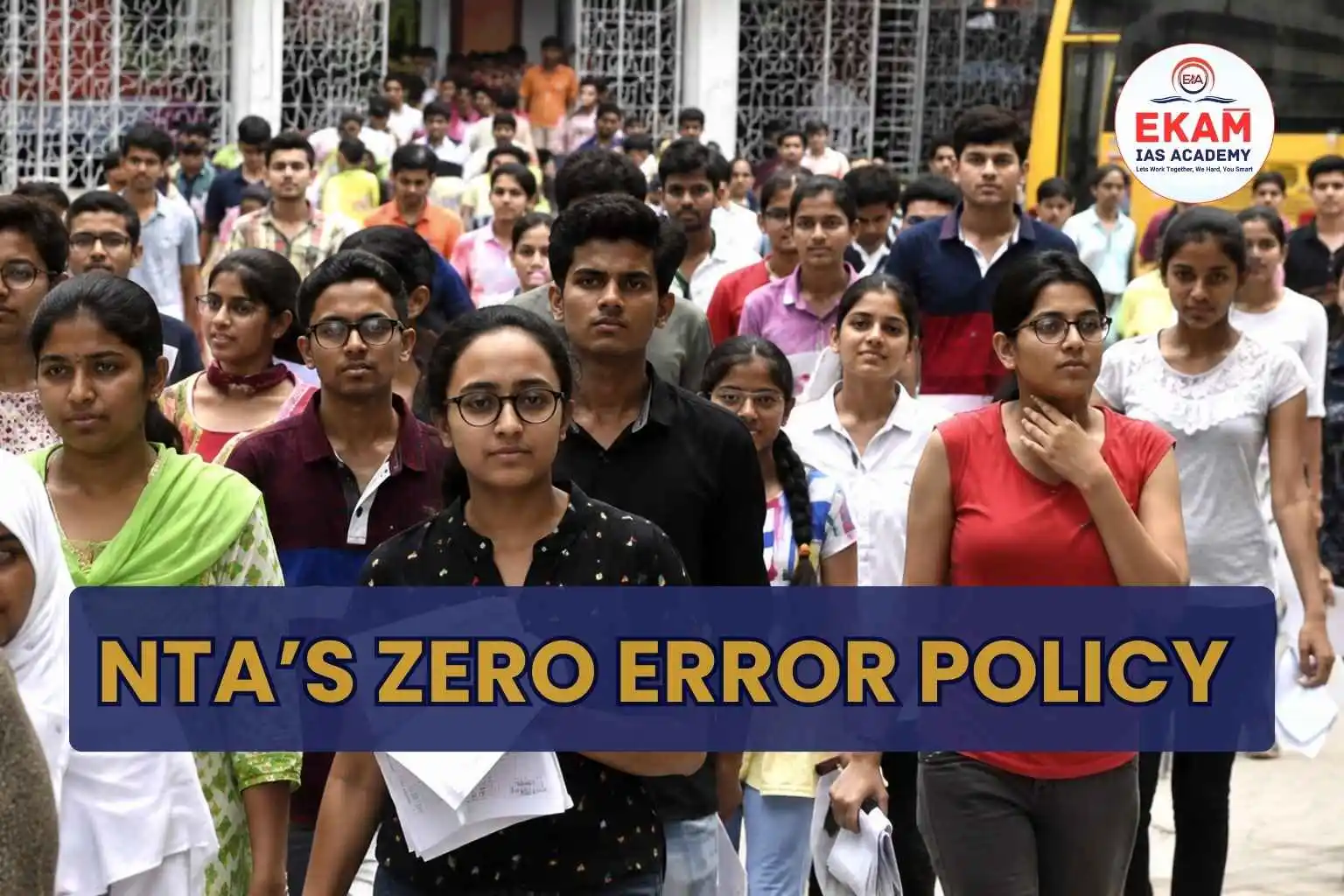
Nine days after 22 lakh students appeared for NEET UG 2026, the National Testing Agency (NTA) admitted that the examination was compromised and ordered a re-test. This topic is important for aspirants preparing through IAS coaching in Hyderabad, UPSC coaching in Hyderabad, and UPSC online coaching.
NEET 2024 Result Controversy
• Unprecedented Scores: Out of the top 100 candidates, 67 scored full marks compared to only 2 in 2023, raising concerns about fairness.
• Paper Leak Allegations: Reports indicated that around 155 students may have benefited from leaked papers.
• Governance Concerns: Despite widespread demands, no re-test was conducted in 2024, raising questions about accountability.
• Seat Pressure: Nearly 13 lakh students qualified in 2024, while only about 1.1 lakh MBBS seats were available, intensifying competition and stress.
NTA’s Zero Error Commitment
• After leadership changes, NTA announced a “Zero Error, Zero Tolerance” policy for NEET UG 2026.
• Measures included:
• Sealed handling of confidential materials.
• GPS-tracked transport with police escorts.
• CCTV surveillance at examination centres.
• Biometric Aadhaar verification.
• Frisking with metal detectors.
• Centralised real-time monitoring systems.
• Online fraud prevention by blocking Telegram channels spreading fake papers.
Why the Policy Failed
• Leak Despite Safeguards: A “guess paper” containing genuine questions circulated before the exam.
• Systemic Weaknesses: Intelligence and enforcement failures exposed deeper institutional vulnerabilities.
• Leadership Vacuum: NTA operated without a full-time director for more than a year, weakening accountability.
• Outdated Examination Model: Dependence on traditional pen-and-paper examinations increased vulnerability to leaks and malpractice.
Radhakrishnan Panel Recommendations
• Committee chaired by former ISRO chief K. Radhakrishnan in 2024 to review examination security.
• Observed that pen-and-paper examinations remain highly vulnerable during transport and storage.
Key Recommendations
• Transition NEET to Computer-Based Testing (CBT) similar to JEE Main.
• Adopt a Computer-Assisted Secure Pen-and-Paper system with encrypted question paper transmission and local printing.
Challenges
• Limited CBT infrastructure for handling millions of students in a single day.
• Slow expansion of computer centres and pending policy approvals delayed reforms.
Lessons and Way Forward
• Structural Reform: Gradually move NEET towards CBT or hybrid secure formats.
• Institutional Strengthening: Ensure permanent leadership and stronger accountability mechanisms within NTA.
• Technology Integration: Use AI-based monitoring, encrypted data transfer, and secure printing systems.
• Transparency: Improve communication with students and parents to rebuild trust.
• Inter-Ministerial Coordination: Education and Health Ministries must jointly implement examination reforms efficiently.
Significance
• Highlights the importance of transparent and credible examination governance in India.
• Reflects the challenges of conducting large-scale competitive exams in a digital era.
• Impacts millions of students and the integrity of India’s higher education admission system.
• Emphasises the role of technology-driven governance and institutional reforms.
Conclusion
India’s examination governance system must transition from logistics-heavy paper models to technology-driven secure systems. Strengthening institutional accountability, digital infrastructure, and transparency is essential for restoring public trust and ensuring fairness in national examinations. Aspirants preparing through IAS coaching and civils coaching in Hyderabad should understand its relevance in governance reforms, education policy, and digital administration.
This topic is available in detail on our main website.