

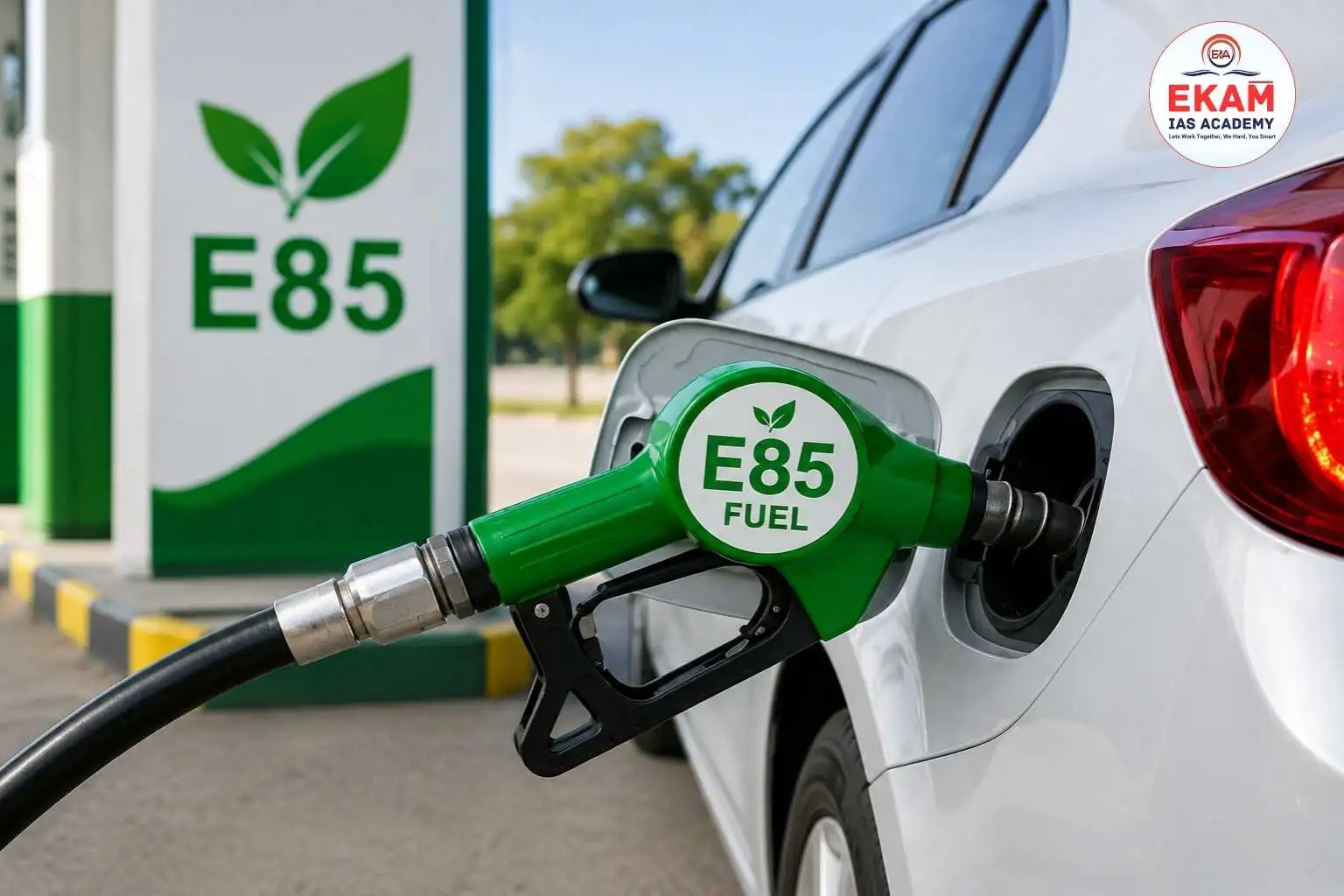
Recently, the Union Minister for Petroleum and Natural Gas launched E85 fuel in New Delhi, marking a milestone in the country’s biofuel transition. This topic is important for aspirants preparing for GS3 Environment and energy-related issues through IAS coaching in Hyderabad.
What is E85 Fuel?
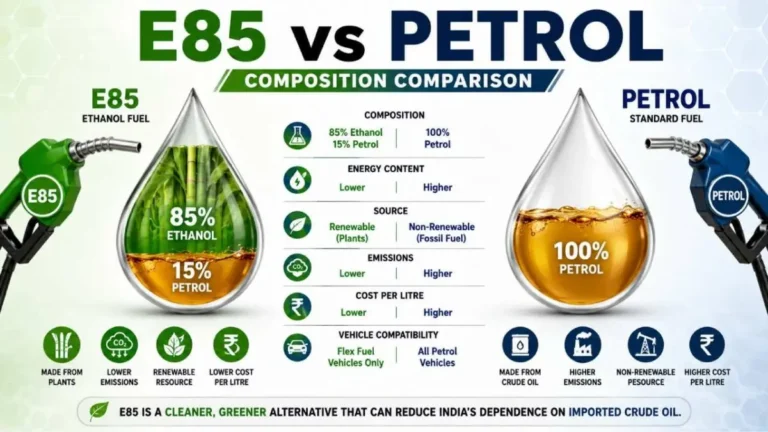
• E85 fuel is a biofuel blend consisting of 80–85% ethanol and 14–19% petrol.
• It is designed for Flex Fuel Vehicles (FFVs), which can run on ethanol-petrol blends ranging from E20 to E100.
• The objective is to promote energy independence, reduce fossil fuel dependence, and support India’s Net Zero 2070 target.
Benefits of E85 Fuel
• Lower Price: E85 is cheaper than petrol, helping pass the benefits of domestic ethanol production to consumers.
• Emission Reduction: It can cut lifecycle greenhouse gas emissions by around 61% compared to petrol.
• High Octane: With a Research Octane Number (RON) of around 108, it enables higher compression ratios and better engine performance.
• Cleaner Combustion: It produces near-zero particulate matter, helping improve urban air quality.
Recent Data & Case Studies
• India produced around 1,800 crore litres of ethanol in 2025–26, surpassing domestic demand.
• Farmers have earned nearly ₹1.18 lakh crore from ethanol procurement since 2014, boosting rural incomes.
• Pilot projects in Maharashtra and Uttar Pradesh show Flex Fuel Vehicles running efficiently on E85 with reduced fuel costs.
Significance
• Strengthens India’s energy security by reducing crude oil imports, as India imports around 90% of its oil.
• Supports India’s climate commitments made under COP26.
• Encourages agrarian empowerment by creating demand for crops such as sugarcane and maize.
• Promotes a cleaner and more sustainable transport fuel ecosystem.
Conclusion
The launch of E85 fuel is a strategic step in India’s biofuel roadmap. By combining economic savings, emission reduction, and farmer benefits, it paves the way for a flex fuel future and strengthens India’s transition toward sustainable mobility.