
The Environment (Protection) Second Amendment Rules, 2025 mandate that caustic soda plants using membrane cell technology must pass a fish survival test to ensure wastewater is non-toxic, strengthening environmental safeguards. This topic is important for aspirants preparing for GS3 Environment and industrial policy-related issues through UPSC coaching in Hyderabad.
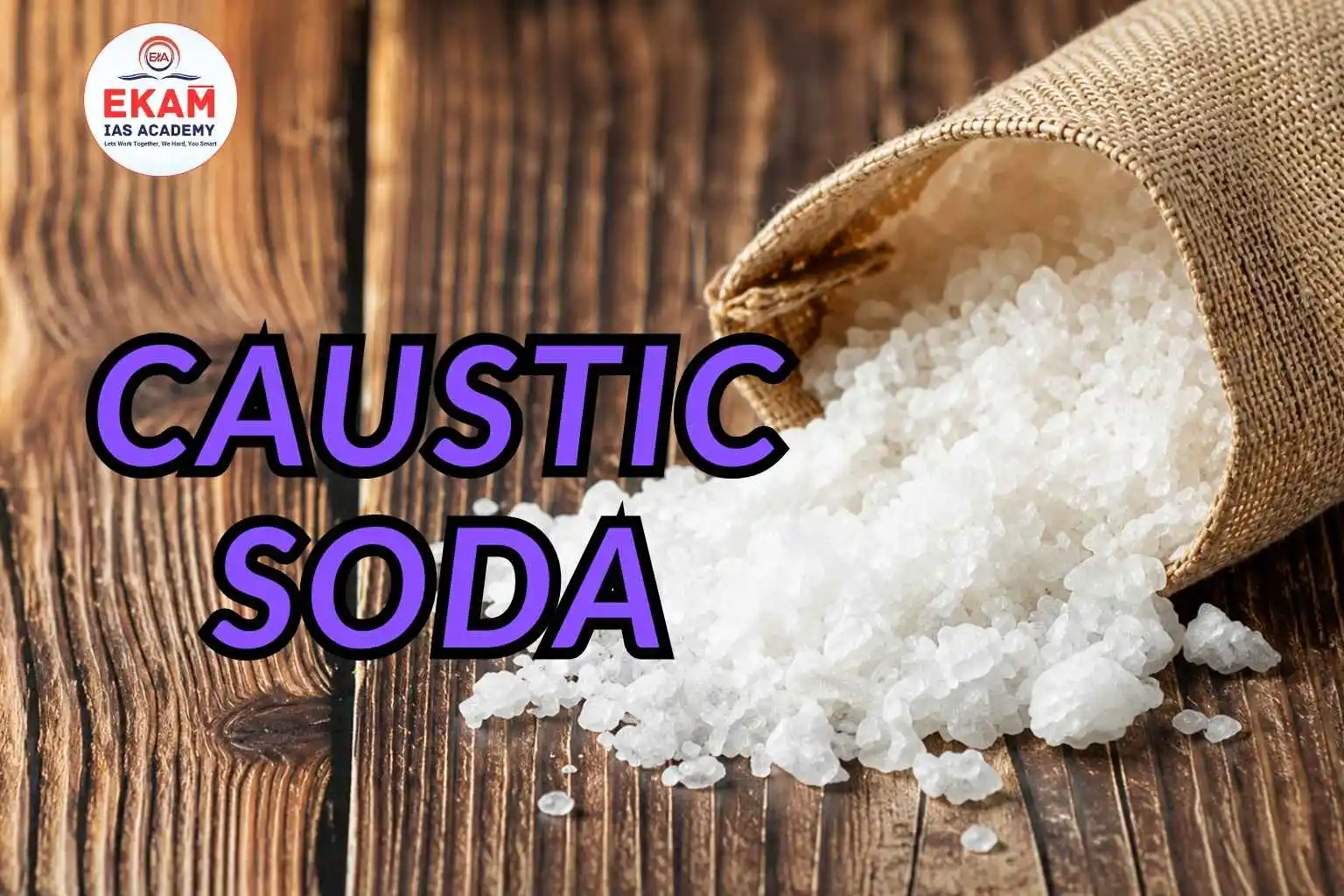
What is Caustic Soda?
• Caustic soda, also called sodium hydroxide (NaOH), lye, or soda lye, is a strong alkali.
• Production: It is made either by electrolysis of brine (NaCl solution) or by reacting sodium carbonate with calcium hydroxide.
Properties
- Strongly alkaline and highly soluble in water.
- White crystalline solid that absorbs moisture from air.
- Releases heat when dissolved or neutralized.
- Corrosive to skin, eyes, and metals.
Industrial Applications
• Chemical Industry: Used in soaps, detergents, textiles, paper, aluminium, and petrochemicals.
• Water Treatment: Helps in purification and pH regulation.
• Metal Processing: Used in electroplating, oxide coating, bleaching, and cleaning.
• Other Uses: Cotton fabric processing, laundering, and bleaching operations.
Environmental Concerns
• Toxicity: Wastewater discharge from caustic soda plants can harm aquatic life.
• New Regulation: Fish survival test ensures effluents are safe for ecosystems.
• Sustainability: Encourages adoption of cleaner technology and compliance with green standards.
Policy and Governance
• Regulatory Framework: Rules are framed under the Environment Protection Act, 1986.
• Global Practices: Aligns India with international norms on chemical safety.
• Government Initiatives: The Central Pollution Control Board (CPCB) and MoEFCC monitor industrial effluents to safeguard rivers and reservoirs.
Conclusion
Caustic soda remains vital for industrial growth, but strict environmental checks ensure that production does not compromise ecological balance, promoting sustainable development.