
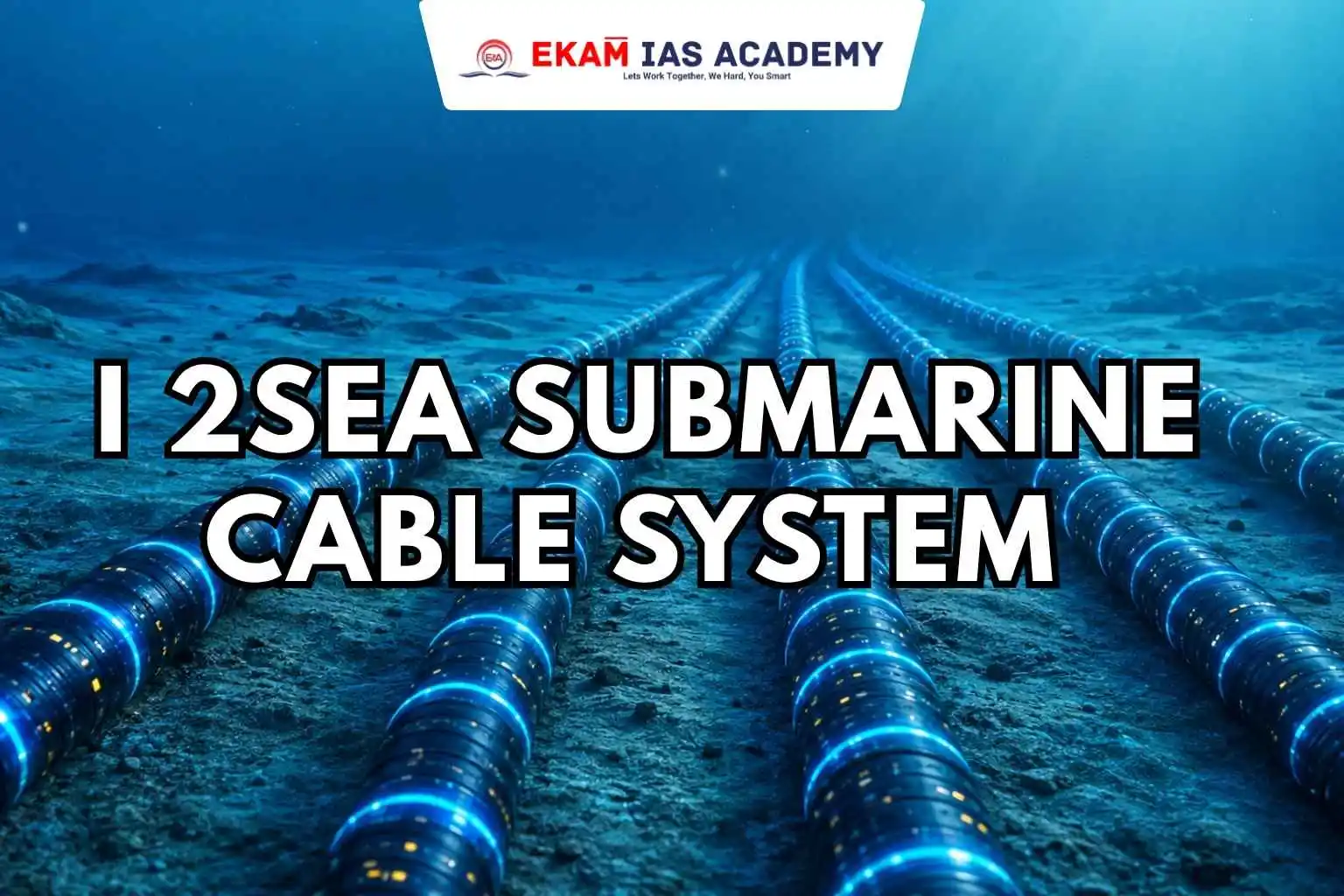
A consortium of Lightstorm, Microsoft, Singtel, and Tata Communications has announced the I 2SEA submarine cable project, a 3,600 km fibre system connecting India’s east coast with Singapore and Malaysia, expected to be operational by 2029. This topic is important for aspirants preparing for GS3 Science & Technology and digital infrastructure through IAS coaching in Hyderabad.
I 2SEA Project
• Consortium Partners: Lightstorm (Singapore), Microsoft, Singtel, Tata Communications.
• Length: 3,600 km optical fibre subsea cable.
• Timeline: Ready for Service (RFS) by Q4 2029.
• Purpose: Designed to meet rising demand for AI infrastructure, hyperscalers, and GPU-based workloads.
• Connectivity: Direct links from Hyderabad and Chennai to Singapore and Kuala Lumpur.
Landing Stations
• Machilipatnam (AP): Shortest subsea access to Hyderabad.
• South Chennai: New landing point for Tamil Nadu.
Technical Features
• Deep Burial Strategy: Cable buried up to 3 metres for protection and uptime.
• Resilience: Ensures secure transmission of internet traffic, cloud services, and financial data.
• AI Ready Infrastructure: Supports high-capacity links for training and inference workloads.
Strategic Significance
• Strengthens India’s role in the global digital economy.
• Enhances data security and reliability for enterprises.
• Supports Digital India and AI innovation ecosystems.
• Provides infrastructure for cross-border financial flows and cloud services.
• Reduces dependency on existing congested subsea routes, improving latency and bandwidth.
Conclusion
The I 2SEA cable system marks a strategic leap in India’s digital connectivity, positioning the country as a hub for AI-driven global networks.