

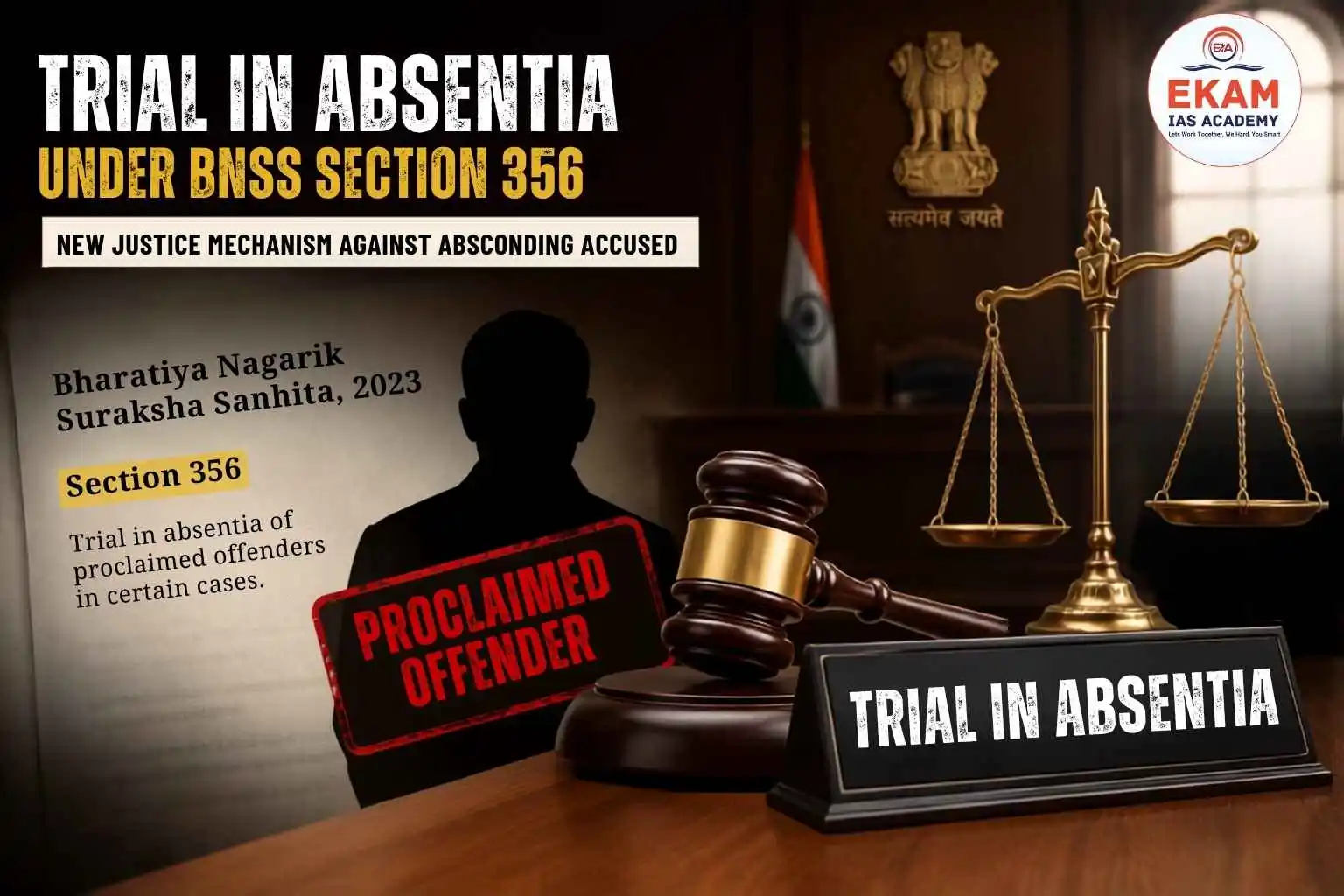
A Special NIA Court in Jammu has issued a non-bailable warrant against Hafiz Saeed and the NIA is likely to seek a trial in absentia under Section 356 of the BNSS in the Pahalgam terror attack case. This topic is important for aspirants preparing for GS2 Polity and criminal procedure reforms through upsc coaching in Hyderabad.
What is Trial in Absentia?
• Meaning: A criminal trial conducted when the accused is deliberately absent and has been declared a proclaimed offender.
• Statutory Basis: Now provided under Section 356 of the Bharatiya Nagarik Suraksha Sanhita (BNSS), enabling full trial and judgment as if the accused were present.
Why Was This Introduced?
• Address Delay: Prevents indefinite pendency of serious cases where accused flee justice.
• Ensure Accountability: Allows courts to proceed in grave offences (10 years+), including terrorism and cross-border conspiracies.
• Balance Interests: Seeks to reconcile timely justice with procedural fairness through built-in safeguards.
Who Can Be Tried in Absentia?
• Limited to Serious Offences: Applicable where offences attract at least 10 years’ imprisonment, life, or death.
• Proclaimed Offender Requirement: Court must first declare the person a proclaimed offender after due inquiry under BNSS provisions.
Key Procedural Safeguards
• Two arrest warrants issued at least 30 days apart before proceeding.
• Public notice in newspapers and display at last known address; 30-day window to appear.
• 90-day waiting period: Trial cannot start until 90 days after charges are framed.
• State-appointed counsel: Court provides a lawyer at State expense if accused lacks representation.
• Use of recorded evidence: Prosecution depositions may be used; cross-examination allowed if accused later arrested.
• AV Recording: Depositions and witness evidence recorded electronically to preserve integrity.
How BNSS Differs from Old CrPC Practice
• CrPC Approach: Allowed limited steps (proclamation, property attachment, recording evidence) but not full trials in absence.
• BNSS Change: Explicitly permits complete trial and judgment in absentia for proclaimed offenders, closing a procedural gap.
Practical and Policy Implications
• Counter-Terrorism: Facilitates prosecution of transnational terrorists who will not submit to Indian courts (example: Hafiz Saeed).
• Human Rights Concern: Risk of perceived unfairness if safeguards are weak; importance of transparent notice and legal aid.
• Enforcement Link: Effective only if investigative agencies exhaust extradition, mutual legal assistance, and diplomatic routes.
• Precedent Management: Courts must document reasons carefully to avoid miscarriages of justice and ensure appellate review.
Conclusion
Trial in absentia under BNSS offers a focused tool against absconding offenders, but its legitimacy depends on strict adherence to notice, representation, and evidentiary safeguards.