
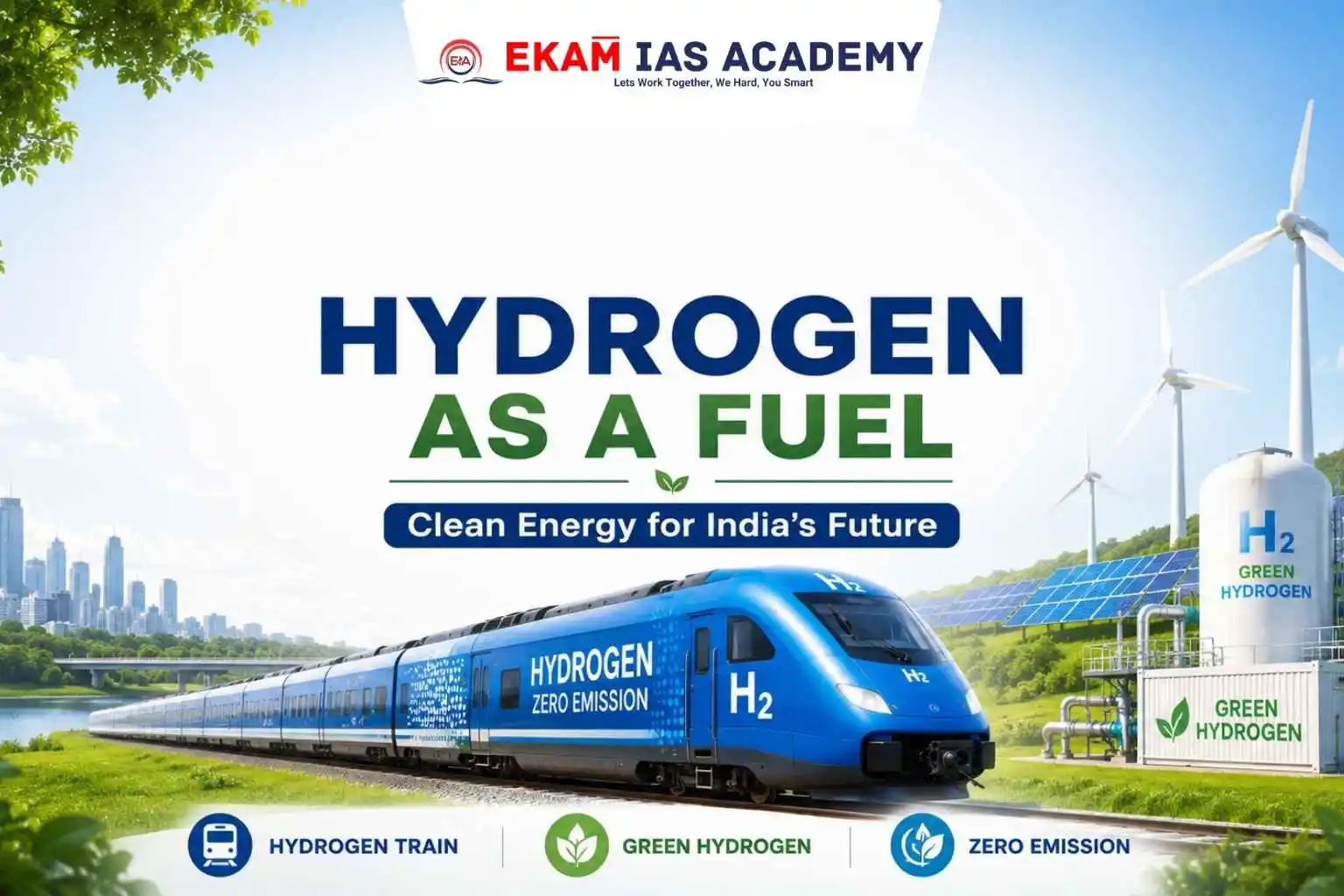
India launched its first hydrogen-powered train service in July 2026, showcasing hydrogen’s role as a clean alternative fuel. This topic is important for aspirants preparing for GS3 Environment and clean energy technologies through civils coaching in Hyderabad.
How Hydrogen Works as Fuel
• Fuel Cell Technology: Hydrogen reacts with oxygen in a fuel cell → produces electricity, with water vapour as the only by-product.
• Combustion Use: Can also be directly burned in modified internal combustion engines.
• Storage & Transport: Stored as compressed gas or liquid; requires specialised infrastructure.
Uses of Hydrogen
• Transport Sector: Hydrogen trains, buses, and cars (hydrail, fuel cell vehicles). Reduces dependence on fossil fuels.
• Industry: Steel production (green steel), ammonia for fertilizers, petrochemicals. Replaces coal and natural gas in high-emission processes.
• Power Generation: Used in turbines or blended with natural gas. Enables storage of renewable energy.
• Space & Defence: Rocket fuel in ISRO launches. Potential for military vehicles and submarines.
Policy Context
• National Hydrogen Mission (2021): Targets production of green hydrogen using renewable energy.
• Global Example: Germany and Japan already operate hydrogen trains and buses.
• India’s Strategy: Focus on transport, fertilizer, and refinery sectors as early adopters.
Challenges
• High Cost: Green hydrogen production remains expensive compared to fossil fuels.
• Infrastructure Gaps: Need for hydrogen pipelines, refuelling stations, and storage facilities.
• Safety Concerns: Hydrogen is highly flammable, requiring strict handling protocols.
Conclusion
Hydrogen offers India a pathway to zero-emission energy security, making it a cornerstone of the country’s green transition.