
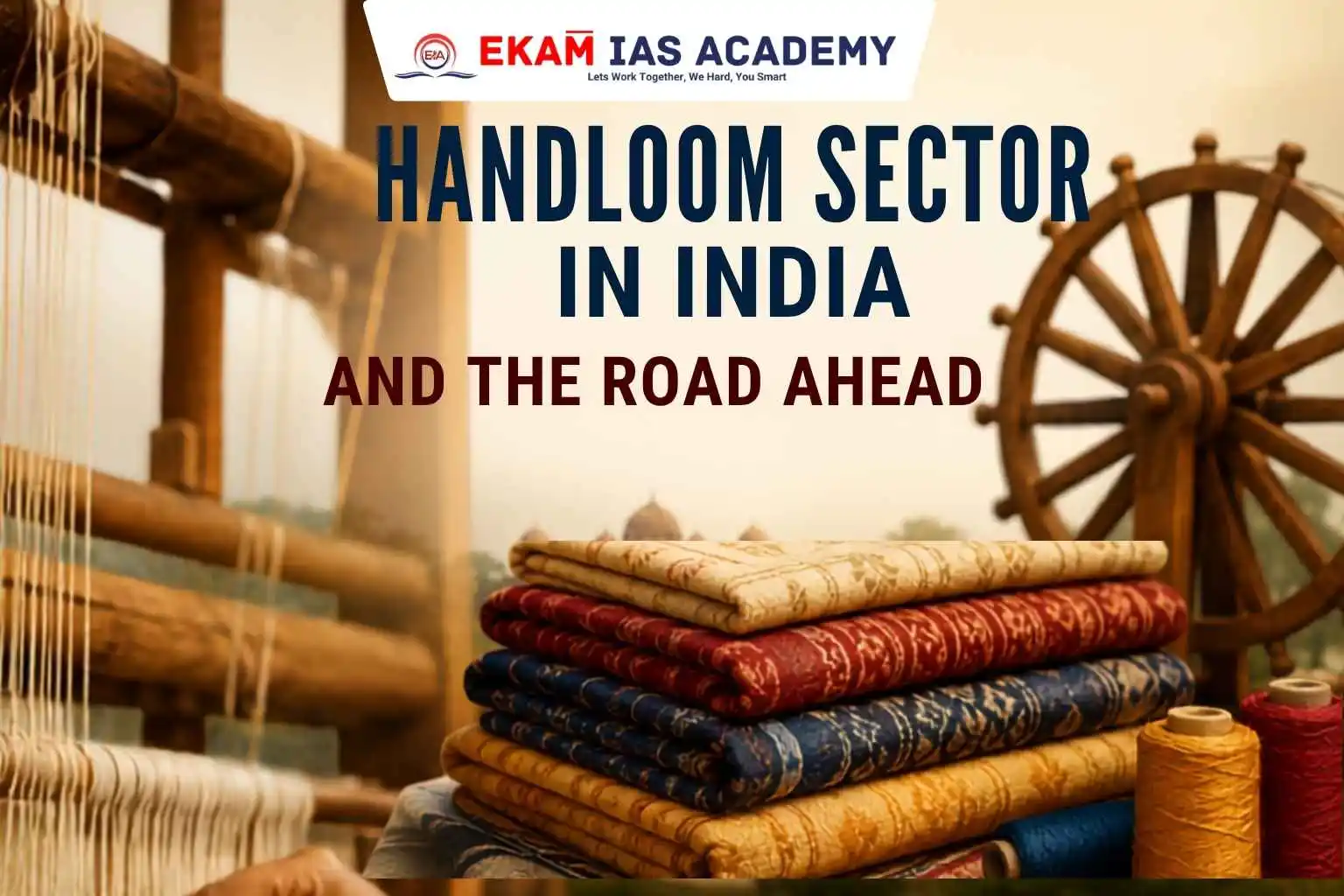
On National Handloom Day (August 7), the focus has shifted towards the economic and cultural significance of India’s handloom sector, which supports millions of artisans but faces challenges such as declining incomes, fragmented markets, and loss of traditional weaving skills. Strengthening handlooms requires combining heritage conservation with modern markets, technology, and global branding. This topic is important for aspirants preparing for GS3 Economy through IAS Coaching in hyderabad .
Historical Context
- Ancient Legacy: Indian handlooms were globally traded long before Europe’s Industrial Revolution, making India a leading manufacturing economy.
- Freedom Struggle: The Swadeshi Movement (1905) promoted boycott of British textiles; Mahatma Gandhi’s spinning wheel symbolised self-reliance.
- Commemoration: National Handloom Day honours this legacy and India’s weaving communities.
Economic Significance
- Provides livelihood to 35 lakh weavers and allied workers across 31 lakh households.
- Women form ~70% of the workforce, strengthening rural empowerment.
- Contributes ~15% of India’s cloth production, despite reliance on manual technology.
- Acts as one of the largest non-farm employment sources in rural India.
- Supports inclusive growth, aligning with SDG‑8 (Decent Work & Economic Growth).
Success Stories
- Tangaliya Weaving (Gujarat): Revived through institutional support.
- Badturang Village (Odisha): Cluster-level initiatives boosted livelihoods.
- Siddipet Gollabhama Sarees (Telangana): Market access and design innovation created new demand.
- Global Visibility: Indian weaves showcased in international films and fashion, enhancing soft power.
Making Handloom Aspirational
- Position handloom as contemporary and premium, not just traditional.
- Use celebrity ambassadors, designer collaborations, influencer campaigns to attract Gen Z.
- Highlight sustainability and exclusivity as premium features.
Expanding Global Reach
- Tap into global demand for authentic, handcrafted, eco-friendly luxury.
- Ensure quality standards, branding, GI protection, and prevent cultural misappropriation.
- Use handloom as a tool of India’s soft power diplomacy.
Need for Better Measurement
- Current data on GDP, exports, and employment contribution is inadequate.
- Establish a national platform for States and cooperatives to share best practices.
- Reliable measurement will enable stronger policy interventions.
Challenges
- Declining Returns: Weavers face low incomes, making the profession unattractive.
- Fragmented Markets: Limited buyer access reduces profitability.
- Skill Transmission Breakdown: Younger generations are leaving weaving, risking extinction of traditions.
- Cultural Loss: Each disappearing weave erases centuries of knowledge and identity.
Government Support
- National Handloom Development Programme: Focus on skill training, design innovation, branding, and technology adoption.
- E-commerce Integration: Artisan clusters now access wider consumer bases.
- UNESCO Collaboration: Documentation of endangered weaves for preservation.
- GI Tag Promotion: Strengthening domestic and global recognition of handloom products.
Conclusion
India’s handloom sector is not just heritage it is a pillar of rural employment, sustainability, and cultural identity, demanding policies that make it both economically viable and globally aspirational.