
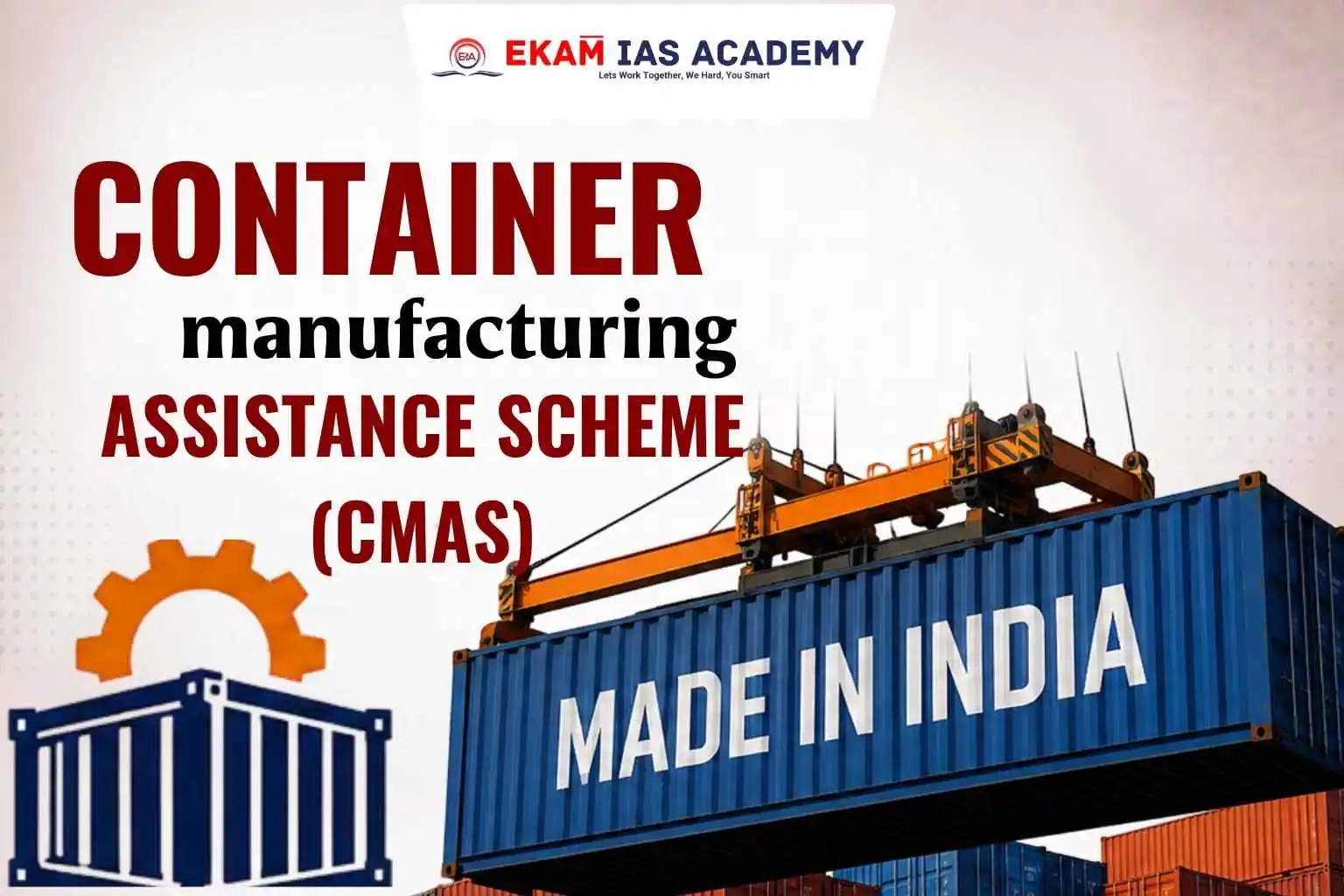
The Container Manufacturing Assistance Scheme (CMAS) is a strategic initiative by the Union Government to strengthen India’s domestic container manufacturing capacity and reduce dependence on imported shipping containers. The scheme aims to enhance logistics efficiency, supply chain resilience, and maritime self-reliance by developing a competitive container manufacturing ecosystem. This topic is important for aspirants preparing for GS3 Economy through UPSC Preparation.
About the Scheme
- Objective: Build a competitive container manufacturing industry in India.
- Coverage: Supports new Greenfield units and expansion of existing Brownfield facilities.
- Target: Raise annual domestic capacity to 7.5 lakh TEUs, nearly 10 times current levels.
- Financial Outlay: ₹10,000 crore spread over five years.
Key Features
- Capital assistance for new factories.
- Operational support to improve competitiveness.
- Testing infrastructure for quality assurance.
- Skilling and capacity building for workforce development.
- Integration with national policies like Make in India, PM Gati Shakti, Sagarmala Programme, and Maritime Amrit Kaal Vision 2047.
Significance
- Logistics Efficiency: Reduces reliance on imported containers, ensuring timely availability for exports.
- Economic Impact: Strengthens supply chain resilience and supports India’s growing maritime trade.
- Employment: Creates jobs in manufacturing, testing, and allied services.
- Strategic Autonomy: Enhances India’s self-reliance in critical logistics infrastructure.
- Global Context: Countries like China dominate container manufacturing; India’s entry strengthens its position in global shipping.
Conclusion
The CMAS is a strategic step towards logistics self‑reliance, aligning industrial growth with India’s maritime vision and global trade ambitions.

One thought on “Container Manufacturing Assistance Scheme (CMAS)”