
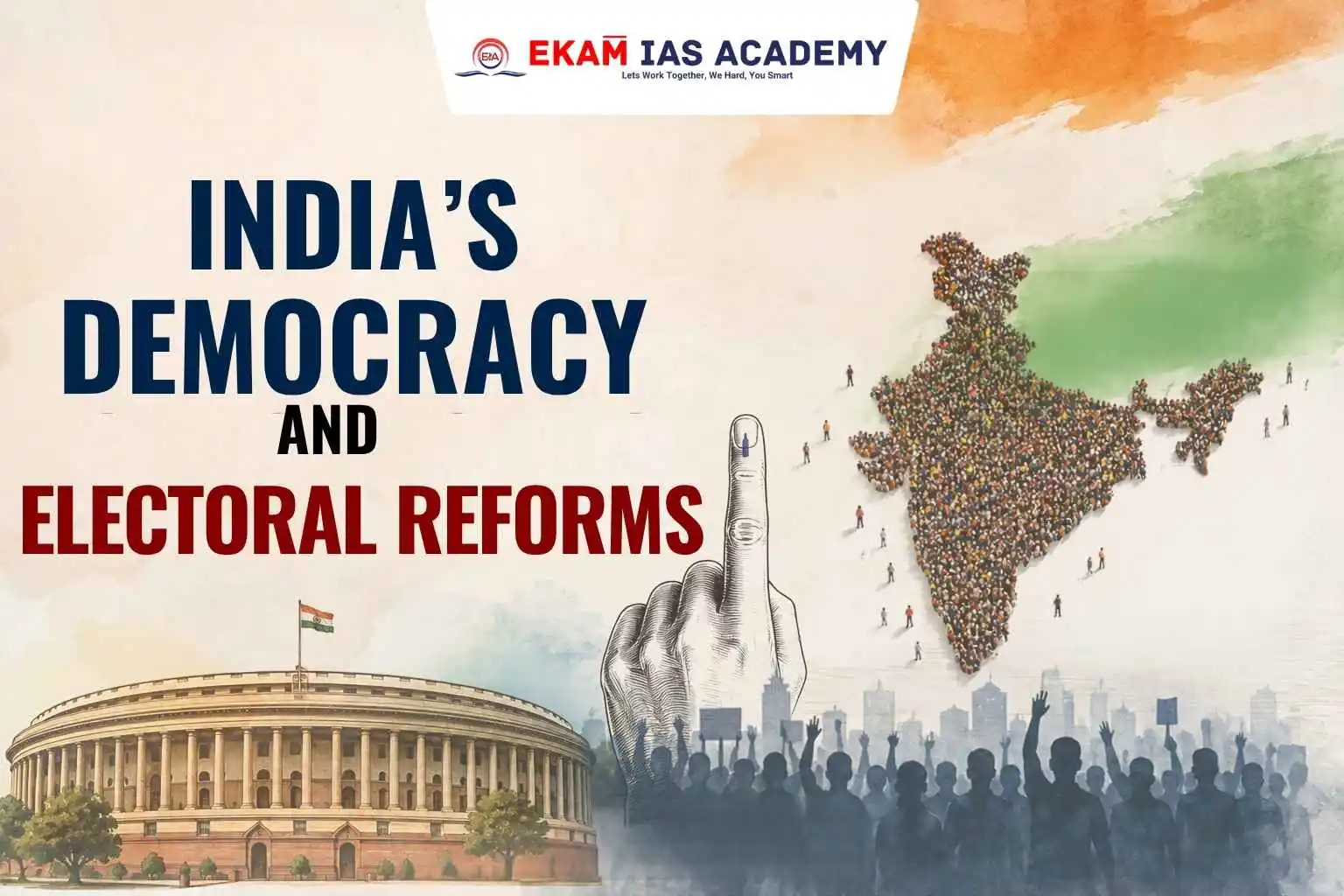
India’s electoral system is based on the principles of representative democracy, federalism, and accountability. The proposal of One Nation, One Election (ONOE) has triggered a nationwide debate on whether synchronising elections can improve governance efficiency or weaken India’s federal democratic structure. This topic is important for aspirants preparing for UPSC Preparation.
One Nation, One Election (ONOE)
- ONOE refers to holding simultaneous elections for the Lok Sabha and all State Legislative Assemblies across India, instead of staggered polls.
- Objective: The idea aims to reduce election costs, avoid frequent disruptions due to the Model Code of Conduct, and streamline governance.
- Constitutional Angle: Requires amendments to Articles 83, 85, 172, 174, and 356 of the Constitution, since these deal with the tenure and dissolution of legislatures.
- Debate: Supporters argue it will improve efficiency and reduce expenditure, while critics warn it may weaken federalism, overshadow local issues, and distort voter mandates.
Issues with ONOE
- Parliamentary Flexibility: In India, governments fall when they lose majority; elections must follow. Fixing rigid timelines undermines this accountability.
- Federal Autonomy: Dissolving stable State Assemblies to match national cycles weakens the sovereignty of State electorates.
- Distorted Mandates: Midterm governments serving truncated terms dilute voter power compared to full five‑year mandates.
- National Overshadowing: Simultaneous elections risk drowning local issues under national narratives, disadvantaging regional parties.
Challenges
- Erosion of Federalism: India’s Constitution (Articles 1 & 246) envisages a Union of States; ONOE risks centralising power.
- Distorted Voter Equity: A citizen voting for a two‑year truncated term has less bargaining power than one voting for a full five‑year mandate.
- Economic Misrepresentation: Election Commission data shows Lok Sabha 2019 cost ₹5,500 crore, but this is minimal compared to India’s GDP; campaign spending also circulates money in the informal sector.
- Governance Myth: The Model Code of Conduct does not halt ongoing projects; claims of “policy paralysis” are exaggerated.
Way Forward
- Strengthen Federal Balance: Respect State autonomy; allow independent electoral cycles as per constitutional design.
- Improve Electoral Management: Use technology, e‑voting pilots, and better logistics to reduce costs without altering rhythms.
- Enhance Accountability: Frequent elections keep leaders responsive; data from CSDS surveys show voter satisfaction is higher when governments face regular scrutiny.
- Focus on Electoral Reforms: Address real issues—criminalisation of politics, campaign finance transparency, and voter awareness—rather than synchronisation.
Conclusion
India’s democratic strength lies in flexible, federal electoral rhythms, not forced uniformity; safeguarding diversity and accountability is essential for a resilient republic.