
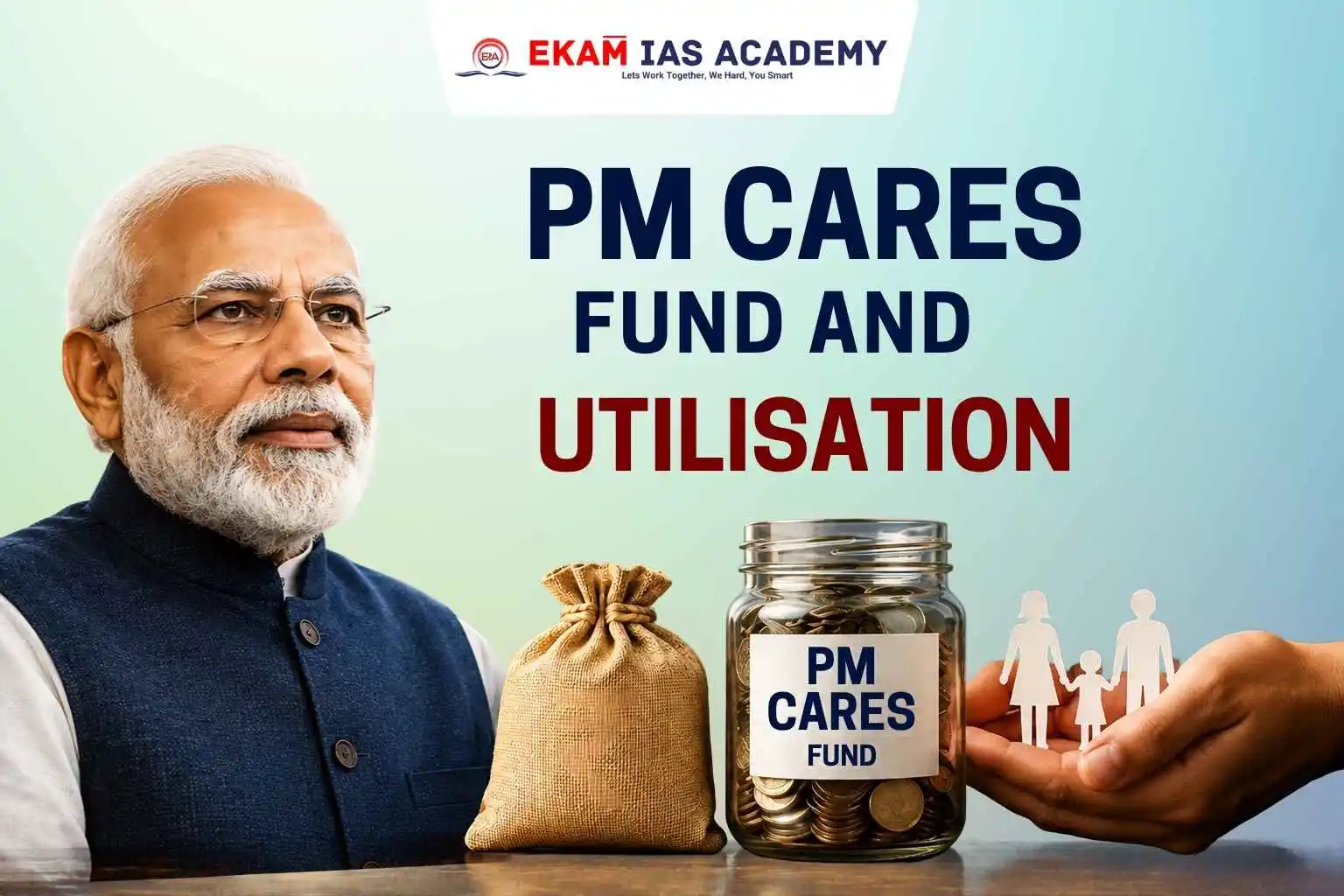
Public funds created during emergencies require a balance between rapid response, transparency, and accountability. The recent audited financial statements of the PM CARES Fund (2023–24 and 2024–25) indicate a significant decline in donations and very low utilisation of accumulated resources, raising concerns regarding transparency and effective deployment of emergency funds. This topic is important for aspirants preparing for UPSC Polity Preparation.
PM CARES Fund
- Creation: Established in March 2020 as a public charitable trust. Intended to provide emergency relief during crises such as pandemics and disasters.
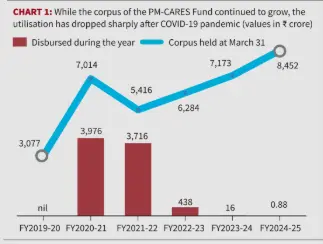
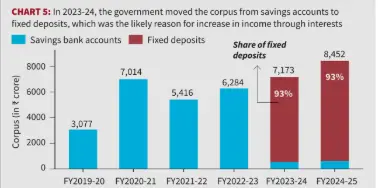
- Corpus Growth: Corpus increased by 25.8% between 2022–23 and 2024–25. Grew from ₹6,722 crore → ₹8,453 crore.
- Interest Income: In 2023–24, corpus shifted from savings accounts to fixed deposits. By 2024–25, interest income was ₹475 crore, nearly equal to donations.
- Donation Trends: Donations have declined sharply in recent years. Corpus growth sustained largely through financial returns rather than public contributions.
Key Findings
- Utilisation Collapse: Spending dropped from ₹437.9 crore (2022–23) to just ₹87.5 lakh (2024–25).
- Refunds Issue: Refunds from implementing agencies exceeded actual utilisation; details remain undisclosed.
- Transparency Concerns: Delay of two years in releasing audited statements; change of auditors during this period.
- Fund Flow: Donations + interest income far outpaced disbursements, leaving large idle balances.
Challenges
- Accountability Gap: Lack of disclosure on beneficiaries and implementing agencies.
- Underutilisation: Only 0.01% of corpus spent in 2024–25, undermining emergency relief purpose.
- Public Trust: Criticism from civil society and opposition over opacity.
- Comparative Benchmark: CAG reports show higher utilisation in other disaster relief funds like SDRF/NDRF.
Way Forward
- Enhanced Transparency: Regular disclosure of beneficiaries, implementing agencies, and fund utilisation.
- Independent Oversight: CAG audit or parliamentary scrutiny to ensure accountability.
- Efficient Utilisation: Align spending with urgent needs — health, disaster relief, climate resilience.
- Public Engagement: Encourage citizen participation and feedback mechanisms.
Conclusion
Without transparency and timely utilisation, PM CARES risks becoming a static corpus rather than a dynamic relief instrument.