
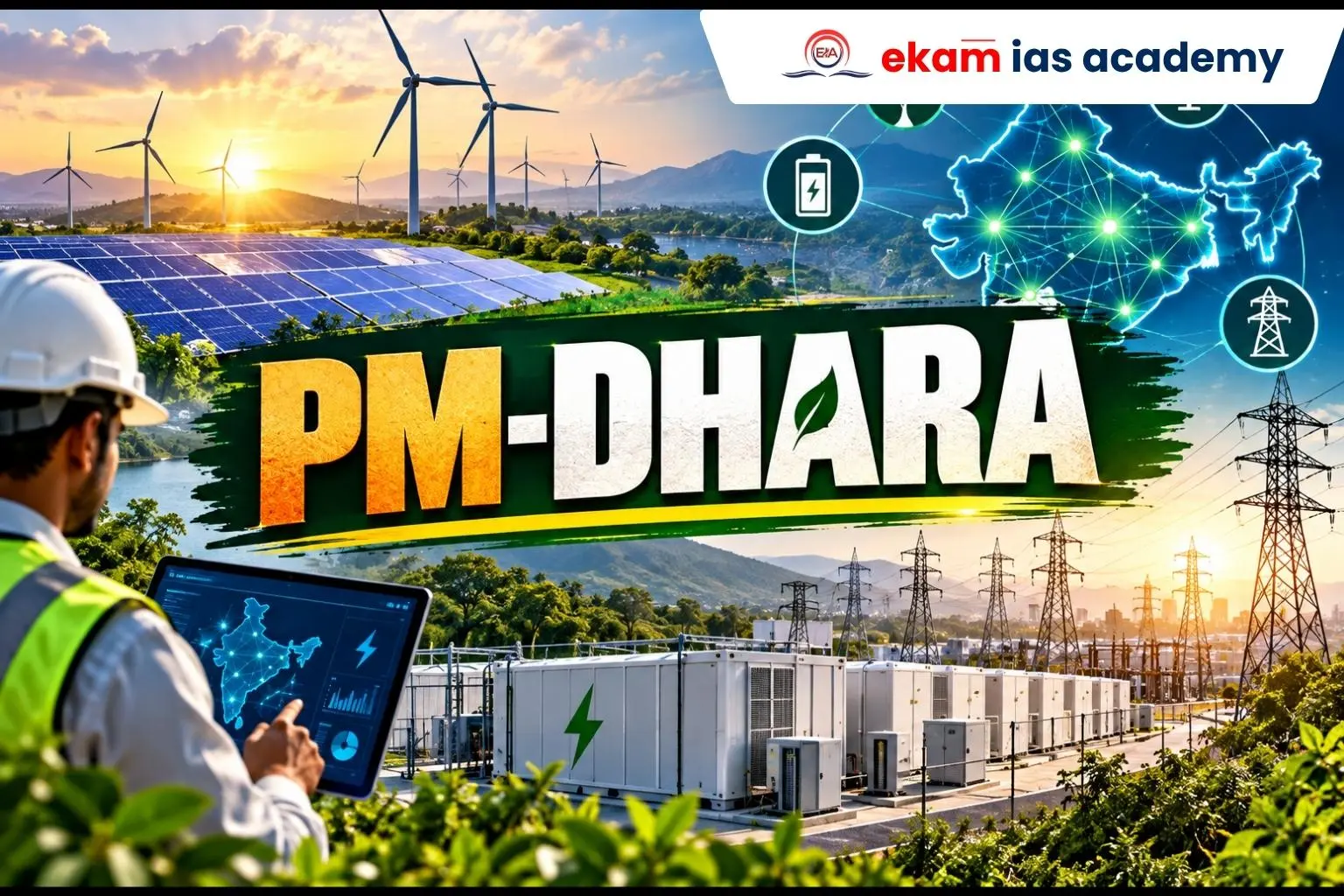
The Union Cabinet approved the ₹1.86 lakh crore PM-DHARA Scheme to strengthen State-level transmission networks and integrate large-scale renewable energy, addressing grid congestion and intermittency. The PM-DHARA Renewable Energy initiative is aimed at improving Renewable Energy Access India and supporting India’s clean-energy transition.
What is PM-DHARA?
- PM-DHARA stands for PM-Developing Harmonized and Accelerated Renewable-energy Access.
- The PM-Developing Harmonized and Accelerated Renewable-energy Access initiative aims to modernise the Intra-State Transmission System (InSTS) across States/UTs by FY 2032-33.
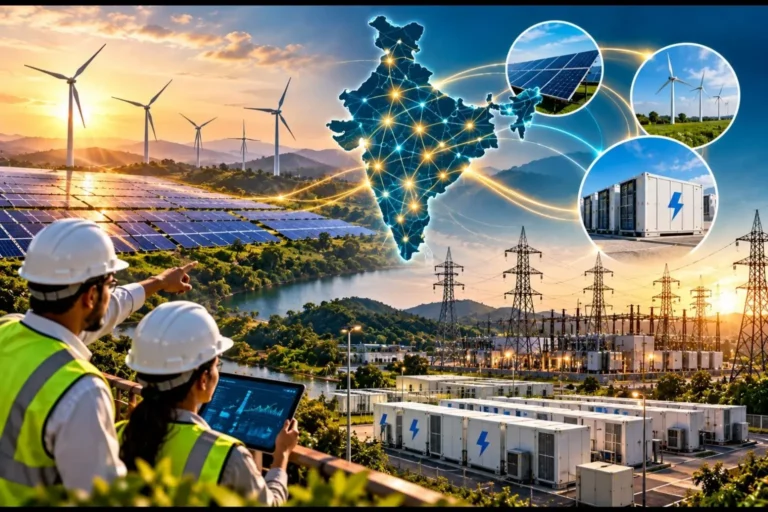
- The PM DHARA Scheme India will support evacuation of up to 135 GW of renewable power and deployment of 50 GWh Battery Energy Storage Systems (BESS).
- It is an important PM DHARA Renewable Energy Scheme for strengthening Renewable Energy Policy India and improving Clean Energy Access India.
Implementation Framework
- State Transmission Utilities (STUs) will coordinate implementation.
- New or greenfield projects will follow Tariff-Based Competitive Bidding (TBCB).
- Existing-network upgrades will use the Cost-Plus Basis.
- Private Transmission Service Providers can participate through the Build-Own-Operate-Maintain (BOOM) model.
Why is it Important?
- Grid stability: BESS can store surplus solar/wind electricity and supply it during peak or non-solar hours, supporting Solar Energy India and wider renewable integration.
- Green transition: Supports India’s target of 900 GW non-fossil capacity by 2035 and strengthens Renewable Energy Transition India.
- Future readiness: CEA estimates India may require about 411 GWh of energy storage by 2031-32, showing the growing importance of storage infrastructure for Renewable Energy Development India.
- Economic dimension: Transmission, battery manufacturing, construction and grid management can generate skilled employment and strengthen Green Energy Infrastructure India.
Conclusion
PM-DHARA can bridge the gap between rapid renewable-energy creation and reliable electricity delivery, making storage and transmission the backbone of India’s clean-energy transition. The scheme is therefore important for Renewable Energy Scheme UPSC, Renewable Energy UPSC and PM-DHARA Current Affairs preparation.