

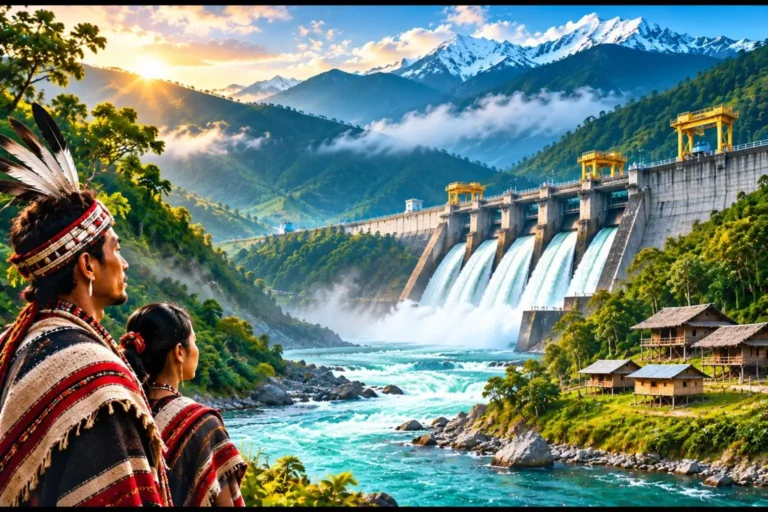
India’s proposed 11.2 GW Siang Upper Multipurpose Project (SUMP) in Arunachal Pradesh has gained strategic importance following China’s development of a major hydropower project on the Yarlung Tsangpo. The Siang Upper Multipurpose Project UPSC topic is important for understanding water security, hydropower development and Development and Tribal Rights.
About the Siang Upper Multipurpose Project
- Location: Siang River, Arunachal Pradesh.
- Proposed capacity: Approximately 11,200 MW.
- Objectives: Generate hydroelectricity, regulate river flows and strengthen downstream flood protection.
- Strategic relevance: Intended to improve India’s ability to manage possible changes in upstream river flows.
- The Siang River Project Arunachal Pradesh, also referred to as the Siang River Hydropower Project and Upper Siang Hydroelectric Project, has significance for India’s energy and water security.
Why Is China a Concern?
- China is developing a large hydropower project on the Yarlung Tsangpo River in Tibet.
- The river enters Arunachal Pradesh as the Siang and later forms the Brahmaputra.
- Upstream dams may influence water availability, sediment movement and flood patterns.
- However, rainfall and tributaries within India contribute significantly to the Brahmaputra’s flow.
Challenges
- Tribal land rights: The Adi community fears displacement and loss of ancestral lands, highlighting concerns related to Arunachal Pradesh Tribal Rights, Tribal Rights in India and Tribal Land Rights in India.
- Environmental risks: Large reservoirs can affect forests, biodiversity and river ecosystems, demonstrating the Environmental Impact of Hydropower Projects.
- Seismic vulnerability: The eastern Himalayas are highly earthquake-prone.
- Disaster risks: Landslides, sedimentation and extreme rainfall threaten dam safety.
- Information gaps: Limited upstream hydrological data complicates flood management.
- Governance concerns: Coercive measures against protesters may weaken public trust.
- The project also raises questions concerning Siang River and Indigenous Communities and the balance between infrastructure development and indigenous interests.
Constitutional and Legal Safeguards
- Article 21: Protects life, livelihood and environmental well-being.
- Article 371H: Provides special constitutional provisions for Arunachal Pradesh.
- Forest Rights Act, 2006: Recognises specified forest rights of eligible communities and provides a framework for Forest Rights of Tribal Communities.
- Environmental Impact Assessment: Examines ecological and social consequences before clearance.
- Land acquisition safeguards: Require applicable procedures concerning compensation and rehabilitation.
Way Forward
- Community participation: Ensure meaningful consultations and transparent decision-making.
- Scientific assessment: Conduct independent seismic, ecological and cumulative impact studies.
- Fair rehabilitation: Protect customary land rights, livelihoods and cultural heritage of the Adi Tribe of Arunachal Pradesh.
- Transboundary diplomacy: Seek regular hydrological data-sharing and emergency-warning arrangements with China.
- Disaster preparedness: Strengthen reservoir monitoring, early-warning systems and downstream evacuation plans.
- Sustainable planning: Evaluate alternatives and adopt basin-wide river management.
- Development planning should balance the Siang Upper Multipurpose Project, Tribal Rights in India, environmental sustainability and the concerns of indigenous communities.
Conclusion
India’s water security must be built through scientific planning, regional diplomacy and respect for indigenous rights, because national development cannot come at the cost of its own people. The Siang Upper Multipurpose Project, Forest Rights Act 2006, Environmental Impact of Hydropower Projects, Tribal Land Rights in India and Environment and Ecology UPSC perspectives highlight the need to balance strategic development with ecological and community interests.