

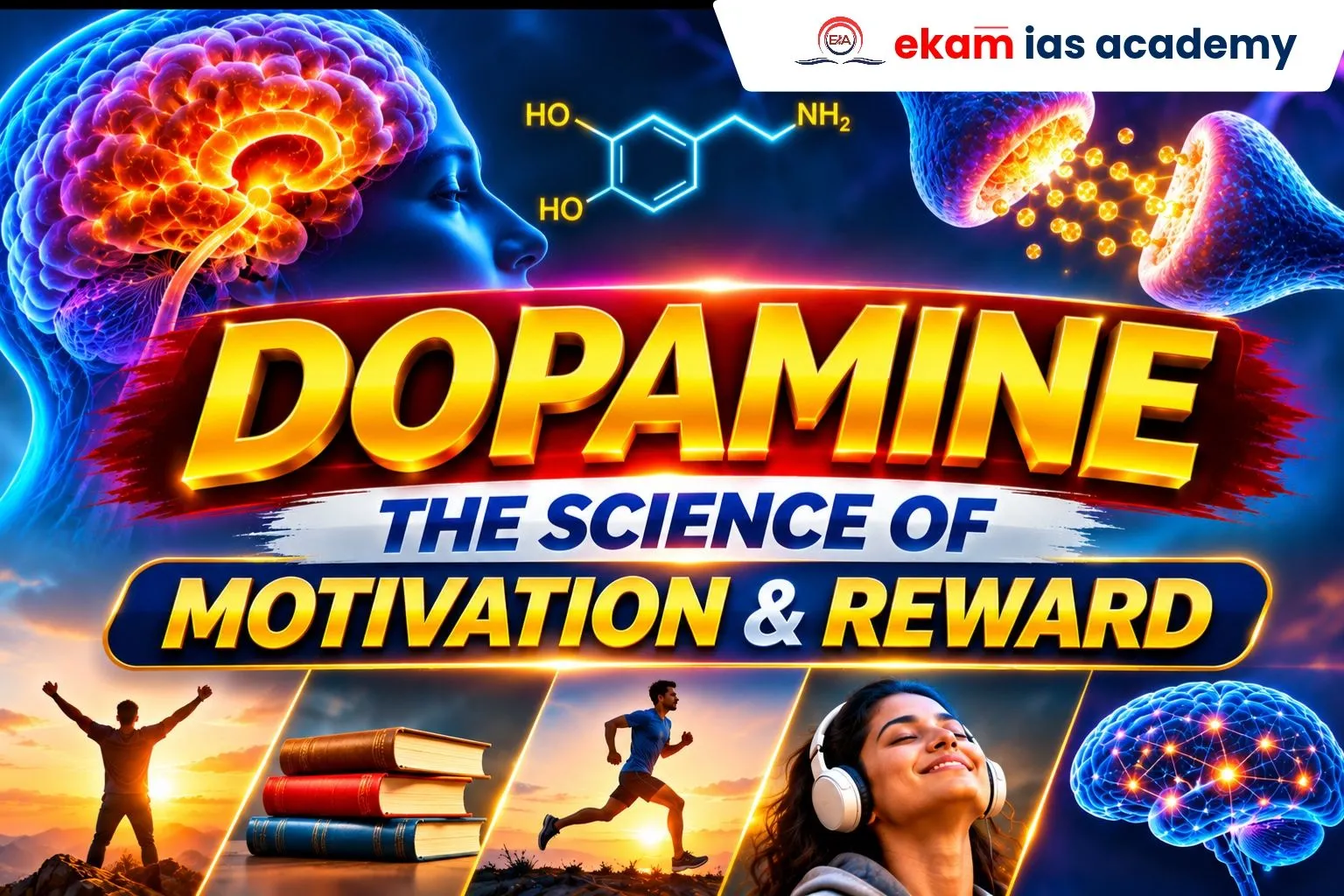
A recent study found that excessive physical training without sufficient rest may disturb Dopamine Regulation in the Brain, highlighting the importance of Dopamine and Brain Function and balanced recovery.
What is Dopamine?
- Dopamine is a chemical messenger (neurotransmitter) produced mainly in the brain and is an important Dopamine Neurotransmitter in the nervous system.
- It is also a catecholamine and acts as a hormone in certain parts of the body, making Dopamine Hormone an important area of biological study.
- It helps nerve cells communicate and regulates several physical and mental functions, including the Role of Dopamine in the Human Brain.
- Dopamine is closely associated with Neuroscience and Brain Chemistry and influences learning, behaviour and physiological processes.
Major Functions
- Reward and motivation: Encourages goal-oriented behaviour and learning, forming an important part of the Dopamine and Reward System and Dopamine and Motivation.
- Memory and attention: Supports concentration and information processing.
- Movement: Helps coordinate voluntary muscle activity.
- Emotional regulation: Influences mood and responses to rewarding experiences, linking dopamine with Dopamine and Mental Health.
- Body functions: Helps regulate blood pressure, kidney activity and hormone secretion.
- Together, these functions explain the importance of Dopamine and Human Behaviour.
Dopamine and Health
- Parkinson’s disease: Linked to the loss of dopamine-producing neurons.
- ADHD: Associated with differences in dopamine signalling and attention regulation.
- Addiction: Repeated substance use can alter dopamine-based reward pathways, highlighting the relationship between Dopamine and Addiction.
- Rest and recovery: Inadequate recovery after intense exercise may affect brain signalling and Dopamine Regulation in the Brain.
Medical Importance
- Dopamine is used as an intravenous medicine in selected critical-care situations to support blood circulation.
- Medicines affecting dopamine pathways are used to manage Parkinson’s disease and certain psychiatric conditions.
- Understanding Dopamine Explained is therefore important for studying neurological and psychiatric conditions.
Broader Significance
- Public health: Highlights the importance of sleep, exercise balance and recovery.
- Neuroscience: Improves understanding of learning, behaviour and neurological disorders through the study of Neuroscience and Brain Chemistry.
- Sports science: Supports safer training practices and prevention of overtraining.
- These aspects make dopamine relevant to Human Nervous System UPSC and Science and Technology UPSC preparation.
Conclusion
Dopamine is essential for movement, motivation and brain health, making balanced physical activity and adequate recovery important for overall well-being. Understanding Dopamine and Brain Function, Dopamine and Reward System, Dopamine and Motivation and Dopamine Regulation in the Brain provides a useful foundation for understanding the human nervous system.