
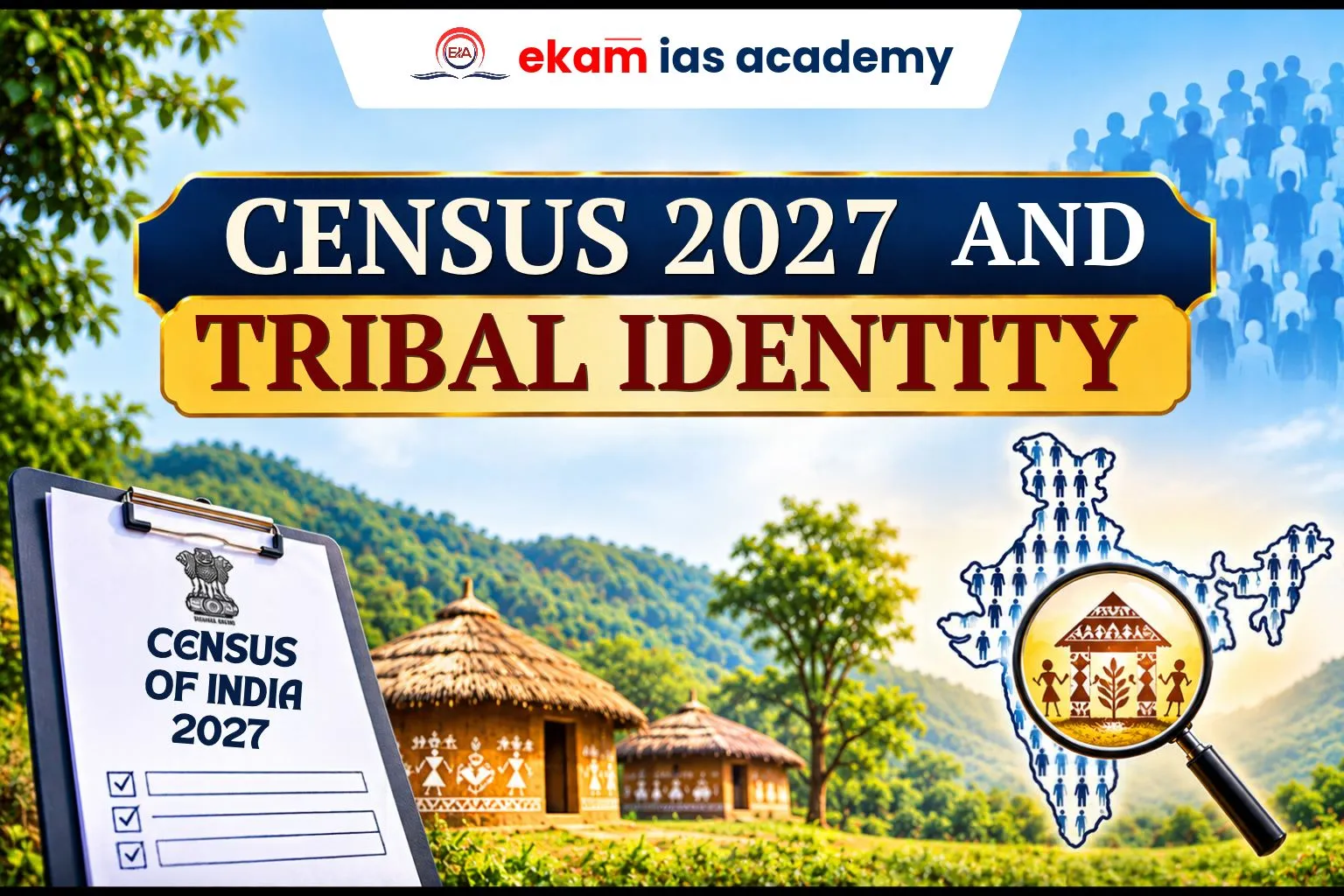
On 16 November 2026, the Census 2027 India self-enumeration portal briefly displayed 287 entries under the “Other Religions” category. The development is relevant to Census and Tribal Identity, Tribal Identity and Recognition and Census 2027 UPSC preparation.
How Was Religion Recorded Earlier?
- 2001 and 2011 Censuses: Six major religions were separately identified: Hindu, Muslim, Christian, Sikh, Buddhist and Jain.
- Other Religions and Persuasions (ORP): Respondents could freely state faiths outside these categories.
- Religion Not Stated: A separate category appeared in published statistical tables.
- Post-enumeration classification: Officials examined responses and grouped related sects after collecting information.
- Official records: The Census received 2,875 religion-related names in 2001 and 3,235 in 2011.
- This historical framework is important for understanding the evolution of the Census of India 2027 and the recording of Indigenous Communities in India.
What Is Different in Census 2027?
- Digital platform: Citizens can enter information through an online self-enumeration portal for the first time.
- 287 suggestions: The portal temporarily displayed names such as Sarna, ISKCON, Shia, Sunni and Methodist.
- Government clarification: These were intended as predictive-text suggestions to prevent spelling errors, not newly recognised religions.
- Withdrawal: The menu was removed; respondents remain free to write their religion under “Others”.
- Important distinction: Earlier classification occurred mainly after enumeration, while the reported menu suggested categories during data entry.
- The changes are significant for Tribal Population Census India, Tribal Demographic Data and accurate recording of Tribal Identity and Recognition.
Other Major Features of Census 2027
- Two phases: Houselisting and Housing Census, followed by Population Enumeration.
- Caste enumeration: Caste information will also be collected during the second phase, making Caste and Tribe Enumeration an important feature.
- Digital access: Self-enumeration is available in 16 Indian languages, covering 40 notified questions.
- Field verification: Enumerators will visit households, including those using online self-enumeration.
- Legal framework: Conducted under the Census Act, 1948, by the Registrar General and Census Commissioner of India.
- These features can generate important Tribal Demographic Data for Tribal Development in India and evidence-based policy.
Why Is Religious Classification Important?
- Religious identity: Incorrect grouping may misrepresent communities and their beliefs.
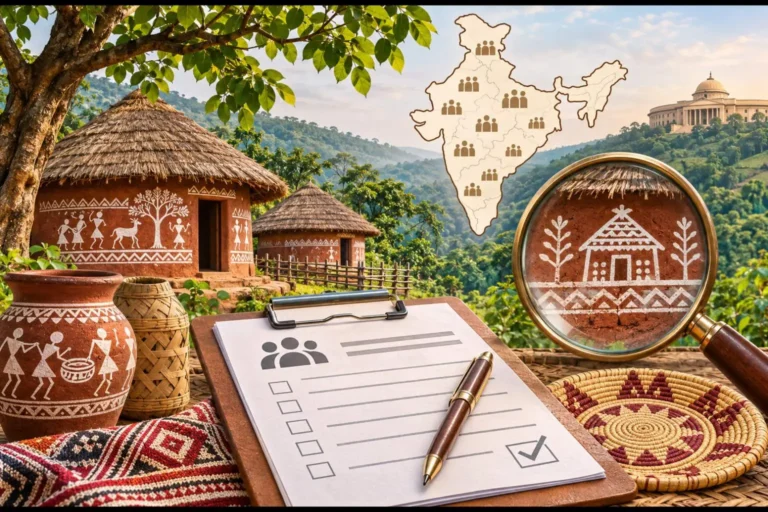
- Tribal concerns: Adivasi groups seek separate recognition of indigenous faiths, including Sarna, highlighting concerns related to Scheduled Tribes in India and Tribal Identity and Recognition.
- Data accuracy: Inconsistent classification complicates comparisons across different Censuses.
- Public policy: Reliable information supports research, minority welfare and development planning.
- Constitutional protection: Articles 25–26 guarantee religious freedom; Article 29 protects distinctive cultures.
- Accurate enumeration is therefore important for Tribal Rights and Representation, Scheduled Tribe Classification and Census and Social Justice.
Way Forward
- Classification bias: Suggested answers may influence respondents’ choice of religious identity.
- Digital divide: Limited internet access and digital literacy can disadvantage vulnerable communities.
- Transparency: Publish clear guidelines distinguishing religions, denominations and organisations.
- Inclusive enumeration: Consult tribal representatives and train enumerators to record answers without interference.
- Data protection: Maintain confidentiality and publish comparable, accurately classified statistics.
- Such measures can strengthen Tribal Development in India, improve Tribal Rights and Representation and ensure credible Tribal Demographic Data.
Conclusion
Census 2027 must combine digital efficiency with religious neutrality, cultural sensitivity and accurate self-identification to protect India’s diversity. Transparent enumeration is essential for Scheduled Tribes in India, Indigenous Communities in India, Census and Social Justice and Indian Society UPSC.