


Why in News?
A recent scientific study has warned that climate change may significantly shrink Nilgiri Wood Pigeon (Columba elphinstonii) suitable habitat by the end of the century — an important biodiversity issue often discussed in UPSC coaching in Hyderabad.
Taxonomy and Identification
Scientific Classification
• Scientific Name: Columba elphinstonii
• Family: Columbidae
• Status: Endemic to India (Western Ghats Biodiversity Hotspot)
Physical Features
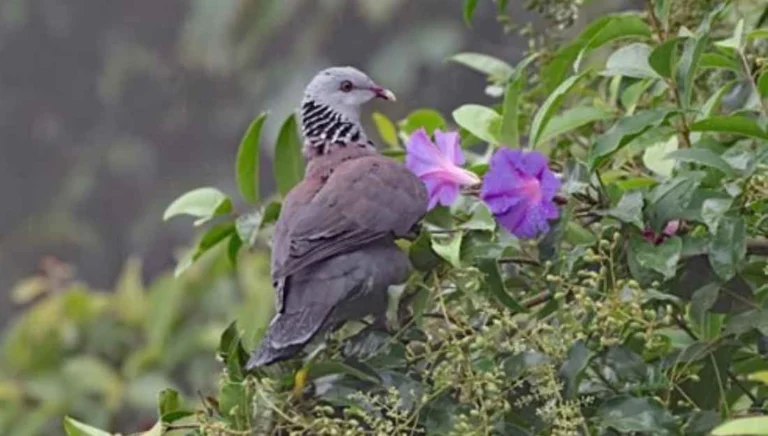
• Large-sized forest pigeon.
• Dark grey-brown plumage.
• Distinct black-and-white checkerboard pattern on the nape, which helps in identification.
Habitat
• Found in wet evergreen, moist evergreen, and semi-evergreen forests.
• Strong association with ‘shola’ forests (montane evergreen forest patches in valleys).
• Occurs up to 2,250 metres above sea level.
Geographical Distribution
• Major populations in:
• Nilgiri Hills (Tamil Nadu)
• Anamalai Hills (Tamil Nadu & Kerala)
• Isolated populations in:
• Biligirirangan Hills (Karnataka)
• Nandi Hills
• Parts of northern Maharashtra
Ecological Role
• Primarily frugivorous (fruit-eating).
• Feeds in dense forest canopies.
• Plays a key role in seed dispersal, supporting forest biodiversity and regeneration — a concept frequently analysed in IAS coaching in Hyderabad.
Status
• Listed as Vulnerable on the IUCN Red List.
Major Threats
• Deforestation and habitat fragmentation.
• Expansion of plantations such as tea and coffee.
• Infrastructure development in hill regions.
• Hunting in certain areas.
• Climate change, causing habitat shift to higher elevations — an environmental theme often covered in UPSC online coaching and civils coaching in Hyderabad.
This topic is available in detail on our main website.