
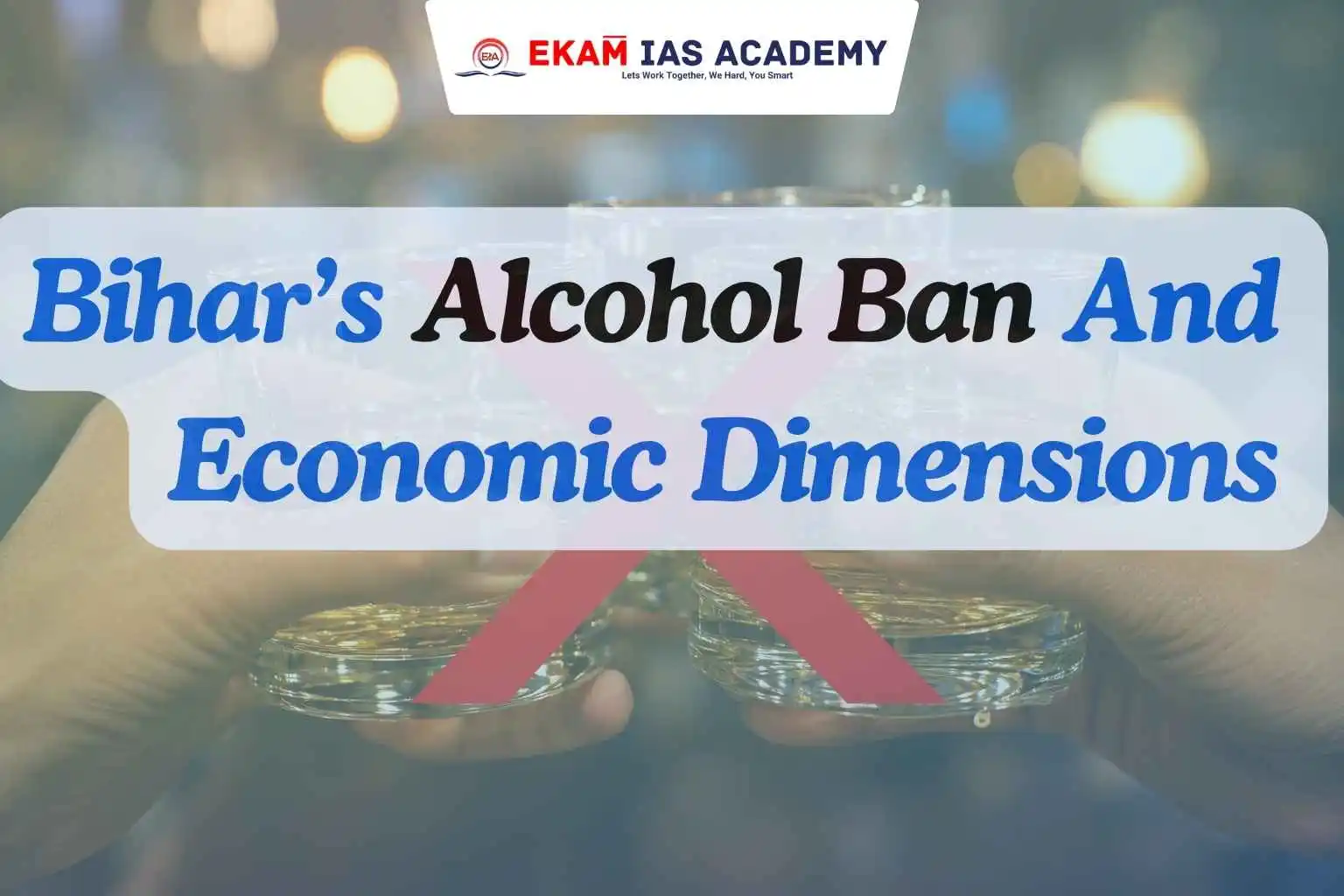
Public policy decisions often require balancing economic costs with social welfare outcomes. Bihar’s alcohol prohibition policy, introduced in 2016, has generated debate between concerns over revenue loss and evidence suggesting improvements in public health, household welfare, and reduction in alcohol-related violence. This topic is important for aspirants preparing for IAS Coaching in Hyderabad .
Background of the Ban
- Implementation in 2016: Introduced by the Bihar government to reduce alcohol‑related health and social problems.
- Revenue Impact: Estimated to have reduced State revenue by about 14%, though long‑term gains in public health and safety are expected to outweigh this loss.
- Policy Criticism: Recent reports have questioned its effectiveness, citing crime data and fiscal concerns, but these assessments are considered incomplete.
Impact on Violence and Health
- Crime Data Limitations: NCRB records only severe cases; many domestic violence incidents remain unreported.
- Improved Reporting: Rise in reported crimes linked to better awareness, legal aid, and de-stigmatisation, not necessarily more violence.
- Violence Reduction:
- Lancet Regional Health (2024): Ban prevented 21 lakh cases of intimate partner violence.
- Peer-reviewed study (2024): Significant drop in assaults on women.
- Health Gains:
- Reduced hypertension, diabetes, and obesity among men.
- Ban prevented 18 lakh cases of overweight/obesity.
Economic and Social Considerations
- Excise Revenue Loss: The ban reduced State excise collections by about 14% of total revenue.
- National Economic Cost: Alcohol consumption is estimated to cost India 1.45% of GDP annually (~₹98 lakh crore), as per the International Journal of Drug Policy (2019).
- Social Losses vs Gains: The social costs of alcohol are assessed to be three times higher than the fiscal gains from excise taxes.
- Public Welfare Benefits: Improvements in safety, productivity, and family wellbeing outweigh the short‑term fiscal losses.
Challenges
- Health Infrastructure: Limited addiction and mental health services.
- Employment & Awareness: Need for expanded education, jobs, and awareness campaigns.
- Policy Alternatives: Global evidence (WHO) suggests rationing, restricted availability, and pricing policies as softer options.
Way Forward
- Strengthen Services: Scale up mental health and de-addiction centres.
- Balanced Policy: Explore intermediate measures like rationing and controlled access.
- Public Education: Intensify campaigns on health risks and social costs.
- Evidence-Based Governance: Use quasi-experimental studies for policy evaluation.
Conclusion
Bihar’s alcohol ban has delivered clear social and health benefits, and future policy must build on these gains rather than undo them.