

Why in News?
Police in Raisen district of Madhya Pradesh recently arrested four youths after a video showing cannon firing and provocative slogans at Raisen Fort surfaced on social media — a heritage issue often discussed in UPSC coaching in Hyderabad while analysing protection of historical monuments.
Location and Historical Background
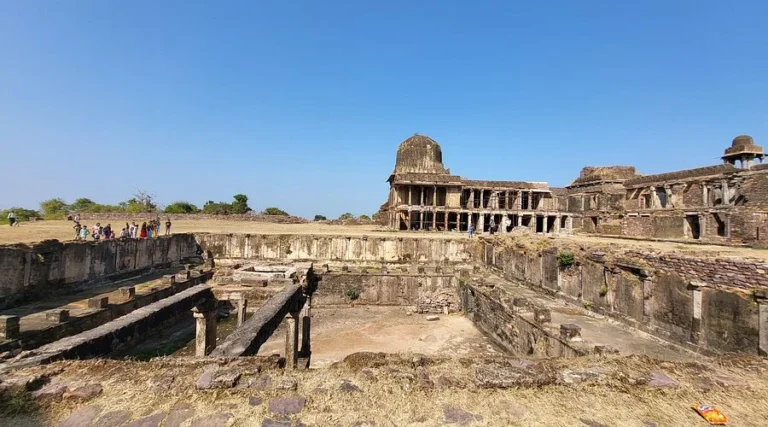
• Location: Raisen town, about 40 km from Bhopal in Madhya Pradesh.
• Built around the 11th century.
• Positioned on a hilltop, providing strong natural defence.
Architectural Features
1. Massive Hill Fort
• Spread across nearly 800 acres, making it one of the largest forts in Central India.
2. Defensive Structure
• Surrounded by massive stone walls.
• Entry through nine gateways, typical of medieval military fortifications.
3. Palaces Inside the Fort
The fort contains several royal structures:
• Badal Mahal
• Rohini Mahal
• Itradaan Mahal
• Hawa Mahal
These palaces reflect the architectural blend of Rajput and Indo-Islamic styles, a topic frequently analysed in IAS coaching in Hyderabad while studying medieval Indian architecture.
Religious and Cultural Significance
Raisen Fort demonstrates religious harmony and cultural diversity.
Important sites include:
• Temple dedicated to Lord Shiva
• Shrine of Hazrat Peer Fatehullah Shah Baba
This coexistence highlights the shared spiritual traditions of medieval India.
Water Management System
The fort had a highly advanced water conservation system.
Key features:
• More than 40 wells and water reservoirs.
• Rainwater harvesting structures to support the fort during sieges and droughts.
This system ensured long-term water availability for residents and soldiers.
Rock Art and Archaeological Importance
The fort region contains ancient rock shelters with prehistoric paintings created by early cave dwellers.
These paintings provide valuable insights into:
• Prehistoric human life
• Early art traditions
• Human settlement patterns
Importance of Protecting Heritage Monuments
Incidents like the recent one highlight the need for stronger protection of historical sites.
Key measures include:
• Strict enforcement of heritage protection laws.
• Improved security and surveillance at monuments.
• Greater public awareness about cultural heritage — themes frequently emphasised in UPSC online coaching and civils coaching in Hyderabad for GS1 History preparation.