

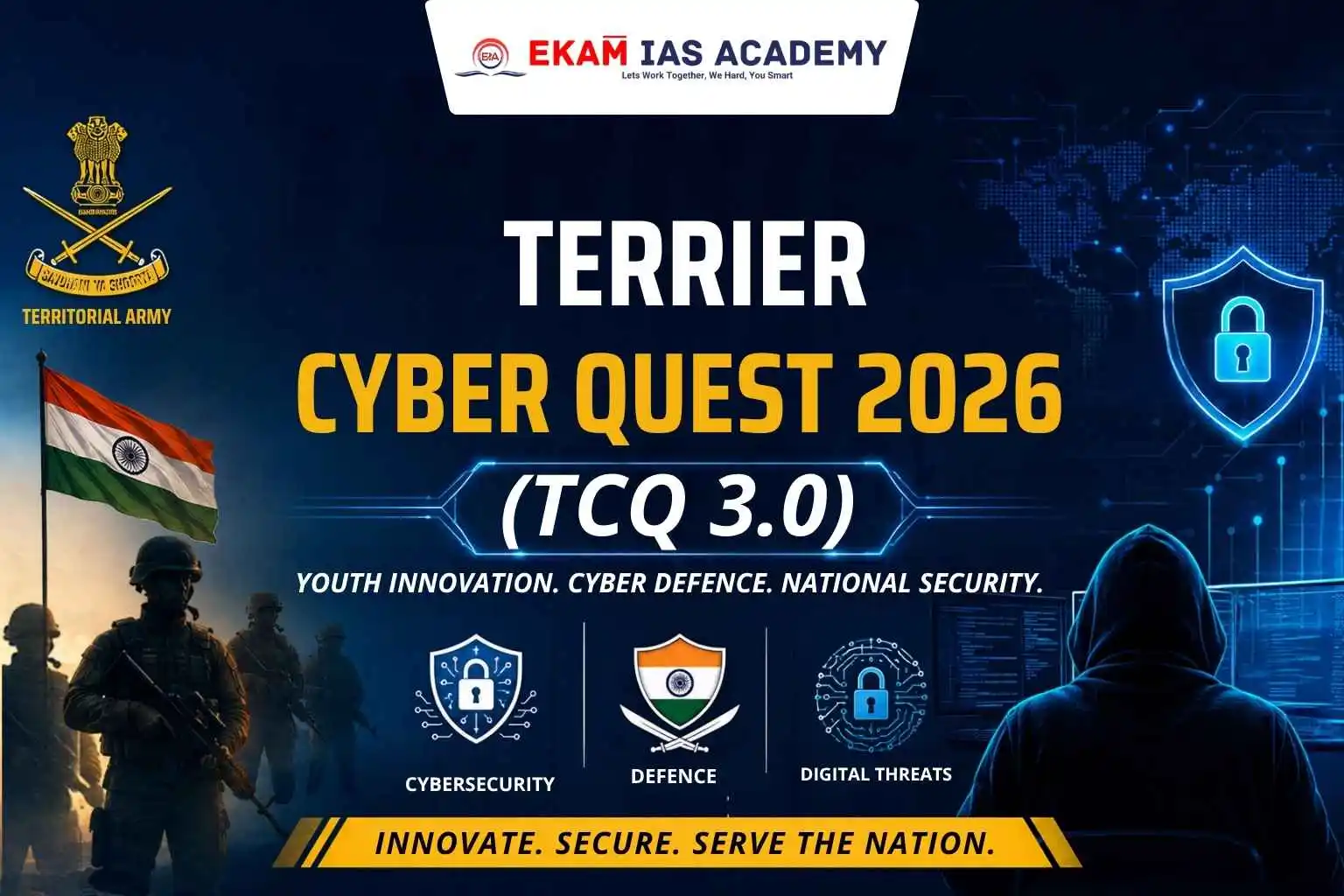
Recently, the Territorial Army, in collaboration with CyberPeace, launched the third edition of Terrier Cyber Quest 2026 (TCQ 3.0), a national-level hackathon focused on developing innovative solutions for cybersecurity, defence technology and emerging digital threats. This topic is important for aspirants preparing for UPSC Preparation.
About TCQ 3.0
- National hackathon addressing cybersecurity, defence, and digital threats.
- Organised by the Territorial Army with CyberPeace, a civil society organisation.
- Participants include students, industry experts, researchers, government bodies, and Armed Forces.
- Aim: Develop technology‑based solutions for emerging cyber and national security challenges.
Competition Tracks
- Bug Hunting: Identify flaws in simulated critical infrastructure; includes Capture‑the‑Flag and live finals.
- AI Kavach: Use AI/ML to detect threats, unusual activity, and strengthen cyber defence.
- Creators Challenge: Digital campaigns against deepfakes, phishing, scams, misinformation.
Opportunities for Participants
- Showcase skills in real‑world cybersecurity challenges.
- Winners may visit defence establishments and contribute to future initiatives.
- Builds synergy between civil society, academia, and defence forces.
Territorial Army
- Part of Indian Army; volunteers serve while retaining civilian jobs.
- Known as “Second Line of Defence”.
- Roles: relieve regular army from static duties, assist civil administration, support disaster relief.
- Motto: Savdhani Va Shoorta (Vigilance and Valour).
- Eligibility: Indian citizens, aged 18–42 years, graduates, physically fit, gainfully employed.
Challenges
- Rising cyberattacks: CERT‑In 2025 report noted 13.9 lakh incidents in India.
- Shortage of skilled cybersecurity professionals in defence sector.
- Increasing threats from AI‑driven malware and misinformation campaigns.
- Need for stronger collaboration between government, academia, and private sector.
Way Forward
- Expand hackathons to regional and school levels for wider talent pool.
- Integrate outputs into national cyber defence architecture.
- Strengthen public‑private partnerships for cyber resilience.
- Monitoring & evaluation through independent audits, feedback, and performance tracking.
Conclusion
TCQ 3.0 reflects India’s resolve to harness youth innovation for national cyber defence, bridging civil‑military collaboration in the digital age.