
Regenerative agriculture is emerging as a transformative approach to farming in India. Unlike conventional methods that focus on sustaining current productivity, this model actively seeks to restore soil health, enhance biodiversity, and build resilience against climate change. For comprehensive UPSC preparation, aspirants can refer t0 IAS Coaching in Hyderabad
Core Principles
- Minimising soil disturbance to preserve natural structure.
- Protecting living roots of perennial crops for nutrient cycling.
- Maintaining soil cover to prevent erosion and conserve moisture.
- Integrating livestock for manure and natural soil enrichment.
- Limiting chemical inputs to reduce dependency on synthetic fertilisers.
- Enhancing biodiversity through crop diversification and ecological balance.
Popular Practices in India
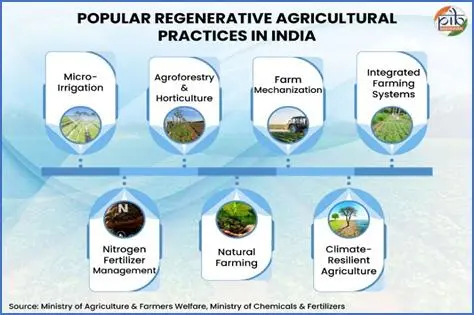
- Micro‑irrigation: Drip and sprinkler systems improve water efficiency and reduce wastage.
- Natural farming: Use of biological inputs like Beejamrut, Jeevamrut, Neemastra; promotes multi‑cropping, mulching, and livestock integration.
- Soil health management: Green manuring, cover cropping, and mulching add organic matter, conserve moisture, and support nutrient cycling.
- Integrated farming systems: Combining crops with livestock, fisheries, horticulture, agroforestry, and apiculture diversifies income and reduces risk.
- Agroforestry: Planting trees alongside crops improves soil moisture, regulates temperature, stores carbon, and provides additional revenue.
Conclusion
Regenerative agriculture is not just a farming technique but a climate‑resilient pathway that strengthens rural livelihoods while restoring ecological balance.