
Why in News
India has submitted its First National Report (NR1) on the implementation of the Nagoya Protocol to the CBD Secretariat. Such environmental governance developments are important for aspirants preparing through IAS coaching in Hyderabad, UPSC online coaching, and other civil services preparation programs.
Nagoya Protocol
• The Nagoya Protocol is a global agreement under the Convention on Biological Diversity (CBD) focusing on fair and equitable sharing of benefits arising from genetic resources.
Understanding such international environmental agreements is essential for students preparing through UPSC coaching in Hyderabad and Hyderabad IAS coaching institutes, where environment and biodiversity topics are a major part of the UPSC syllabus.
About India’s National Report (NR1)
• Prepared by the Ministry of Environment, Forest and Climate Change (MoEFCC) in collaboration with the National Biodiversity Authority (NBA).
• Covers implementation progress from 2017 to 2025.
• Highlights regulatory, institutional, and operational achievements in Access and Benefit Sharing (ABS).
These policy frameworks are often discussed in IAS coaching and civils coaching in Hyderabad, helping aspirants understand India’s role in global environmental governance.
Key Data
• 12,830 ABS approvals granted during the period.
• 5,913 by NBA
• 6,917 by State Biodiversity Boards (SBBs)/UT Biodiversity Councils
• India issued 3,500+ Internationally Recognized Certificates of Compliance (IRCCs), contributing to a major share globally (~60%).
Such data-based insights are important for aspirants enrolled in UPSC online coaching and structured UPSC coaching in Hyderabad programs.
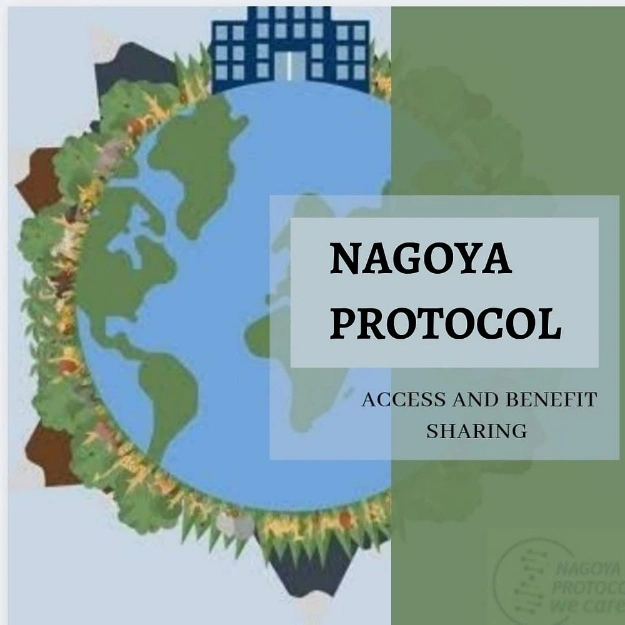
Nagoya Protocol: Key Features
• Adopted in 2010 (Nagoya, Japan) and came into force in 2014.
• Ensures:
• Access to genetic resources through Prior Informed Consent (PIC)
• Benefit sharing via Mutually Agreed Terms (MAT)
• Covers:
• Monetary benefits (royalties, fees)
• Non-monetary benefits (technology transfer, research collaboration)
• Aims to prevent bio-piracy and promote sustainable utilization.
These concepts are frequently analysed in Hyderabad IAS coaching programs to strengthen understanding of international conventions and environmental ethics.
India’s Legal and Institutional Framework
• Based on the Biological Diversity Act, 2002 (aligned with the Protocol).
• Supported by:
• Biological Diversity Rules, 2024
• ABS Regulations, 2025
Understanding legal frameworks is crucial for aspirants studying through IAS coaching and civils coaching in Hyderabad, especially for GS Paper 3 and governance-related questions.
Three-Tier Structure
- National Biodiversity Authority (NBA) – Approval for foreign access, high-value resources
- State Biodiversity Boards (SBBs) – Regulate domestic access
- Biodiversity Management Committees (BMCs) – Local-level implementation
Supporting Tools
• People’s Biodiversity Registers (PBRs) for documentation
• Digital systems for ABS approvals and monitoring
These implementation mechanisms are often discussed in UPSC coaching in Hyderabad and UPSC online coaching programs to help aspirants connect policy with grassroots governance.
This topic is available in detail on our main website.