
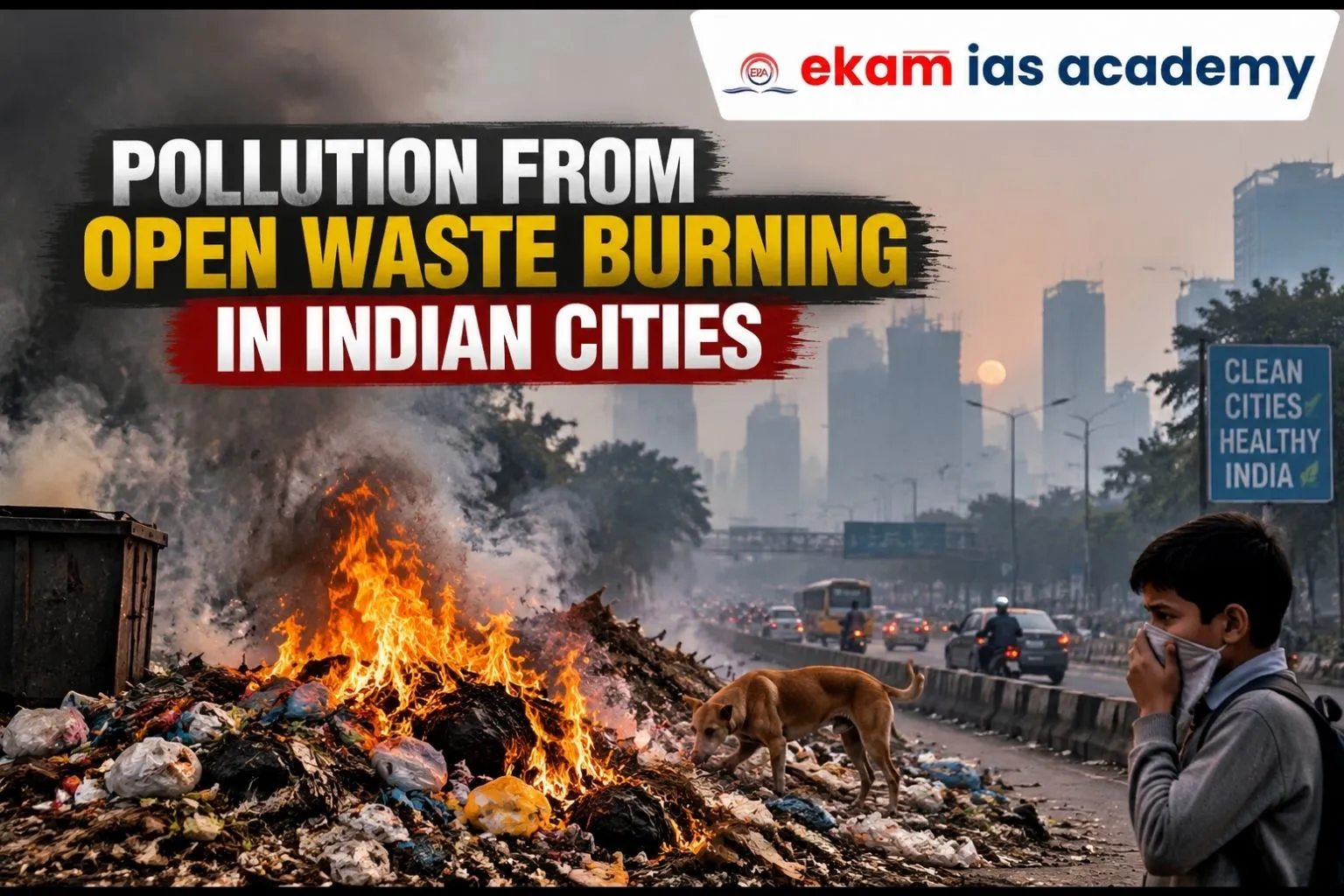
A World Resources Institute (WRI) India study (2019–2026) found that open waste burning in India triples in winter, with Tier-3 cities recording the highest incidence. Waste burning in Indian cities has emerged as a major environmental and public health concern. Though contributing less than 1% of overall PM2.5 and PM10 emissions, open garbage burning in India near homes and streets makes exposure highly toxic.
Main Pollutants from Waste Burning
Particulate Matter (PM2.5 & PM10): Fine particles released due to waste burning and air pollution penetrate deep into lungs, causing respiratory and cardiovascular diseases.
Carbon Monoxide (CO): Reduces oxygen delivery in the body, dangerous for children and elderly exposed to air pollution from waste burning.
Volatile Organic Compounds (VOCs): Contribute to smog formation and long-term health risks associated with open waste burning pollution.
Dioxins and Furans: Highly toxic pollutants generated from solid waste burning in India, linked to cancer and immune system damage.
Heavy Metals: Released from burning plastics and e-waste, contaminating soil and air, creating additional challenges in municipal waste burning India.
Socio-Economic Dimensions
- Poorer areas recorded up to 84 incidents per sq. km/day in Tier-2 cities during winter, reflecting disparities in waste collection and municipal services.
- Informal settlements and low-income zones face higher exposure due to lack of organised waste management, increasing vulnerability to urban waste burning in India.
- The issue highlights the connection between waste management and air pollution in India, where weak municipal systems contribute to unsafe disposal practices.
Way Forward
- Strengthen door-to-door collection and segregation to reduce uncollected waste and prevent open waste burning in Indian cities.
- Promote community composting and recycling hubs in Tier-2 and Tier-3 cities.
- Enforce penalties for open burning with strict monitoring to control open waste burning pollution.
- Integrate informal waste pickers into municipal systems for inclusive management.
- Expand public awareness campaigns highlighting open waste burning health effects and the dangers of toxic emissions.

Government Measures
Solid Waste Management Rules, 2016: Ban on open burning of waste; mandates segregation at source and provides a framework for controlling solid waste burning in India.
Swachh Bharat Mission: Focus on waste segregation, composting, and scientific disposal to reduce waste burning in Indian cities.
National Clean Air Programme (NCAP): Targets 40% reduction in PM2.5 and PM10 levels by 2026 and includes interventions related to waste burning and air pollution.
Municipal Initiatives: Deployment of waste-to-energy plants, mechanised collection, and awareness campaigns to address challenges of municipal waste burning India.
Extended Producer Responsibility (EPR): Mandates producers to manage plastic and packaging waste.
Conclusion
Pollution from Open Waste Burning in Indian Cities remains a significant environmental challenge despite its limited contribution to overall emissions. Open waste burning in India creates severe local health risks due to toxic pollutants and socio-economic disparities. Strong enforcement of waste management rules, improved municipal services, and awareness are essential to control waste burning and PM2.5 pollution and achieve India’s clean air and climate goals.
Effective implementation of Solid Waste Management UPSC measures and stronger governance mechanisms are crucial for addressing Open Waste Burning UPSC issues and building sustainable urban environments.