
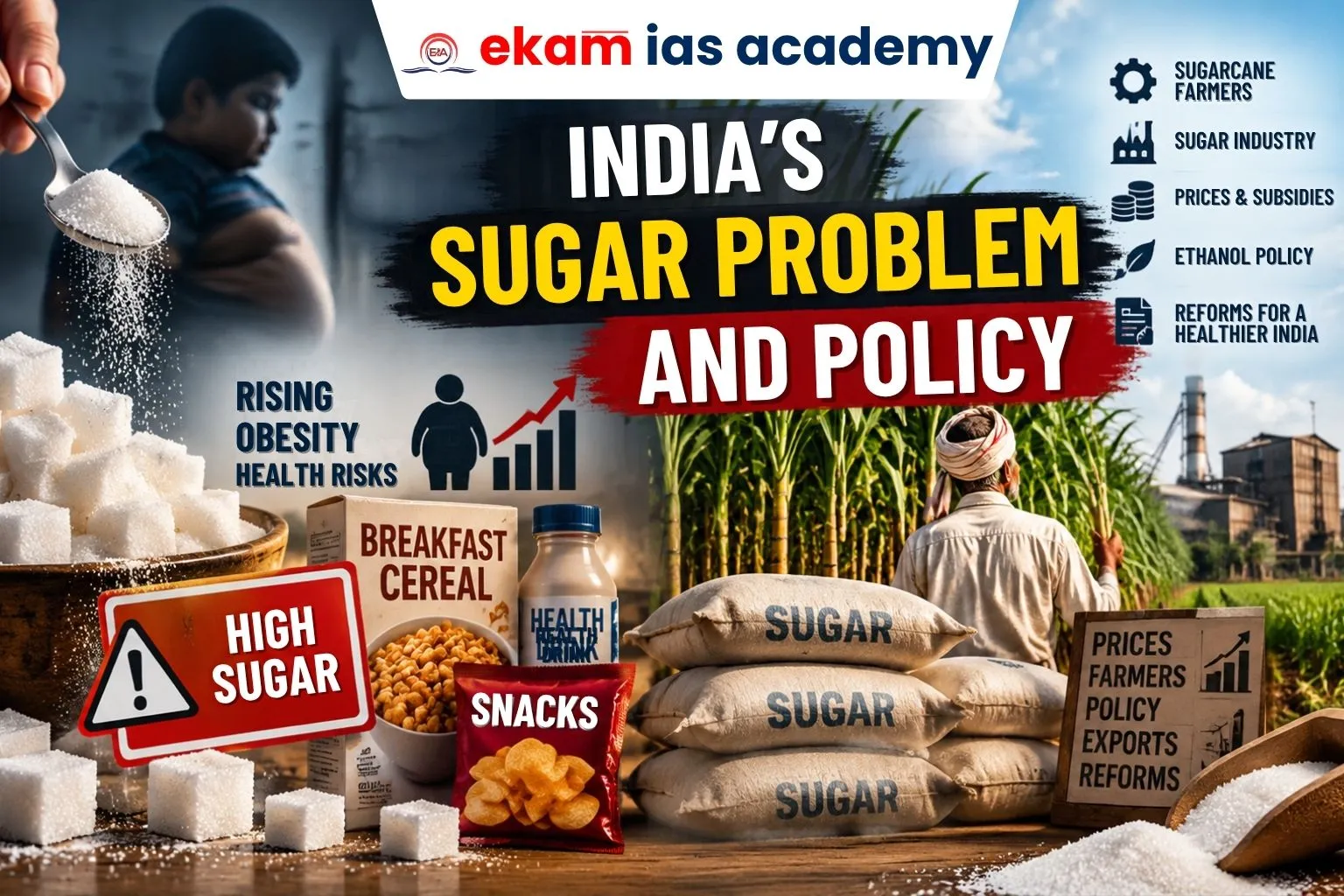
The Food Safety and Standards Authority of India (FSSAI), following Supreme Court directions, has proposed red warning labels on packaged foods high in fat, salt, and sugar. The issue highlights India’s growing Sugar Problem in India and the need for a comprehensive Sugar Policy in India to address rising health concerns while balancing the interests of the Sugar Industry in India and consumers.
Rising Health Concerns from Sugar Consumption
- The World Obesity Atlas 2026 reports that 41 million Indian children and adolescents (5–19 years) are overweight or obese, highlighting a growing public health crisis linked to excessive sugar consumption and changing dietary patterns.
- Products like breakfast cereals, infant foods, and “health drinks” often conceal high sugar content while advertising energy, vitamins, or immunity benefits, misleading parents and consumers about their actual nutritional value.
- Despite CBSE and FSSAI guidelines discouraging HFSS (High Fat, Salt, Sugar) foods, cheap sugary snacks and drinks dominate school canteens, making unhealthy options more accessible to children.
Issues
- Weak Enforcement: Optional guidelines for schools and canteens are rarely implemented, creating challenges for effective Sugar Policy in India and public health regulation.
- Unorganised Sector: Street food, dhabas, and sweet shops — major sources of sugar intake — remain outside effective regulatory purview, complicating efforts to control the Sugar Problem in India.
- GST Structure: Since 2025, sugary and sugar-free beverages fall under the same 40% GST slab, offering no incentive for reformulation or healthier alternatives.
- Sugar Prices in India: Fluctuations in sugar prices affect both consumers and producers, making pricing stability an important challenge for policymakers.
- Sugarcane Policy India: Government interventions in sugarcane pricing, procurement, and production influence both sugar availability and farmer incomes.
Global Lessons
- UK Sugar Tax: Introduced a tiered levy based on sugar content. Manufacturers reformulated products to reduce sugar and avoid higher taxes.
- India’s Missed Opportunity: Current taxation does not differentiate between high-sugar and zero-sugar drinks, failing to nudge healthier production. A differentiated approach can support long-term Sugar Sector Reforms India.
Sugar Industry and Farmer Concerns
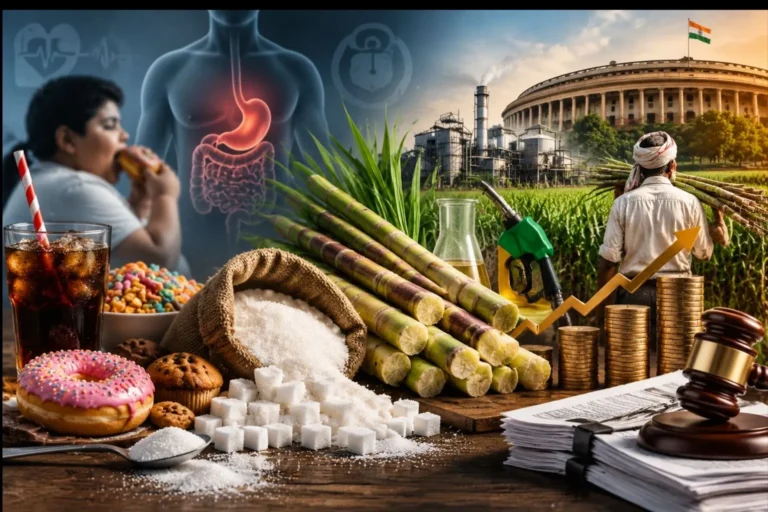
- The Sugar Industry in India plays an important role in rural employment, especially in major sugar-producing states. However, the sector faces challenges related to surplus production, price fluctuations, and sustainability.
- Sugarcane Farmers in India depend on fair pricing mechanisms such as Sugarcane FRP in India (Fair and Remunerative Price) to ensure economic viability.
- Rising production costs, delayed payments, and dependence on government support remain major challenges for sugarcane growers.
- Policies related to ethanol blending and diversification have increased the importance of Ethanol and Sugarcane Policy India in managing sugar surpluses and supporting farmers.
Way Forward
- Mandatory Standards: Enforce front-of-pack red labels across all packaged foods.
- Extend Regulation: Cover the unorganised sector through hygiene and nutrition rules.
- Sugar Tax Reform: Introduce tiered taxation based on sugar content, incentivising reformulation and addressing rising Sugar Prices in India.
- Protect Children: Ban marketing of HFSS foods to minors; regulate school canteens strictly.
- Subsidise Healthy Food: Use part of sugar tax revenue to make nutritious alternatives affordable for low-income families.
- Balanced Sugar Policy: A comprehensive Sugar Policy UPSC perspective requires balancing consumer health, farmer welfare, industrial growth, and sustainable agriculture.
Conclusion
The FSSAI’s red label proposal is a welcome first step, but meaningful progress requires mandatory enforcement, tiered sugar taxes, and protection of vulnerable communities. Without decisive action, the epidemic of obesity and diabetes will continue to burden India’s health system and economy.
At the same time, reforms in the Sugar Industry UPSC perspective must address farmer welfare, sugar pricing, ethanol production, and long-term sustainability of the sugar sector. A balanced approach towards health regulation and agricultural policy is essential for solving India’s sugar challenges.