
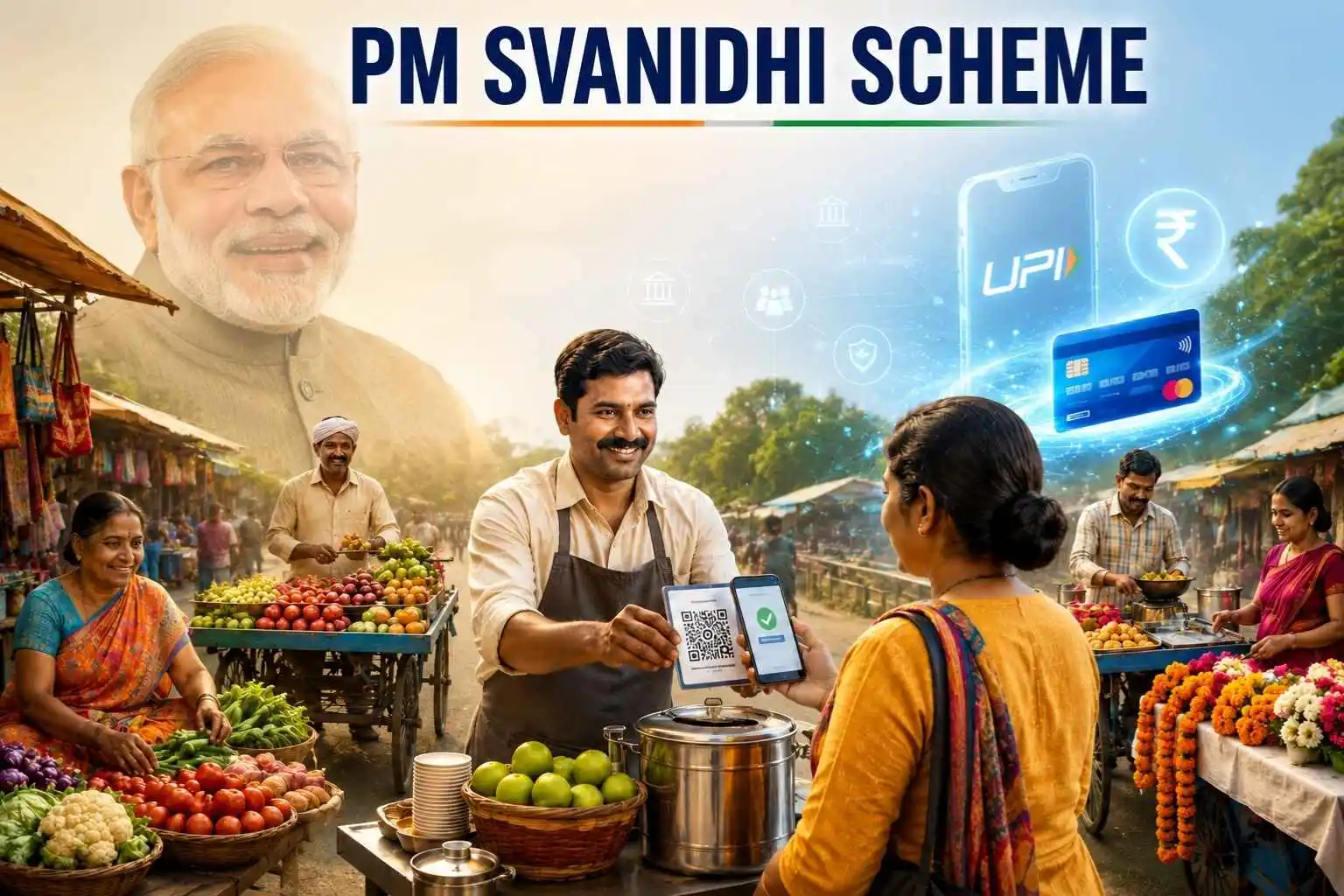
The Prime Minister Street Vendor’s AtmaNirbhar Nidhi (PM SVANidhi) scheme has emerged as a landmark initiative supporting street vendors in India’s urban informal economy. The scheme is highly relevant for aspirants preparing through IAS coaching in Hyderabad, UPSC online coaching, and UPSC coaching in Hyderabad.
What is PM SVANidhi Scheme?
• Launched in June 2020, PM SVANidhi is a Central Sector Scheme aimed at providing affordable credit and financial inclusion to street vendors.
• The scheme seeks to empower vendors through collateral-free working capital loans, promotion of digital payments, and convergence with social welfare programmes.
• It was introduced to support street vendors affected by the economic disruptions caused by the COVID-19 pandemic.
Implementation
• Jointly implemented by the Ministry of Housing and Urban Affairs (MoHUA) and the Department of Financial Services (DFS).
• Operates through commercial banks, regional rural banks, cooperative banks, microfinance institutions, NBFCs, and digital lending platforms.
• Designed to ensure last-mile financial access for urban informal workers.
Key Features
Working Capital Loans
• Collateral-free loans provided in progressive tranches:
- First Tranche: ₹15,000
- Second Tranche: ₹25,000
- Third Tranche: ₹50,000
• Timely repayment enables eligibility for higher loan amounts.
Interest Subsidy
• Interest subsidy of 7% per annum credited directly to beneficiaries’ bank accounts.
Credit Guarantee Support
• Reduces lending risk for financial institutions and improves credit access.
UPI-linked RuPay Credit Card
• Vendors successfully repaying the second tranche become eligible for RuPay credit cards.
• Credit limit up to ₹30,000.
Digital Transaction Incentives
• Cashback incentives up to ₹1,600 annually for adopting digital payments.
• Encourages financial literacy and formal financial participation.
SVANidhi Se Samriddhi (SSS)
• Conducts socio-economic profiling of beneficiary families.
• Facilitates linkage with major welfare schemes such as:
- Ayushman Bharat
- Pradhan Mantri Awas Yojana
- Pradhan Mantri Jeevan Jyoti Bima Yojana
- Pradhan Mantri Suraksha Bima Yojana
Capacity Building
• Training programmes on:
- Financial literacy
- Digital literacy
- Food safety and hygiene
• Implemented in collaboration with Food Safety and Standards Authority of India.
Impact of the Scheme
• As of March 2026, over 50 lakh street vendors have availed loans under the scheme.
• More than 65% of beneficiaries adopted digital payments, contributing to increased UPI penetration in informal markets.
• Around 18 lakh families have been connected to welfare schemes through the SVANidhi Se Samriddhi initiative.
• Enhanced access to institutional credit has reduced dependence on informal moneylenders.
Significance
Financial Inclusion
• Brings street vendors into the formal banking ecosystem.
Digital Empowerment
• Encourages cashless transactions and digital literacy.
Social Security
• Links vulnerable families to welfare programmes.
Urban Livelihood Support
• Strengthens the resilience of the urban informal economy.
Inclusive Growth
• Supports vulnerable self-employed workers and micro-entrepreneurs.
Conclusion
PM SVANidhi has evolved into a transformative scheme for India’s urban informal sector by combining affordable credit, digital inclusion, and social welfare convergence. By empowering millions of street vendors, the initiative promotes self-reliance, financial stability, and inclusive economic growth. Aspirants preparing through Hyderabad IAS coaching, IAS coaching, and civils coaching in Hyderabad should connect this topic with urban livelihoods, financial inclusion, and welfare delivery reforms in India.
This topic is available in detail on our main website.