
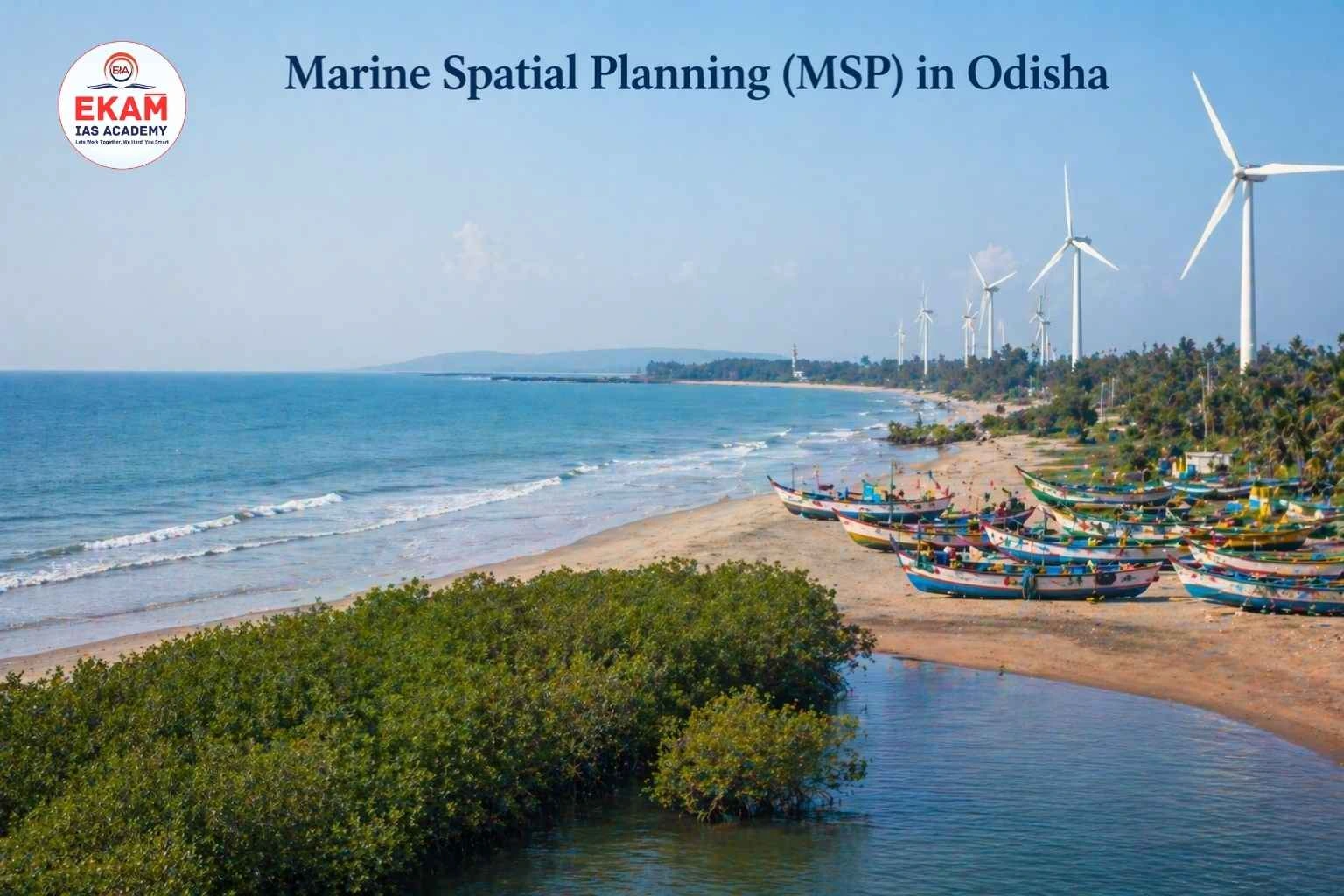
Odisha has become the first Indian state to implement Marine Spatial Planning (MSP) in partnership with the National Centre for Coastal Research (NCCR), marking a major step in integrated coastal and marine management. This topic is important for aspirants preparing through IAS coaching in Hyderabad, UPSC coaching in Hyderabad, and UPSC online coaching.
Background
• Marine Spatial Planning (MSP): A scientific framework to manage ocean resources sustainably.
• Global Context: India began MSP in 2019 under the Indo Norway Ocean Initiative, starting with Puducherry and Lakshadweep.
• Odisha’s Role: In the second phase, Odisha is leading as the first state to adopt MSP.
Such environment and disaster management topics are frequently covered in Hyderabad IAS coaching and civils coaching in Hyderabad.
National Centre for Coastal Research (NCCR)
• Established in 1998 in Chennai under the Ministry of Earth Sciences.
• Formerly known as ICMAM PD.
• Functions:
• Shoreline management using satellite and field data.
• Monitoring pollution and water quality (microplastics, heavy metals).
• Hazard mitigation tools (flood warnings, storm surge models).
• Ecosystem research on coastal habitats.
• Capacity building through training and awareness programs.
These institutions are crucial for aspirants preparing through IAS coaching.
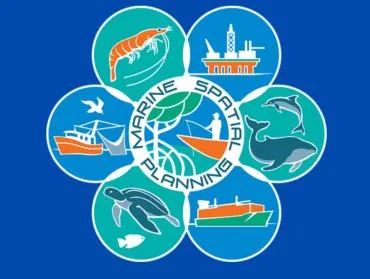
Marine Spatial Planning
• Objective: Balance ecological protection with economic growth.
• Activities Covered: Fisheries and aquaculture, Ports and shipping, Renewable energy, Tourism, Conservation zones.
• Method: Mapping marine areas to allocate specific zones for different uses.
• Benefits: Promotes blue economy, enhances climate resilience, and ensures sustainable livelihoods.
This topic is highly relevant for GS3 and is widely discussed in UPSC online coaching.
Odisha’s Context
• Coastline: Over 550 km, rich in lagoons, mangroves, and estuaries.
• Supports biodiversity and livelihoods for millions.
• Scientific Mapping under MSP:
• Study of water parameters (salinity, temperature).
• Benthic mapping (underwater vegetation).
• Identification of zones for tourism, fisheries, aquaculture, seagrass, and seaweed cultivation.
• Outcome: Evidence-based policies for coastal management.
Significance for Odisha
• Boosts fisheries, ports, tourism, and marine industries.
• Protects fragile ecosystems while meeting developmental needs.
• Strengthens livelihoods of coastal communities.
• Ensures long-term environmental sustainability.
Such integrated topics are frequently asked in UPSC and are covered in UPSC coaching in Hyderabad.
Supporting Initiative – OMBRIC
• In August 2025, Odisha launched the Odisha Marine Biotechnology Research and Innovation Corridor (OMBRIC).
• Focus: Marine biotechnology research, startups, ecological protection, and scientific tourism.
• Complements MSP by integrating innovation with conservation.
Conclusion
By combining scientific mapping, biotechnology innovation, and community participation, MSP ensures a balanced approach to economic growth and ecological sustainability along India’s coasts. For aspirants preparing through IAS coaching in Hyderabad and civils coaching in Hyderabad, this topic is crucial for GS3 preparation.
This topic is available in detail on our main website.