
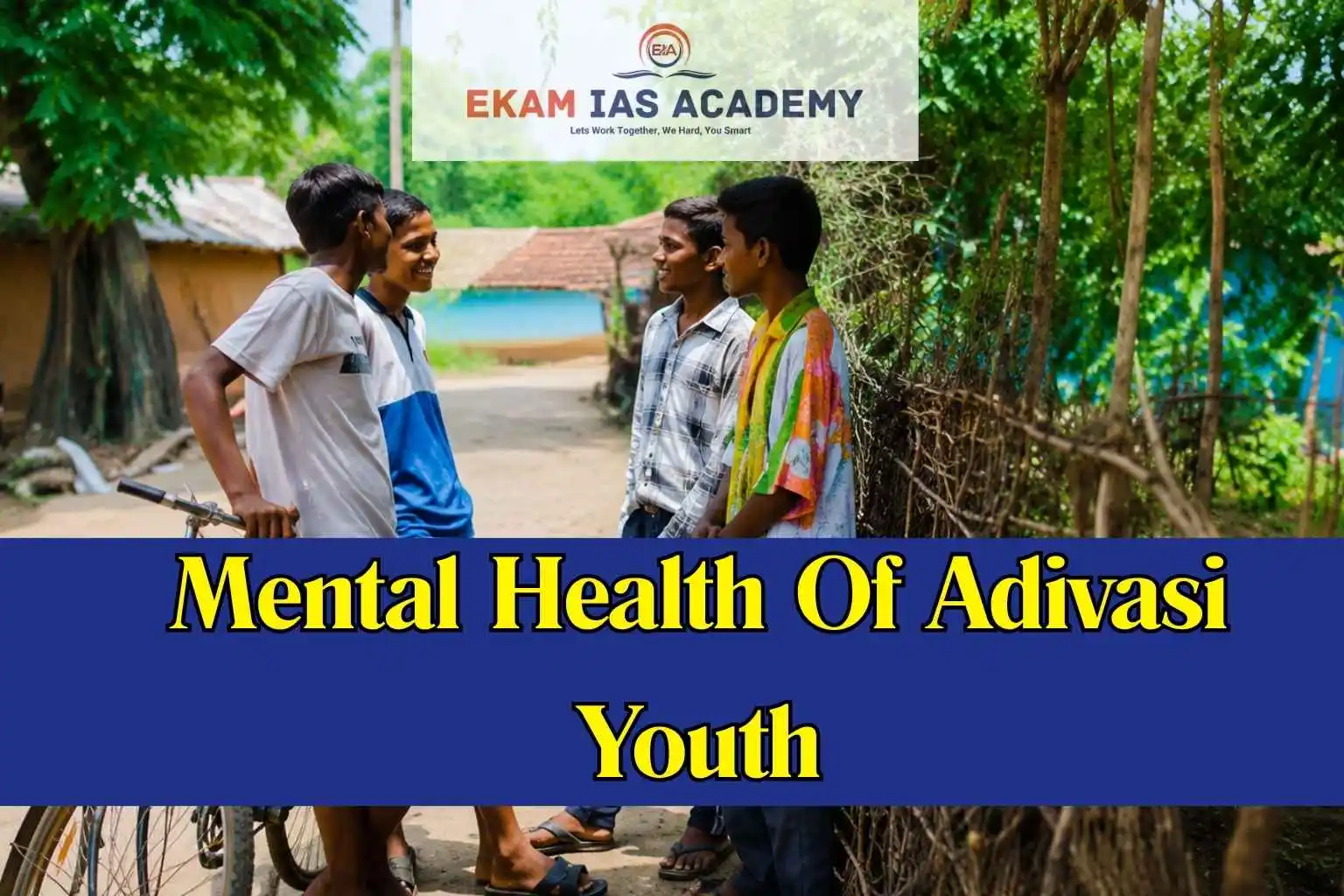
Recent studies highlight that Adivasi adolescents express distress in non-clinical ways, which are often overlooked by formal mental health systems. This topic is important for aspirants preparing for GS1 Social Issues and adolescent health policies through IAS coaching in Hyderabad.
Adolescent Mental Health
• Indigenous Communities in India: India hosts the largest indigenous population globally, constituting about 9% of the national population.
• Health Inequities: Persistent socio-economic and health disparities make adolescent mental health critical but under-researched.
• Global Burden: WHO estimates 1 in 7 adolescents (10–19 years) worldwide experience mental health conditions.
• National Survey Findings: The 2015–16 National Mental Health Survey reported that 7% of Indian adolescents (13–17 years) suffer from mental health problems, with the majority untreated due to limited access, especially in rural and Adivasi regions.
Healthcare Inequity
• Challenges: Adivasi youth face poverty, poor nutrition, and weak health infrastructure.
• Data: NFHS 5 shows only 28% of ST households have improved sanitation, compared to 48% nationally.
• Impact: Poor living conditions exacerbate physical and mental health vulnerabilities.
Education & Migration Burden
• Disrupted Schooling: Seasonal migration increases dropout rates and emotional stress.
• Data: Ministry of Education reports a 24% dropout rate among ST students at the secondary level, higher than the national average of 17%.
• Consequences: Migration intensifies loneliness, fractured social ties, and substance use.
Mental Health System Gaps
• Urban-Centric Frameworks: Focus on clinical categories like depression and anxiety, overlooking local expressions of distress.
• Access Issues: Over 80% of affected adolescents lack formal care.
• Need: Train professionals to recognise local idioms of distress and expand rural outreach under the National Mental Health Programme (NMHP).
Justice & Cultural Continuity
• Rights Perspective: Addressing Adivasi mental health involves dignity, cultural survival, and equitable access.
• Data: NITI Aayog MPI (2023) shows ST poverty at 41.5% vs national 21.9%.
• Implication: Policies must integrate cultural spaces and justice alongside psychiatric care.
Challenges
• Socio-Economic Precarity: Early family responsibilities, poverty, and migration compress adolescence into survival struggles.
• Expression of Distress: Manifested through local idioms, silence, irritability, bodily complaints, or withdrawal rather than clinical terms.
• Limited Research: Surveys in Gujarat, Tamil Nadu, and Meghalaya show 16% prevalence of mental disorders among Adivasi adolescents, double the national average.
• Cultural Erosion: Traditional intergenerational spaces are weakening due to migration and technology.
Way Forward
• Strengthen community spaces for collective dialogue and support.
• Reduce economic precarity through targeted welfare schemes, scholarships, and livelihood programs.
• Train professionals to recognise local languages and idioms of distress.
• Integrate school-based counselling and culturally sensitive outreach.
• Ensure inclusive policy frameworks under the NMHP.
Conclusion
True mental health equity in India will come only when Adivasi youth are heard in their own voices, beyond clinical labels, integrating culture, rights, and accessibility in policy design.